Translate

Showing posts with label Hydrofoils. Show all posts

Friday, 17 May 2024

Theoretical performance of a CH4/H-fuelled Destroyer Escort Hydrofoil (DEH) in 1975.

Dynamic lift ship representing a heavy hydrofoil. Fuel weight 377.6 LT. Dimensions 209.2 x 42.4 x 11.0 x 20.5 (freeboard) feet. Range 3,100 (at 30 knots)-1,800 (at 50 knots) nautical miles.

Performance of a representative DFM-fuelled Destroyer Escort Hydrofoil (DEH) in 1975. Dynamic lift ship representing a heavy hydrofoil, weight 1,363 light tons, dimensions 200 (waterline) x 40.5 (waterline) x 12.0 (ship draft) x 16.0 (ship freeboard) feet. Propulsion 1 screw. Horsepower 80,000 hp. Maximum speed 52 knots. DFM fuel weight 456 LT. Cruising speed 30 knots. Range at cruising speed 3,150 nautical miles based on 10 percent fuel reserve rounded to nearest 50 nautical miles.

Destroyer Escort Hydrofoil (DEH) general applicable for the next specific warfare areas:

ASMD=self protection against anti-ship missiles

ASW (P)=force protection against subsurface threats

AAW=force attribution of airborne threats

ASUW=warfare against surface ship threats

EW=electronic warfare

CDS=combat direction systems

SURV=surveillance

AMW(L)=amhibious lift capability

NGFS=naval gunfire support

MIW=mine warfare

MLS=mobile logistic support for sea-based forces

SPW=special warfare


Principal mission characteristics

Mission: sea control defense of protected convoy lane

Duration in day: 7.2

Range in nautical miles: 5,200

Mission description: sweep of 2,600 miles protected lane both ways using sprint and draft tactic for submarine search. Sprint 45 knots.


Ship operational parameters

Days in op area:7.2

Op area day profile in hours: 16

Op area day profile in knots: 45

Op area day profile in nautical miles: 720

Total time at speed in hours: 115.4

Total time at speed in knots: 45

Source

Hydrogen. Hearings before the subcommittee of energy research, development and demonstration of the committee on science and technology U.S. House of Representatives. Ninety-fourth congress, first session June 10 and 12, 1975, p. 1027 and further

Thursday, 16 May 2024

Theoretical performance of a CH4/L-fuelled Destroyer Escort Hydrofoil (DEH) in 1975

Dynamic lift ship representing a heavy hydrofoil. Fuel weight 408.5 LT. Dimensions 206.9 x 41.9 x 11.2 x 19.3 (freeboard) feet. Range 3,350 (at 30 knots)-1,950 (at 50 knots) nautical miles.

Performance of a representative DFM-fuelled Destroyer Escort Hydrofoil (DEH) in 1975. Dynamic lift ship representing a heavy hydrofoil, weight 1,363 light tons, dimensions 200 (waterline) x 40.5 (waterline) x 12.0 (ship draft) x 16.0 (ship freeboard) feet. Propulsion 1 screw. Horsepower 80,000 hp. Maximum speed 52 knots. DFM fuel weight 456 LT. Cruising speed 30 knots. Range at cruising speed 3,150 nautical miles based on 10 percent fuel reserve rounded to nearest 50 nautical miles.

Destroyer Escort Hydrofoil (DEH) general applicable for the next specific warfare areas:

ASMD=self protection against anti-ship missiles

ASW (P)=force protection against subsurface threats

AAW=force attribution of airborne threats

ASUW=warfare against surface ship threats

EW=electronic warfare

CDS=combat direction systems

SURV=surveillance

AMW(L)=amhibious lift capability

NGFS=naval gunfire support

MIW=mine warfare

MLS=mobile logistic support for sea-based forces

SPW=special warfare


Principal mission characteristics

Mission: sea control defense of protected convoy lane

Duration in day: 7.2

Range in nautical miles: 5,200

Mission description: sweep of 2,600 miles protected lane both ways using sprint and draft tactic for submarine search. Sprint 45 knots.


Ship operational parameters

Days in op area:7.2

Op area day profile in hours: 16

Op area day profile in knots: 45

Op area day profile in nautical miles: 720

Total time at speed in hours: 115.4

Total time at speed in knots: 45

Source

Hydrogen. Hearings before the subcommittee of energy research, development and demonstration of the committee on science and technology U.S. House of Representatives. Ninety-fourth congress, first session June 10 and 12, 1975, p. 1027 and further
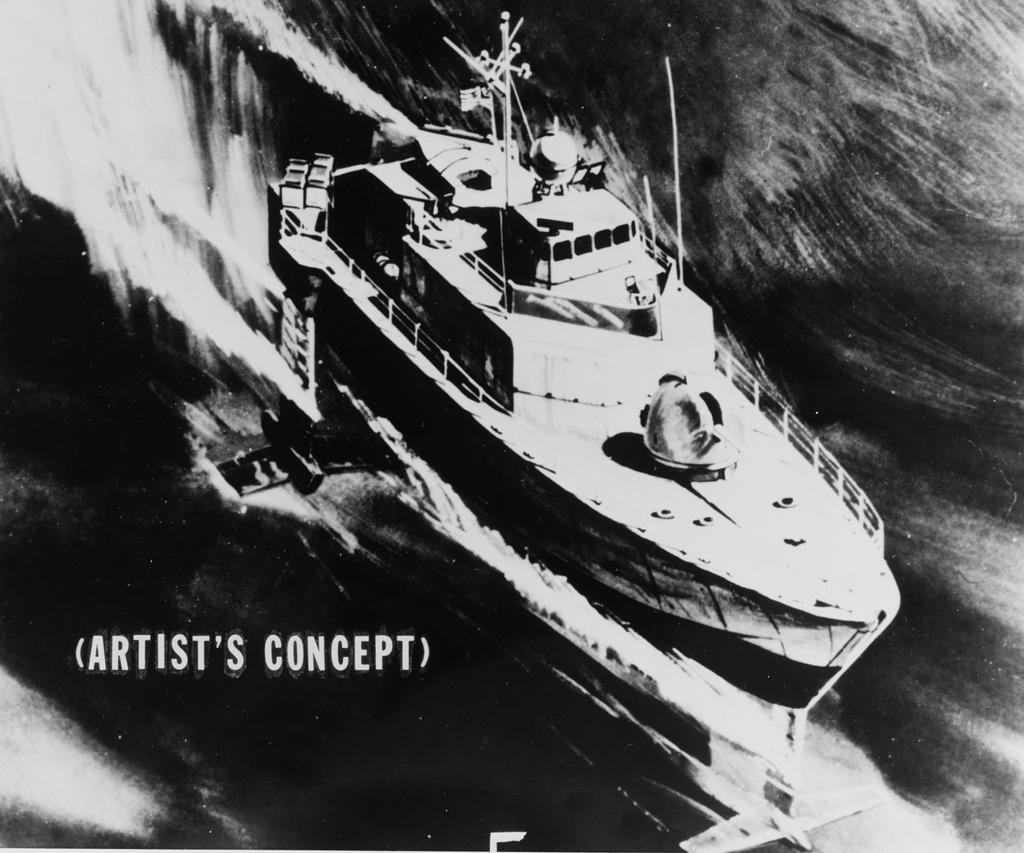
Wednesday, 15 May 2024

Theoretical performance of a N2H4-fuelled Destroyer Escort Hydrofoil (DEH) in 1975

Dynamic lift ship representing a heavy hydrofoil. Fuel weight 460.7 LT. Dimensions 199.5 x 40.4 x 12.1 x 158 (freeboard) feet. Range 1,250 (at 30 knots)-750 (at 50 knots) nautical miles.

Performance of a representative DFM-fuelled Destroyer Escort Hydrofoil (DEH) in 1975. Dynamic lift ship representing a heavy hydrofoil, weight 1,363 light tons, dimensions 200 (waterline) x 40.5 (waterline) x 12.0 (ship draft) x 16.0 (ship freeboard) feet. Propulsion 1 screw. Horsepower 80,000 hp. Maximum speed 52 knots. DFM fuel weight 456 LT. Cruising speed 30 knots. Range at cruising speed 3,150 nautical miles based on 10 percent fuel reserve rounded to nearest 50 nautical miles.

Destroyer Escort Hydrofoil (DEH) general applicable for the next specific warfare areas:

ASMD=self protection against anti-ship missiles

ASW (P)=force protection against subsurface threats

AAW=force attribution of airborne threats

ASUW=warfare against surface ship threats

EW=electronic warfare

CDS=combat direction systems

SURV=surveillance

AMW(L)=amhibious lift capability

NGFS=naval gunfire support

MIW=mine warfare

MLS=mobile logistic support for sea-based forces

SPW=special warfare


Principal mission characteristics

Mission: sea control defense of protected convoy lane

Duration in day: 7.2

Range in nautical miles: 5,200

Mission description: sweep of 2,600 miles protected lane both ways using sprint and draft tactic for submarine search. Sprint 45 knots.


Ship operational parameters

Days in op area:7.2

Op area day profile in hours: 16

Op area day profile in knots: 45

Op area day profile in nautical miles: 720

Total time at speed in hours: 115.4

Total time at speed in knots: 45

Source

Hydrogen. Hearings before the subcommittee of energy research, development and demonstration of the committee on science and technology U.S. House of Representatives. Ninety-fourth congress, first session June 10 and 12, 1975, p. 1027 and further

Tuesday, 14 May 2024

Theoretical performance of a NHs/H-fuelled Destroyer Escort Hydrofoil (DEH) in 1975

Dynamic lift ship representing a heavy hydrofoil. Fuel weight 418.0 LT. Dimensions 202.3 x 41.0 x 11.7 x 17.1 (freeboard) feet. Range 1,300 (at 30 knots)-750 (at 50 knots) nautical miles.

Performance of a representative DFM-fuelled Destroyer Escort Hydrofoil (DEH) in 1975. Dynamic lift ship representing a heavy hydrofoil, weight 1,363 light tons, dimensions 200 (waterline) x 40.5 (waterline) x 12.0 (ship draft) x 16.0 (ship freeboard) feet. Propulsion 1 screw. Horsepower 80,000 hp. Maximum speed 52 knots. DFM fuel weight 456 LT. Cruising speed 30 knots. Range at cruising speed 3,150 nautical miles based on 10 percent fuel reserve rounded to nearest 50 nautical miles.

Destroyer Escort Hydrofoil (DEH) general applicable for the next specific warfare areas:

ASMD=self protection against anti-ship missiles

ASW (P)=force protection against subsurface threats

AAW=force attribution of airborne threats

ASUW=warfare against surface ship threats

EW=electronic warfare

CDS=combat direction systems

SURV=surveillance

AMW(L)=amhibious lift capability

NGFS=naval gunfire support

MIW=mine warfare

MLS=mobile logistic support for sea-based forces

SPW=special warfare


Principal mission characteristics

Mission: sea control defense of protected convoy lane

Duration in day: 7.2

Range in nautical miles: 5,200

Mission description: sweep of 2,600 miles protected lane both ways using sprint and draft tactic for submarine search. Sprint 45 knots.


Ship operational parameters

Days in op area:7.2

Op area day profile in hours: 16

Op area day profile in knots: 45

Op area day profile in nautical miles: 720

Total time at speed in hours: 115.4

Total time at speed in knots: 45

Source

Hydrogen. Hearings before the subcommittee of energy research, development and demonstration of the committee on science and technology U.S. House of Representatives. Ninety-fourth congress, first session June 10 and 12, 1975, p. 1027 and further

Monday, 13 May 2024

Theoretical performance of a NH3/L-fuelled Destroyer Escort Hydrofoil (DEH) in 1975

Dynamic lift ship representing a heavy hydrofoil. Fuel weight 434.6 LT. Dimensions 203.3 x 41.2 x 11.6 x 17.5 (freeboard) feet. Range 1,350 (at 30 knots)-750 (at 50 knots) nautical miles.

Performance of a representative DFM-fuelled Destroyer Escort Hydrofoil (DEH) in 1975. Dynamic lift ship representing a heavy hydrofoil, weight 1,363 light tons, dimensions 200 (waterline) x 40.5 (waterline) x 12.0 (ship draft) x 16.0 (ship freeboard) feet. Propulsion 1 screw. Horsepower 80,000 hp. Maximum speed 52 knots. DFM fuel weight 456 LT. Cruising speed 30 knots. Range at cruising speed 3,150 nautical miles based on 10 percent fuel reserve rounded to nearest 50 nautical miles.

Destroyer Escort Hydrofoil (DEH) general applicable for the next specific warfare areas:

ASMD=self protection against anti-ship missiles

ASW (P)=force protection against subsurface threats

AAW=force attribution of airborne threats

ASUW=warfare against surface ship threats

EW=electronic warfare

CDS=combat direction systems

SURV=surveillance

AMW(L)=amhibious lift capability

NGFS=naval gunfire support

MIW=mine warfare

MLS=mobile logistic support for sea-based forces

SPW=special warfare


Principal mission characteristics

Mission: sea control defense of protected convoy lane

Duration in day: 7.2

Range in nautical miles: 5,200

Mission description: sweep of 2,600 miles protected lane both ways using sprint and draft tactic for submarine search. Sprint 45 knots.


Ship operational parameters

Days in op area:7.2

Op area day profile in hours: 16

Op area day profile in knots: 45

Op area day profile in nautical miles: 720

Total time at speed in hours: 115.4

Total time at speed in knots: 45

Source

Hydrogen. Hearings before the subcommittee of energy research, development and demonstration of the committee on science and technology U.S. House of Representatives. Ninety-fourth congress, first session June 10 and 12, 1975, p. 1027 and further

Sunday, 12 May 2024

Theoretical performance of a H2-fuelled Destroyer Escort Hydrofoil (DEH) in 1975

Dynamic lift ship representing a heavy hydrofoil. Fuel weight 228.0 LT. Dimensions 224.7 x 49.5 x 9.5 x 29.5 (freeboard) feet. Range 4,450 (at 30 knots)-2,600 (at 50 knots) nautical miles.

Performance of a representative DFM-fuelled Destroyer Escort Hydrofoil (DEH) in 1975. Dynamic lift ship representing a heavy hydrofoil, weight 1,363 light tons, dimensions 200 (waterline) x 40.5 (waterline) x 12.0 (ship draft) x 16.0 (ship freeboard) feet. Propulsion 1 screw. Horsepower 80,000 hp. Maximum speed 52 knots. DFM fuel weight 456 LT. Cruising speed 30 knots. Range at cruising speed 3,150 nautical miles based on 10 percent fuel reserve rounded to nearest 50 nautical miles.

Destroyer Escort Hydrofoil (DEH) general applicable for the next specific warfare areas:

ASMD=self protection against anti-ship missiles

ASW (P)=force protection against subsurface threats

AAW=force attribution of airborne threats

ASUW=warfare against surface ship threats

EW=electronic warfare

CDS=combat direction systems

SURV=surveillance

AMW(L)=amhibious lift capability

NGFS=naval gunfire support

MIW=mine warfare

MLS=mobile logistic support for sea-based forces

SPW=special warfare


Principal mission characteristics

Mission: sea control defense of protected convoy lane

Duration in day: 7.2

Range in nautical miles: 5,200

Mission description: sweep of 2,600 miles protected lane both ways using sprint and draft tactic for submarine search. Sprint 45 knots.


Ship operational parameters

Days in op area:7.2

Op area day profile in hours: 16

Op area day profile in knots: 45

Op area day profile in nautical miles: 720

Total time at speed in hours: 115.4

Total time at speed in knots: 45

Source

Hydrogen. Hearings before the subcommittee of energy research, development and demonstration of the committee on science and technology U.S. House of Representatives. Ninety-fourth congress, first session June 10 and 12, 1975, p. 1027 and further

Saturday, 11 May 2024

Theoretical performance of a MMA-fuelled Patrol Hydrofoil Missile Ship PHM in 1975

Fuel weight 39.3 LT. Dimensions 118.6 x 24.7 x 6.1 x 8.6 (freeboard) feet. Range 1,050 (at 30 knots)-550 (at 55 knots) nautical miles.

Performance of a representative DFM-fuelled PHM in 1975. Dynamic lift ship representing a light hydrofoil, weight light 231 tons, dimensions 118 (waterline) x 24.6 (waterline) x 6.2 (ship draft) x 8.3 (ship freeboard) feet. Propulsion waterjet. Horsepower 20,000 hp. Maximum speed 55 knots. DFM fuel weight 41 LT. Cruising speed 30 knots. Range at cruising speed 1,350 nautical miles based on 10 percent fuel reserve rounded to nearest 50 nautical miles.

Patrol Hydrofoil Missile Ship (PHM) general applicable for the next specific warfare areas:

ASMD=self protection against anti-ship missiles

ASW (P)=force protection against subsurface threats

AAW=force attribution of airborne threats

ASUW=warfare against surface ship threats

EW=electronic warfare

CDS=combat direction systems

SURV=surveillance

AMW(L)=amhibious lift capability

NGFS=naval gunfire support

MIW=mine warfare

MLS=mobile logistic support for sea-based forces

SPW=special warfare


Principal mission characteristics

Mission: Sea Control SSM Engagement

Duration in day: 1.35

Range in nautical miles: 1,255

Mission description: high speed transit to operating ara. Six hour SSM engagement. Return to base at near max lift/drag speeds. Mission foilborne.


Ship operational parameters

Days in transit:

Transit day profile hours: 10

Transit day profile in knots: 50

Transit day profile in nautical miles: 500

Days in op area: 0.25

Op area day profile in hours: 3

Op area day profile in knots: 50

Op area day profile in nautical miles: 150

Total time at speed in hours: 16.7

Total time at speed in knots: 30


Ship operational parameters

Days in transit: 1.1

Transit day profile hours: 16.7

Transit day profile in knots: 30

Transit day profile in nautical miles: 500

Days in op area: 0.25

Op area day profile in hours: 3

Op area day profile in knots: 35

Op area day profile in nautical miles: 105

Total time at speed in hours: 3

Total time at speed in knots: 35

Source

Hydrogen. Hearings before the subcommittee of energy research, development and demonstration of the committee on science and technology U.S. House of Representatives. Ninety-fourth congress, first session June 10 and 12, 1975, p. 1027 and further 

Friday, 10 May 2024

Theoretical performance of a CH3OH-fuelled DFM-fuelled Patrol Hydrofoil Missile Ship (PHM) in 1975

Fuel weight 40.8 LT. Dimensions 118.1 x 24.6 x 6.2 x 8.4 (freeboard) feet. Range 650 (at 30 knots)-350 (at 55 knots) nautical miles.

Performance of a representative DFM-fuelled PHM in 1975. Dynamic lift ship representing a light hydrofoil, weight light 231 tons, dimensions 118 (waterline) x 24.6 (waterline) x 6.2 (ship draft) x 8.3 (ship freeboard) feet. Propulsion waterjet. Horsepower 20,000 hp. Maximum speed 55 knots. DFM fuel weight 41 LT. Cruising speed 30 knots. Range at cruising speed 1,350 nautical miles based on 10 percent fuel reserve rounded to nearest 50 nautical miles.

Patrol Hydrofoil Missile Ship (PHM) general applicable for the next specific warfare areas:

ASMD=self protection against anti-ship missiles

ASW (P)=force protection against subsurface threats

AAW=force attribution of airborne threats

ASUW=warfare against surface ship threats

EW=electronic warfare

CDS=combat direction systems

SURV=surveillance

AMW(L)=amhibious lift capability

NGFS=naval gunfire support

MIW=mine warfare

MLS=mobile logistic support for sea-based forces

SPW=special warfare


Principal mission characteristics

Mission: Sea Control SSM Engagement

Duration in day: 1.35

Range in nautical miles: 1,255

Mission description: high speed transit to operating ara. Six hour SSM engagement. Return to base at near max lift/drag speeds. Mission foilborne.


Ship operational parameters

Days in transit:

Transit day profile hours: 10

Transit day profile in knots: 50

Transit day profile in nautical miles: 500

Days in op area: 0.25

Op area day profile in hours: 3

Op area day profile in knots: 50

Op area day profile in nautical miles: 150

Total time at speed in hours: 16.7

Total time at speed in knots: 30


Ship operational parameters

Days in transit: 1.1

Transit day profile hours: 16.7

Transit day profile in knots: 30

Transit day profile in nautical miles: 500

Days in op area: 0.25

Op area day profile in hours: 3

Op area day profile in knots: 35

Op area day profile in nautical miles: 105

Total time at speed in hours: 3

Total time at speed in knots: 35

Source

Hydrogen. Hearings before the subcommittee of energy research, development and demonstration of the committee on science and technology U.S. House of Representatives. Ninety-fourth congress, first session June 10 and 12, 1975, p. 1027 and further

Thursday, 9 May 2024

Theoretical performance of a CH4/H-fuelled Patrol Hydrofoil Missile Ship (PHM) in 1975

Fuel weight 34.2 LT. Dimensions 120.2 x 25.1 x 6.0 x 9.6 (freeboard) feet. Range 1,300 (at 30 knots)-700 (at 55 knots) nautical miles.

Performance of a representative DFM-fuelled PHM in 1975. Dynamic lift ship representing a light hydrofoil, weight light 231 tons, dimensions 118 (waterline) x 24.6 (waterline) x 6.2 (ship draft) x 8.3 (ship freeboard) feet. Propulsion waterjet. Horsepower 20,000 hp. Maximum speed 55 knots. DFM fuel weight 41 LT. Cruising speed 30 knots. Range at cruising speed 1,350 nautical miles based on 10 percent fuel reserve rounded to nearest 50 nautical miles.

Patrol Hydrofoil Missile Ship (PHM) general applicable for the next specific warfare areas:

ASMD=self protection against anti-ship missiles

ASW (P)=force protection against subsurface threats

AAW=force attribution of airborne threats

ASUW=warfare against surface ship threats

EW=electronic warfare

CDS=combat direction systems

SURV=surveillance

AMW(L)=amhibious lift capability

NGFS=naval gunfire support

MIW=mine warfare

MLS=mobile logistic support for sea-based forces

SPW=special warfare


Principal mission characteristics

Mission: Sea Control SSM Engagement

Duration in day: 1.35

Range in nautical miles: 1,255

Mission description: high speed transit to operating ara. Six hour SSM engagement. Return to base at near max lift/drag speeds. Mission foilborne.


Ship operational parameters

Days in transit:

Transit day profile hours: 10

Transit day profile in knots: 50

Transit day profile in nautical miles: 500

Days in op area: 0.25

Op area day profile in hours: 3

Op area day profile in knots: 50

Op area day profile in nautical miles: 150

Total time at speed in hours: 16.7

Total time at speed in knots: 30


Ship operational parameters

Days in transit: 1.1

Transit day profile hours: 16.7

Transit day profile in knots: 30

Transit day profile in nautical miles: 500

Days in op area: 0.25

Op area day profile in hours: 3

Op area day profile in knots: 35

Op area day profile in nautical miles: 105

Total time at speed in hours: 3

Total time at speed in knots: 35

Source

Hydrogen. Hearings before the subcommittee of energy research, development and demonstration of the committee on science and technology U.S. House of Representatives. Ninety-fourth congress, first session June 10 and 12, 1975, p. 1027 and further

Wednesday, 8 May 2024

Theoretical performance of a CH4/L fuelled Patrol Hydrofoil Missile Ship (PHM) in 1975

Fuel weight 36.7 LT.Dimensions 119.6 x 24.9 x 6.0 x 9.2 (freeboard) feet. Range 1,400 (at 30 knots)-750 (at 55 knots) nautical miles.

Performance of a representative DFM-fuelled PHM in 1975. Dynamic lift ship representing a light hydrofoil, weight light 231 tons, dimensions 118 (waterline) x 24.6 (waterline) x 6.2 (ship draft) x 8.3 (ship freeboard) feet. Propulsion waterjet. Horsepower 20,000 hp. Maximum speed 55 knots. DFM fuel weight 41 LT. Cruising speed 30 knots. Range at cruising speed 1,350 nautical miles based on 10 percent fuel reserve rounded to nearest 50 nautical miles.

Patrol Hydrofoil Missile Ship (PHM) general applicable for the next specific warfare areas:

ASMD=self protection against anti-ship missiles

ASW (P)=force protection against subsurface threats

AAW=force attribution of airborne threats

ASUW=warfare against surface ship threats

EW=electronic warfare

CDS=combat direction systems

SURV=surveillance

AMW(L)=amhibious lift capability

NGFS=naval gunfire support

MIW=mine warfare

MLS=mobile logistic support for sea-based forces

SPW=special warfare


Principal mission characteristics

Mission: Sea Control SSM Engagement

Duration in day: 1.35

Range in nautical miles: 1,255

Mission description: high speed transit to operating ara. Six hour SSM engagement. Return to base at near max lift/drag speeds. Mission foilborne.


Ship operational parameters

Days in transit:

Transit day profile hours: 10

Transit day profile in knots: 50

Transit day profile in nautical miles: 500

Days in op area: 0.25

Op area day profile in hours: 3

Op area day profile in knots: 50

Op area day profile in nautical miles: 150

Total time at speed in hours: 16.7

Total time at speed in knots: 30


Ship operational parameters

Days in transit: 1.1

Transit day profile hours: 16.7

Transit day profile in knots: 30

Transit day profile in nautical miles: 500

Days in op area: 0.25

Op area day profile in hours: 3

Op area day profile in knots: 35

Op area day profile in nautical miles: 105

Total time at speed in hours: 3

Total time at speed in knots: 35

Source

Hydrogen. Hearings before the subcommittee of energy research, development and demonstration of the committee on science and technology U.S. House of Representatives. Ninety-fourth congress, first session June 10 and 12, 1975, p. 1027 and further

Tuesday, 7 May 2024

Theoretical performance of a N2H4-fuelled Patrol Hydrofoil Missile Ship (PHM) in 1975

Fuel weight 41.2 LT. Dimensions 117.9 x 24.6 x 6.2 x 8.2 (freeboard)  feet. Range 550 (at 30 knots)-300 (at 55 knots) nautical miles.

Performance of a representative DFM-fuelled PHM in 1975. Dynamic lift ship representing a light hydrofoil, weight light 231 tons, dimensions 118 (waterline) x 24.6 (waterline) x 6.2 (ship draft) x 8.3 (ship freeboard) feet. Propulsion waterjet. Horsepower 20,000 hp. Maximum speed 55 knots. DFM fuel weight 41 LT. Cruising speed 30 knots. Range at cruising speed 1,350 nautical miles based on 10 percent fuel reserve rounded to nearest 50 nautical miles.

Patrol Hydrofoil Missile Ship (PHM) general applicable for the next specific warfare areas:

ASMD=self protection against anti-ship missiles

ASW (P)=force protection against subsurface threats

AAW=force attribution of airborne threats

ASUW=warfare against surface ship threats

EW=electronic warfare

CDS=combat direction systems

SURV=surveillance

AMW(L)=amhibious lift capability

NGFS=naval gunfire support

MIW=mine warfare

MLS=mobile logistic support for sea-based forces

SPW=special warfare


Principal mission characteristics

Mission: Sea Control SSM Engagement

Duration in day: 1.35

Range in nautical miles: 1,255

Mission description: high speed transit to operating ara. Six hour SSM engagement. Return to base at near max lift/drag speeds. Mission foilborne.


Ship operational parameters

Days in transit:

Transit day profile hours: 10

Transit day profile in knots: 50

Transit day profile in nautical miles: 500

Days in op area: 0.25

Op area day profile in hours: 3

Op area day profile in knots: 50

Op area day profile in nautical miles: 150

Total time at speed in hours: 16.7

Total time at speed in knots: 30


Ship operational parameters

Days in transit: 1.1

Transit day profile hours: 16.7

Transit day profile in knots: 30

Transit day profile in nautical miles: 500

Days in op area: 0.25

Op area day profile in hours: 3

Op area day profile in knots: 35

Op area day profile in nautical miles: 105

Total time at speed in hours: 3

Total time at speed in knots: 35

Source

Hydrogen. Hearings before the subcommittee of energy research, development and demonstration of the committee on science and technology U.S. House of Representatives. Ninety-fourth congress, first session June 10 and 12, 1975, p. 1027 and further 

Monday, 6 May 2024

Theoretical performance of a NH3/H-fuelled Patrol Hydrofoil Missile Ship (PHM) in 1975

Fuel weight 37.6 LT. Dimensions 118.5 x 24.7 x 6.1 x 8.6 (freeboard) feet. Range 550 (at 30 knots)-300 (at 55 knots) nautical miles.

Performance of a representative DFM-fuelled PHM in 1975. Dynamic lift ship representing a light hydrofoil, weight light 231 tons, dimensions 118 (waterline) x 24.6 (waterline) x 6.2 (ship draft) x 8.3 (ship freeboard) feet. Propulsion waterjet. Horsepower 20,000 hp. Maximum speed 55 knots. DFM fuel weight 41 LT. Cruising speed 30 knots. Range at cruising speed 1,350 nautical miles based on 10 percent fuel reserve rounded to nearest 50 nautical miles.

Patrol Hydrofoil Missile Ship (PHM) general applicable for the next specific warfare areas:

ASMD=self protection against anti-ship missiles

ASW (P)=force protection against subsurface threats

AAW=force attribution of airborne threats

ASUW=warfare against surface ship threats

EW=electronic warfare

CDS=combat direction systems

SURV=surveillance

AMW(L)=amhibious lift capability

NGFS=naval gunfire support

MIW=mine warfare

MLS=mobile logistic support for sea-based forces

SPW=special warfare


Principal mission characteristics

Mission: Sea Control SSM Engagement

Duration in day: 1.35

Range in nautical miles: 1,255

Mission description: high speed transit to operating ara. Six hour SSM engagement. Return to base at near max lift/drag speeds. Mission foilborne.


Ship operational parameters

Days in transit:

Transit day profile hours: 10

Transit day profile in knots: 50

Transit day profile in nautical miles: 500

Days in op area: 0.25

Op area day profile in hours: 3

Op area day profile in knots: 50

Op area day profile in nautical miles: 150

Total time at speed in hours: 16.7

Total time at speed in knots: 30


Ship operational parameters

Days in transit: 1.1

Transit day profile hours: 16.7

Transit day profile in knots: 30

Transit day profile in nautical miles: 500

Days in op area: 0.25

Op area day profile in hours: 3

Op area day profile in knots: 35

Op area day profile in nautical miles: 105

Total time at speed in hours: 3

Total time at speed in knots: 35

Source

Hydrogen. Hearings before the subcommittee of energy research, development and demonstration of the committee on science and technology U.S. House of Representatives. Ninety-fourth congress, first session June 10 and 12, 1975, p. 1027 and further

Sunday, 5 May 2024

Theoretical performance of a NH/3L fuelled Patrol Hydrofoil Missile Ship (PHM) in 1975

Fuel weight 38.9 LT. Dimensions 118.7 x 24.8 x 6.1 x 8.7 (freeboard) feet. Range 550 (at 30 knots)-300 (at 55 knots) nautical miles.

Performance of a representative DFM-fuelled PHM in 1975. Dynamic lift ship representing a light hydrofoil, weight light 231 tons, dimensions 118 (waterline) x 24.6 (waterline) x 6.2 (ship draft) x 8.3 (ship freeboard) feet. Propulsion waterjet. Horsepower 20,000 hp. Maximum speed 55 knots. DFM fuel weight 41 LT. Cruising speed 30 knots. Range at cruising speed 1,350 nautical miles based on 10 percent fuel reserve rounded to nearest 50 nautical miles.

Patrol Hydrofoil Missile Ship (PHM) general applicable for the next specific warfare areas:

ASMD=self protection against anti-ship missiles

ASW (P)=force protection against subsurface threats

AAW=force attribution of airborne threats

ASUW=warfare against surface ship threats

EW=electronic warfare

CDS=combat direction systems

SURV=surveillance

AMW(L)=amhibious lift capability

NGFS=naval gunfire support

MIW=mine warfare

MLS=mobile logistic support for sea-based forces

SPW=special warfare


Principal mission characteristics

Mission: Sea Control SSM Engagement

Duration in day: 1.35

Range in nautical miles: 1,255

Mission description: high speed transit to operating ara. Six hour SSM engagement. Return to base at near max lift/drag speeds. Mission foilborne.


Ship operational parameters

Days in transit:

Transit day profile hours: 10

Transit day profile in knots: 50

Transit day profile in nautical miles: 500

Days in op area: 0.25

Op area day profile in hours: 3

Op area day profile in knots: 50

Op area day profile in nautical miles: 150

Total time at speed in hours: 16.7

Total time at speed in knots: 30


Ship operational parameters

Days in transit: 1.1

Transit day profile hours: 16.7

Transit day profile in knots: 30

Transit day profile in nautical miles: 500

Days in op area: 0.25

Op area day profile in hours: 3

Op area day profile in knots: 35

Op area day profile in nautical miles: 105

Total time at speed in hours: 3

Total time at speed in knots: 35

Source

Hydrogen. Hearings before the subcommittee of energy research, development and demonstration of the committee on science and technology U.S. House of Representatives. Ninety-fourth congress, first session June 10 and 12, 1975, p. 1027 and further

Saturday, 4 May 2024

Theoretical performance of a H2-fuelled Patrol Hydrofoil Missile Ship (PHM) in 1975

Fuel weight 20.6 LT.Dimensions 124.5 x 26.0 x 5.6 x 12.2 (freeboard) feet. Range 1,900 (at 30 knots)-2,000 (at 55 knots) nautical miles.

Performance of a representative DFM-fuelled PHM in 1975. Dynamic lift ship representing a light hydrofoil, weight light 231 tons, dimensions 118 (waterline) x 24.6 (waterline) x 6.2 (ship draft) x 8.3 (ship freeboard) feet. Propulsion waterjet. Horsepower 20,000 hp. Maximum speed 55 knots. DFM fuel weight 41 LT. Cruising speed 30 knots. Range at cruising speed 1,350 nautical miles based on 10 percent fuel reserve rounded to nearest 50 nautical miles.

Patrol Hydrofoil Missile Ship (PHM) general applicable for the next specific warfare areas:

ASMD=self protection against anti-ship missiles

ASW (P)=force protection against subsurface threats

AAW=force attribution of airborne threats

ASUW=warfare against surface ship threats

EW=electronic warfare

CDS=combat direction systems

SURV=surveillance

AMW(L)=amhibious lift capability

NGFS=naval gunfire support

MIW=mine warfare

MLS=mobile logistic support for sea-based forces

SPW=special warfare

Principal mission characteristics

Mission: Sea Control SSM Engagement

Duration in day: 1.35

Range in nautical miles: 1,255

Mission description: high speed transit to operating ara. Six hour SSM engagement. Return to base at near max lift/drag speeds. Mission foilborne.


Ship operational parameters

Days in transit:

Transit day profile hours: 10

Transit day profile in knots: 50

Transit day profile in nautical miles: 500

Days in op area: 0.25

Op area day profile in hours: 3

Op area day profile in knots: 50

Op area day profile in nautical miles: 150

Total time at speed in hours: 16.7

Total time at speed in knots: 30


Ship operational parameters

Days in transit: 1.1

Transit day profile hours: 16.7

Transit day profile in knots: 30

Transit day profile in nautical miles: 500

Days in op area: 0.25

Op area day profile in hours: 3

Op area day profile in knots: 35

Op area day profile in nautical miles: 105

Total time at speed in hours: 3

Total time at speed in knots: 35

Source

Hydrogen. Hearings before the subcommittee of energy research, development and demonstration of the committee on science and technology U.S. House of Representatives. Ninety-fourth congress, first session June 10 and 12, 1975, p. 1027 and further

Sunday, 31 March 2024

Theoretical performance of a CH3OH-fuelled Destroyer Escort Hydrofoil (DEH) in 1975. Dynamic lift ship representing a heavy hydrofoil

Fuel weight 451.2 LT. Dimensions 200.5 x 40.6 x 11.9 x 16.2 (freeboard) feet. Range 1,500 (at 30 knots)-850 (at 50 knots) nautical miles.

Performance of a representative DFM-fuelled Destroyer Escort Hydrofoil (DEH) in 1975. Dynamic lift ship representing a heavy hydrofoil, weight 1,363 light tons, dimensions 200 (waterline) x 40.5 (waterline) x 12.0 (ship draft) x 16.0 (ship freeboard) feet. Propulsion 1 screw. Horsepower 80,000 hp. Maximum speed 52 knots. DFM fuel weight 456 LT. Cruising speed 30 knots. Range at cruising speed 3,150 nautical miles based on 10 percent fuel reserve rounded to nearest 50 nautical miles.

Destroyer Escort Hydrofoil (DEH) general applicable for the next specific warfare areas:

ASMD=self protection against anti-ship missiles

ASW (P)=force protection against subsurface threats

AAW=force attribution of airborne threats

ASUW=warfare against surface ship threats

EW=electronic warfare

CDS=combat direction systems

SURV=surveillance

AMW(L)=amhibious lift capability

NGFS=naval gunfire support

MIW=mine warfare

MLS=mobile logistic support for sea-based forces

SPW=special warfare

Principal mission characteristics

Mission: sea control defense of protected convoy lane

Duration in day: 7.2

Range in nautical miles: 5,200

Mission description: sweep of 2,600 miles protected lane both ways using sprint and draft tactic for submarine search. Sprint 45 knots.

Ship operational parameters

Days in op area:7.2

Op area day profile in hours: 16

Op area day profile in knots: 45

Op area day profile in nautical miles: 720

Total time at speed in hours: 115.4

Total time at speed in knots: 45

Source

Hydrogen. Hearings before the subcommittee of energy research, development and demonstration of the committee on science and technology U.S. House of Representatives. Ninety-fourth congress, first session June 10 and 12, 1975, p. 1027 and further

Sunday, 3 March 2024

Theoretical performance of a MMA -fuelled Destroyer Escort Hydrofoil (DEH) in 1975

Dynamic lift ship representing a heavy hydrofoil. Fuel weight 434.6 LT. Dimensions 202.7 x 41.1 x 11.7 x 17.3 (freeboard) feet. Range 2,500 (at 30 knots)-1,450 (at 50 knots) nautical miles.

Performance of a representative DFM-fuelled Destroyer Escort Hydrofoil (DEH) in 1975. Dynamic lift ship representing a heavy hydrofoil, weight 1,363 light tons, dimensions 200 (waterline) x 40.5 (waterline) x 12.0 (ship draft) x 16.0 (ship freeboard) feet. Propulsion 1 screw. Horsepower 80,000 hp. Maximum speed 52 knots. DFM fuel weight 456 LT. Cruising speed 30 knots. Range at cruising speed 3,150 nautical miles based on 10 percent fuel reserve rounded to nearest 50 nautical miles.

Destroyer Escort Hydrofoil (DEH) general applicable for the next specific warfare areas:

ASMD=self protection against anti-ship missiles

ASW (P)=force protection against subsurface threats

AAW=force attribution of airborne threats

ASUW=warfare against surface ship threats

EW=electronic warfare

CDS=combat direction systems

SURV=surveillance

AMW(L)=amhibious lift capability

NGFS=naval gunfire support

MIW=mine warfare

MLS=mobile logistic support for sea-based forces

SPW=special warfare


Principal mission characteristics

Mission: sea control defense of protected convoy lane

Duration in day: 7.2

Range in nautical miles: 5,200

Mission description: sweep of 2,600 miles protected lane both ways using sprint and draft tactic for submarine search. Sprint 45 knots.


Ship operational parameters

Days in op area:7.2

Op area day profile in hours: 16

Op area day profile in knots: 45

Op area day profile in nautical miles: 720

Total time at speed in hours: 115.4

Total time at speed in knots: 45

Source

Hydrogen. Hearings before the subcommittee of energy research, development and demonstration of the committee on science and technology U.S. House of Representatives. Ninety-fourth congress, first session June 10 and 12, 1975, p. 1027 and further

Thursday, 9 March 2023

New type Soviet Fast Patrol hydrofoil was sighted according to the Australia Station Intelligence Summary dated 8 May 1957

An item reported that a new type Soviet Fast Patrol hydrofoil was sighted with hydrofoils at the fore-end and probably also aft. The propulsion consisted probably of 3 screws with the main shaft connected to a gas turbine and the wing shafts with diesels mallowing a possible speed of about 40 knots. Length hull approximately 70 feet. Armament of 4x2 machine guns and 2-53,3ccm/21” torpedoes.

Source

Website Royal Australian Navy, Sea Power Centre.

Tuesday, 5 April 2022

Russian hydrofoil torpedo boat design Project A4 dated 1941

Designed by Rostislav Evgenievich Alekseev (18 December 1916-9 February 9 1980). He graduated at the Gorky Industrial Institute on 1 October 1941 on his thesis on hydrofoils/ Since 1942 he was involved in designing hydrofoil warships in which the Soviet Union was interested. The navy even seems to have planned 340 such vessels by end 1940s. Afterwards he was responsible for merchant hydrofoil vessels and since 1962 he worked at the Central Hydrofoil Design Bureau which was specialized in designing ground effect vehicles known as ekranoplanes. The 2.000 hp engine seemed to allow a maximum speed of 100 knots for the vessel (called a Torpednyi Kater-Istrebityel) with a displacement of 28 ton and as dimensions 42,45 x 3,25 meter. The crew was to number around 10 persons. Armed with 4 53,3cm torpedoes to be launched though side hatches amidships in the hull, 1-7,5cm gun with 100 rounds, mounted in a circular shaped turret situated above the hull, 1-3 multi-barrelled machine guns with 50.000 rounds and a thrower with 12 depth charges. Fitted out with a optical rangefinder.  

Sunday, 10 February 2019

The Soviet Zelenodolsk Shipyard 340 according to a CIA report dated September 1967


An item reported the Soviet fenced and rail served Zelenodolsk Shipyard 340 with as geographic coordinates 55.50.20 north and 48.30.20 east located on the south centre part of Zelenodolsk on the north bank of the Volga used for newbuilding of Poti PC (1) and small passenger hydrofoils. The shipyard possessed 1 side-haul marine railway with 3 transverse building slipways, 2 piers, 1 large fabrication, 4 shop and 15 support buildings.

Note
1. Project 204 anti-submarine warfare corvettes called by the NATO the Poti-class of which totally 66 units were built between 1960-1968 (11 by the Zelenodolsk Shipyard] serving on the navies of the Soviet Union, Bulgaria and Romania, preceded by the Kronshtadt-class and succeeded by the Pauk-class. The last one [in Bulgarian service} was not earlier decommissioned in 2005.

Source
The report was published on www.archive.org, document number CIA-RDP78T04759A007300010035-9