An item reported that the ship Europa captain Winkworth latitude 32 North Longitude 174 East spoke the whaler Enterprize of Nantucket, master Winslow, 17 months out, 600 barrels, recently from New Zealand and Navigator Islands who reported that generally the whalers were rather unsuccessful. Winslow mentioned that the Independence, captain Brayton was lost after hitting an unknown reef, about 300 miles south east direction of Jarvisland-about 900 miles from Tahiti, latitude3-5 south longitude 155-158 West), crew escaped in the boats without losses as far as known.

Showing posts with label Navigator's Islands. Show all posts
Showing posts with label Navigator's Islands. Show all posts
Friday, 23 October 2026


Wednesday, 28 May 2025
Axis submarines threatening British operations in the Mediterranean according to the U.S. Joint Intelligence Committee. Daily summary dated 8 January 1942
An item reported that enemy submarines continued operating in the Eastern Mediterranean especially on the British Alexandria [Egypt-Cyrenaica [Greece] supply route and in the Aegean Sea south of the Dardanelles. The British R.A.F. in the meantime attacked with all limited means Axis air and submarine bases to prevent a major attack on the British Mediterranean Fleet.
Source
Map Room Papers (Roosevelt Administration), 1942 - 1945. U.S. Joint Intelligence Committee. Daily summary No. 29 dated 8 January 1942
Monday, 10 March 2025
Crude oil consumption by Italian traffic between Suda, Greece-Trobuk, Libya in October 1942
In an attachment of a letter dated Berlin, Germany 5 November No. 2308/42 was the estimated Italian consumption of crude oil in October 1942 described for the Italian traffic between Suda, Greece-Trobuk, Libya for 3 convoys of 3 steamships and an escort of 3 torpedo boats 3,000 tons.
Source
Bundesarchiv RM 7/223Band 2 Jan. 1942 - Dez. 1943
Japanese 25,000 tons 25 knots speed battleship design No. A by Yasushi Taji in 1919
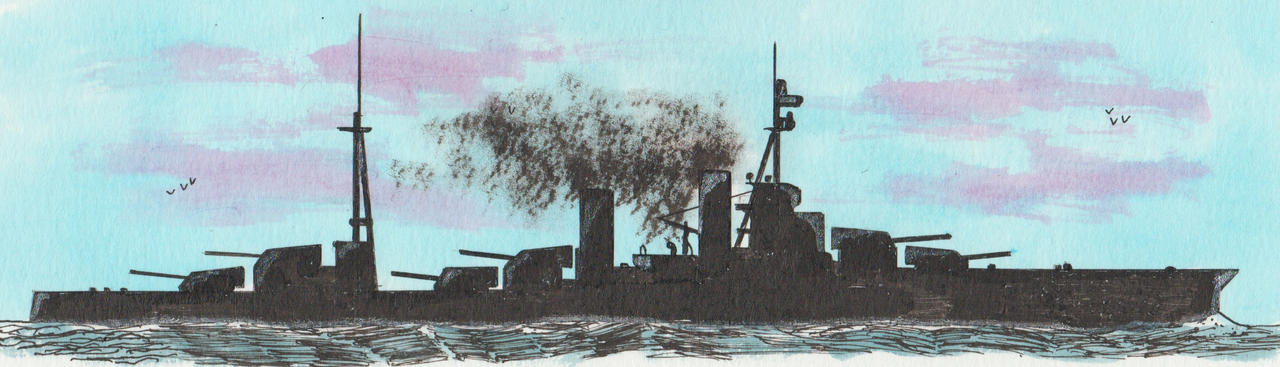
Ise-class. ©Warshipsresearch.blogspot.com
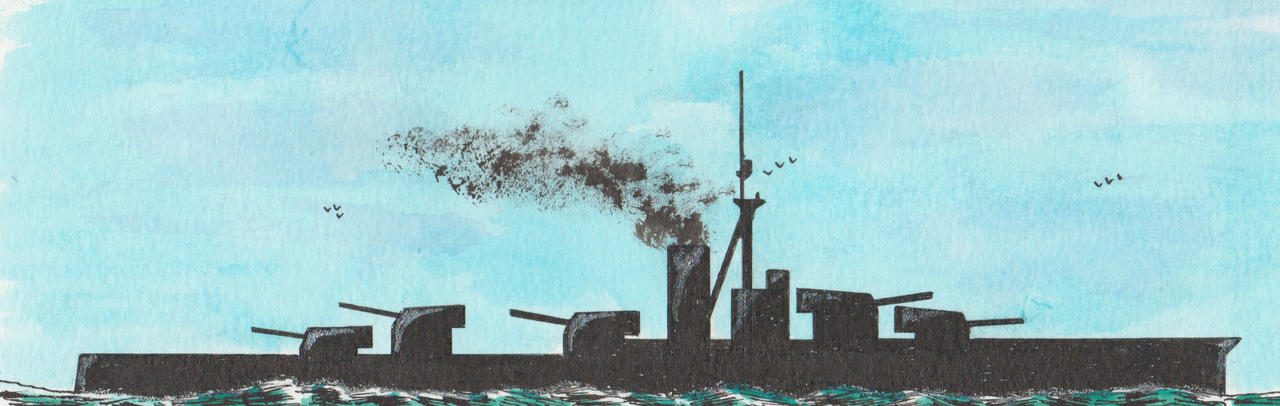
29,500 tons 20 knots 5x2-15" guns design. ©Warshipsresearch.blogspot.com.

Nagato-class. ©Warshipsresearch.blogspot.com
Displacement 25,000 tons. Speed 25 knots. Horsepower for deep condition 56,000 shp. Dimensions 565 (between perpendiculars)-600 (on deep water line) x 88 x 30 feet. Weight armament 3,610 ton. Weight protection 6,140 ton. Total weight armament and protection 9,750 ton. Armament 3x2-15”guns, 16-6” guns, 2-21” torpedo tubes. Protection consisted of: waterline belt 11”(maximum)-6” (intermediate)-3” (fore and after). Upper armour 6”. Battery armour 11”. Barbette armour 11”. Conning tower 11”. Protective deck .1.5”. F'esk or upper deck 1.5”. Underwater protection 1-1.5”.
The Ise-class preceded by Fuso-class succeeded by Nagato-class, built between 1915-1918 had a normal displacement of 1,762 tons , dimensions 683 x 94 x 29.4 feet, main armament of 6x2-35,56cm/14” guns, horsepower 40,000-45,000 shp and a speed of 23 knots.
The Nagato-class preceded by Ise-class succeeded by planned Tosa-class built, between 1917-1921 had a displacement of 32,720 (standard)-39,116 (full load) tons, dimensions 708 (over all) x 95.3 x 29.9 feet, horsepower 80,000 ship and speed26.5 knots.
Source
Hiraga Archives. An article titeld “The mutual influence of speed, armament, and protection on the battleship design”, written by Constructor-Lieutenant Yasushi Taji, 1929
Saturday, 8 February 2025
Japanese destroyer Momi 1918-1932 (1936)

©Warshipsresearch.blogspot.com
Part of Momi-class preceded by Kawakaze-class succeeded by Minekaze-class. Development of the Enoki second-class destroyers building authorized under the 8-4 Fleet Program and planned 28 units of which were 21 were built and the last seven as the Wakatake-class. Laid down by Yokosuka Naval Arsenal on 23 January 1918, launched on 10 June 1919, completed on 27 December 1919, stricken on 1 April 1932, experimental hulk Disposal Destroyer No. 2 and finally broken up before 1936.
Wednesday, 29 January 2025
Japanese pocket battleship Kadekuru mentioned in 1941

Japanese imaginary pocket battleship Kadekuru or Kazekuru. ©Warshipsresearch.blogspot.com

German pocket battleship Admiral Graf Spee. ©Warshipsresearch.blogspot.com
An item reported that 4 armoured ships with a displacement varying between 12,000-14,000 tons seemed to be nearing completition if one not already delivered. With the German pocket battleship look alike design but faster, slightly better armour and heavier armed with 6-12” and 12-5” guns. A French source mentioned that one was called Kadekuru and launched at Yokosuka, Japan on 1 June or in September 1939. Her name was perhaps a misspelling while it could not be identified with an existing Japanese word. Perhaps a misspelling of Syokaku, an aircraft carrier launched at Yokosuka on 2 June 1939.(1)
Note
1.The German panzerschiffe were reclassified as heavy cruisers in February 1940, they were called abroad pocket battleships. Deutschland-class built between 1929-1936 succeeded by Admiral Hipper-class and planned D-class cruisers,consisting of the Deutschland (renamed Lützow in 1940, Admiral Graf Spee and Admiral Scheer. Displacement of the Admiral Graf Spee 12,540 (standard)-16,280 (full load) tons and 2x3-28cm/11” guns. In 1942 identified as probably the destroyer Kurukaze (Non existing).
Source
Brassey’s Naval Annual 1941
Wednesday, 15 January 2025
Japanese heavy cruiser Ashigara 1925-1945
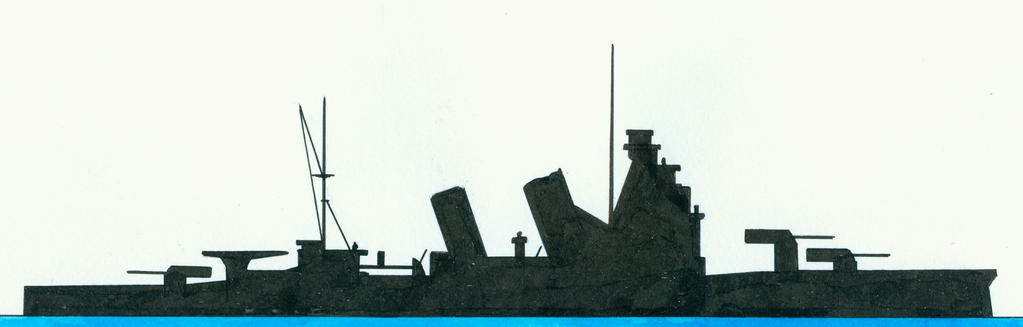
Aoba.©Warshipsresearch.blogspot.com

Sister ship Myōkō.©Warshipsresearch.blogspot.com
Part of Myōkō-class preceded by Aoba-class succeeded by Takao-class. Approved under the 1922–1929 Fleet Modernization Program. Ordered in 1924. Laid down by Kobe-Kawasaki Shipbuilding Yard on 11 April 1925, launched on 22 April 1982, commissioned on 20 August 1929, sunk by the British submarine HMS Trenchant in Bangka Strait on 8 June 1945 and stricken on 20 August 1945.
Sunday, 15 December 2024
Japanese battleship Ise 1915-1947
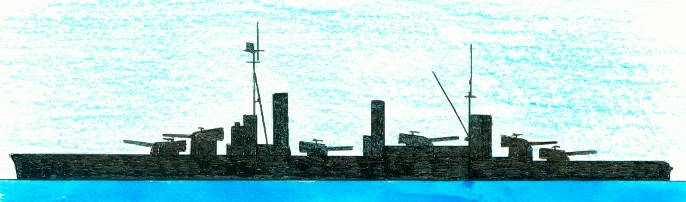
Fuso-class. ©Warshipsresearch.blogspot.com
Ise-class. ©Warshipsresearch.blogspot.com
Nagato-class. ©Warshipsresearch.blogspot.com
Part of Ise-class consisting of Ise and Hyuga, preceded by Fuso-class succeeded by Nagato-class. Ordered on 11 April 1913. Laid down by Kawasaki, Kobe, Japan on 10 May 1915, launched on 2 November 1916, completed on 15 December 1917, modernized between 1928-1929 and 1931-1932, reconstructed between 1934-1937, converted into a hybrid aircraft carrier between 23 February 1943-8 October 1943, sunk during an air attack on 28 July 1945, stricken on 20 November 1945 and broken up en situ between 9 October 1946-4 July 1947.
Thursday, 12 December 2024
American whaler Commodore Morris visited Navigator’s Islands according to the newspaper The Polynesian dated 13 November 1852
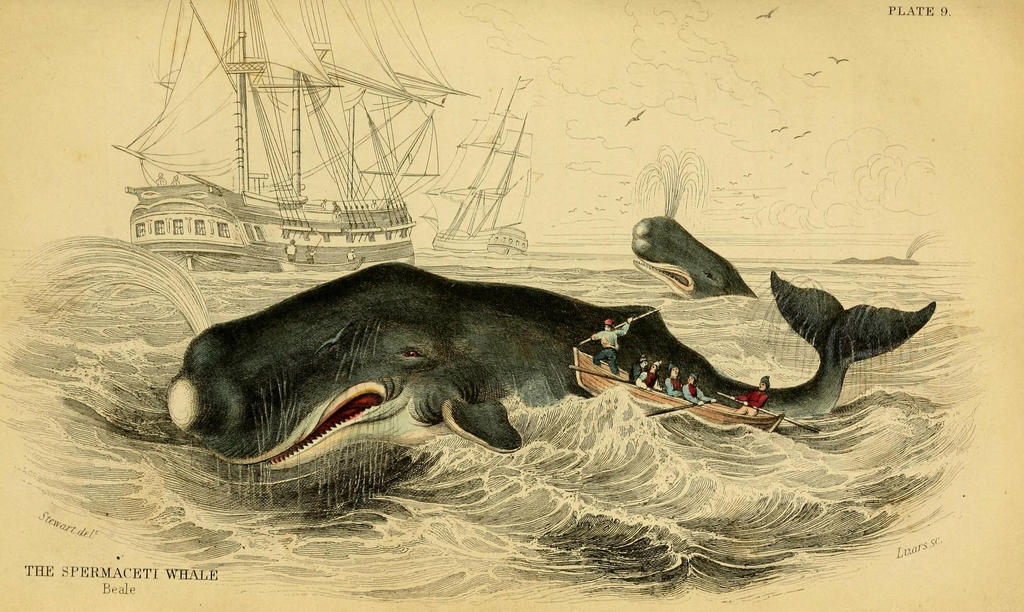
An item referred to master C. Bell who reported the presence on 10 June at Apia, Navigator’s Islands the American whaler Commodore Morris master Lawrence of Falmouth 34 months out 1,150 barrels sperm oil to cruise on the line
Tuesday, 10 December 2024
Tunisian privateer under rais Ali Arnaout in 1793
Date 19 May 1793. Type of vessel barque. Number of rowing benches 0. Number of guns 18. Number of swivels 0. Number of crew 140. Port of departure Porto Farina. Owner government.
Source
Pierre Grandchamp. Documents relatif aux Corsaires Tunisiens (2 Octobre 1777-4 Mai 1825), Tunis, 1925.
Sunday, 25 August 2024
Romanian river monitor Lahovary in 1908
Dimensions 62 x 10 x 1.8 metres. Displacement 581 tons. Horsepower 1,800 hp. Speed 14 knots. Armament 5-12cm guns, 4-4.7cm guns and 2 machine guns; delivered by Czechslovakian Skoda. Crew numbers 80 men. Built at Stabilimento tecnico triestino, Austro-Hungary built, disassembled, transported to Galatz, Romania, assembled and launched in 1907. Remarks Wireless telegraph, spotlights, 25-65 mm thick armour belt and turrets protected by 2-3cm thick armour.
Source
“Die Donauflotillen”, in Die Flagge. Organ des Vereines zur Förderung der österreichischen Schiffahrt, nr. 11, 1908.
Thursday, 1 August 2024
Algerian training ship MRA La Soummam 937 2006-

Great Belt Bridge 31 July 2024
Algeria-flagged, MMSI 65076000 and call sign 7TGY2. Launched by Hudong-Zhong shipyard, Shanghai, China on 11 March 2005, completed on 16 August in 2006.
German cruiser Prinz Eugen probably intending to conduct trials according to the U.S. Joint Intelligence Committee. Daily summary dated 18 December 1941
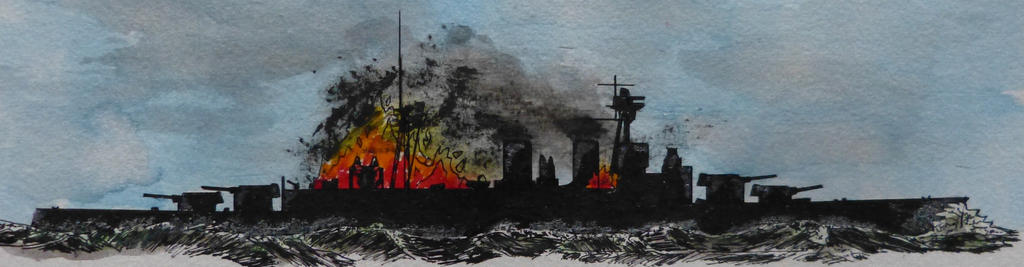
Hood. Warshipsresearch.blogspot.com
An item referred to the SPENAVO London reporting that the German light cruiser Prinze Eugen (1) which was with the German battleship Bismarck (2) when the British battle cruiser HMS Hood (3) was sunk, left the drydock and berthed alongside a pier at Brest, France. She was several times wile under repair and believed first to conduct trials before being ready for service.
Notes
1. Of the Admiral Hipper-class heavy cruisers, preceded by Deutschland-class. Laid down by Germaniawerft, Kiel on 23 April 1936, launched on 22 August 1938, commissioned on 1 August 1940, decommissioned on 7 May 1945, surrendered on 8 May 1945, handed over to the USA and sunk on 22 December 1946 during nuclear tests.
2. Part of Bismarck-class, preceded by Scharnhorst-class succeeded by planned H-class, built as an answer on the French Richelieu-class. Ordered as the Ersatz Hannover under contract ‘F”. Laid down by Blohm&Voss, Hamburg, Germany on 1 July 1936, launched on 14 February 1939, commissioned on 24 August 1940 and scuttled after a battle on 27 May 1941 in the North Atlantic.
3. Nicknamed Mighty Hood. Pennant 51. Her building at the shipyard of John Brown&Company, Clydebank, Scotland was ordered on 7 April 1916, laid down on 1 September, launched on 22 August 1918, commissioned on 15 May 1920 as world largest warship, sunk on 24 May 1941 during her battle with the German battleship Bismarck. The only one of the four projected Admiral class battle cruisers lost by an insufficient design despite the modifications after the Battle of Jutland (31 May-1 June 1916).
Source
Map Room Papers (Roosevelt Administration) mr0422a. U.S. Joint Intelligence Committee. Daily summary No. 8 dated 18 December 1941.
Saturday, 27 July 2024
Japanese submarines sighted off Portuguese Timor according to the U.S. Joint Intelligence Committee. Daily summary dated 18 December 1941
An item referred to SPENAVO London reporting that in the vicinity of Portuguese Timor two [Japanese] submarines were sighted of which Australia claimed to have sunk one.
Source
Map Room Papers (Roosevelt Administration) mr0422a. U.S. Joint Intelligence Committee. Daily summary No. 8 dated 18 December 1941.
Thursday, 18 July 2024
Enemy submarine contacts made off Hawaii according to the U.S. Joint Intelligence Committee. Daily summary dated 20 December 1941
An item rereferred to CINCPAC reporting two doubtful submarine contacts that day off Hawaii.
Source
Map Room Papers (Roosevelt Administration), 1942 - 1945. U.S. Joint Intelligence Committee. Daily summary No. 10 dated 20 December 1941.
Monday, 10 June 2024
Japan claimed to have destroyed at least to have 9 Allied submarine according to the U.S. Joint Intelligence Committee. Daily summary dated 22 December 1941
An item referred to the Japanese press reporting that 9 Allied submarines were sunk and 4 possible without supplying their nationality. A Japanese destroyer sunk the day before one submarine picking up 32 survivors.
Source
Map Room Papers (Roosevelt Administration), 1942 - 1945. U.S. Joint Intelligence Committee. Daily summary No. 12 dated 22 December 1941.
Wednesday, 17 April 2024
Japanese heavy warships withdrawn from the Bay of Bengal-Malaya area according to the U.S. Joint Intelligence Committee. Daily summary dated 22 April 1942
An item reported that all Japanese heavy warships including the aircraft carriers seemed to be withdrawn from the Bay of Bengal-Malaya area. The J.I.C. commented that the major naval operations in this area seemed to be completed and probably transferred to another area probably Melanesia to start on short notice.
Source
Map Room Papers (Roosevelt Administration), 1942 - 1945. U.S. Joint Intelligence Committee. Daily summary No. 133 dated 22 April 1942.
Thursday, 4 April 2024
British screw steam dispatch vessel HMS Iris 1875-1905

Part of Iris-class dispatch vessels later redesignated 2nd-class protected cruisers succeeded by Leander-class. Designed by William White (1) under direction of Nathaniel Barnaby.(2) Laid down by Pembroke Dockyard on 10 November 1875, launched on 12 April 1877, completed in April 1879 and sold to be broken up on 11 July 1905.
Notes
1. Designer chief constructor of the Royal Navy (1885-1902) Sir William White (2 February 1845 Plymouth)-27 February 1913 London).
2. Designer chief constructor of the Royal Navy (1872-1885) Sir Nathaniel Barnaby (25 February 1829 Chatham-16 June 1915 London.
Sources
Francis Elgar. The Royal Navy 1872-1880 in a series of illustrations. Lithographed in colours. From original drawings by W.F. Mitchell, esquire. Portsmouth, December 1880.
Warshipsresearch.blogspot.com
Thursday, 21 March 2024
French warships Jean-Bart, Primaguet and Gloire lying at Casablanca, French Morocco according to the U.S. Joint Intelligence Committee. Daily summary dated 20 April 1942
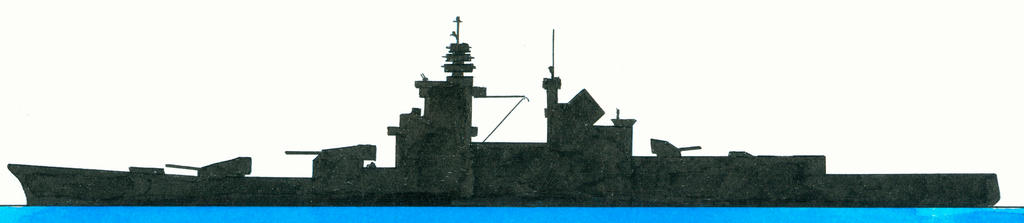
Richelieu-class battleships
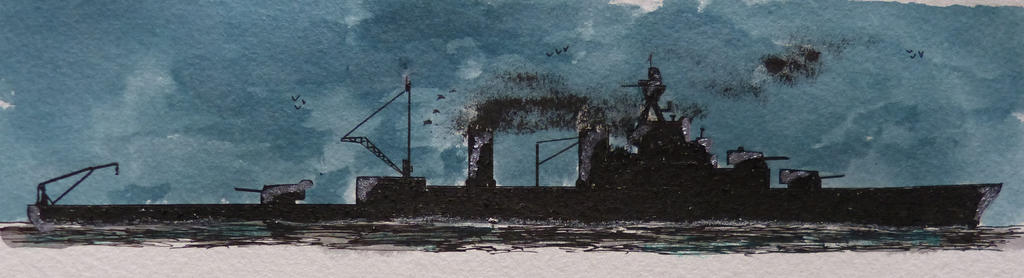
La Galissonnière-class cruisers George Leygues. Montcalm and Gloire
An item reported changes of the positions of Vichy French warships at Casablanca, French Morocco that the harbour defence was prepared to counter a attack from sea. In the harbour were the battleship Jean Bart [report18 April stated Richelieu], light cruisers Primaguet and Gloire and 3 heavy destroyers lying.
Source
Map Room Papers (Roosevelt Administration), 1942 - 1945. U.S. Joint Intelligence Committee. Daily summary No. 131 dated 20 April 1942
Tuesday, 20 February 2024
Number of enemy submarines positioned on the West Atlantic Ocean unchanged according to the U.S. Joint Intelligence Committee. Daily summary dated 25 April 1942
An item reported that the number of enemy submarines on theWest Atlantic Ocean was unchanged with the major activities between the latitude of Cape Hatteras north.
Source
Map Room Papers (Roosevelt Administration), 1942 - 1945. U.S. Joint Intelligence Committee. Daily summary No. 136 dated 25 April 1942
Subscribe to:
Posts (Atom)