Translate

Showing posts with label New Guinea. Show all posts

Saturday, 22 August 2026

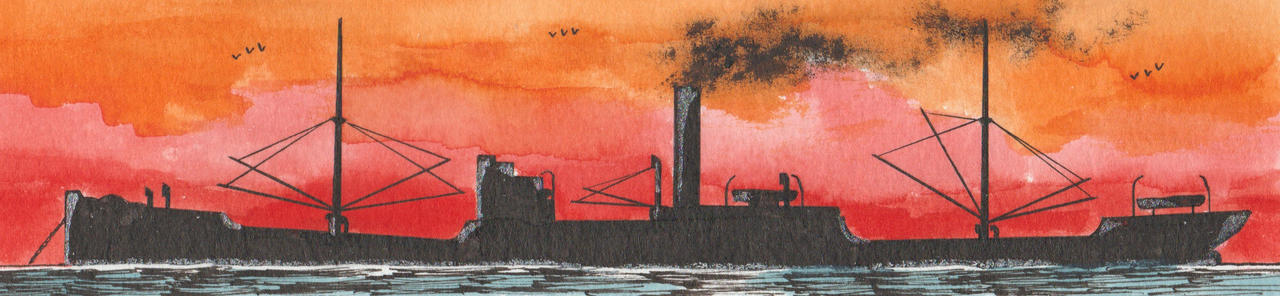
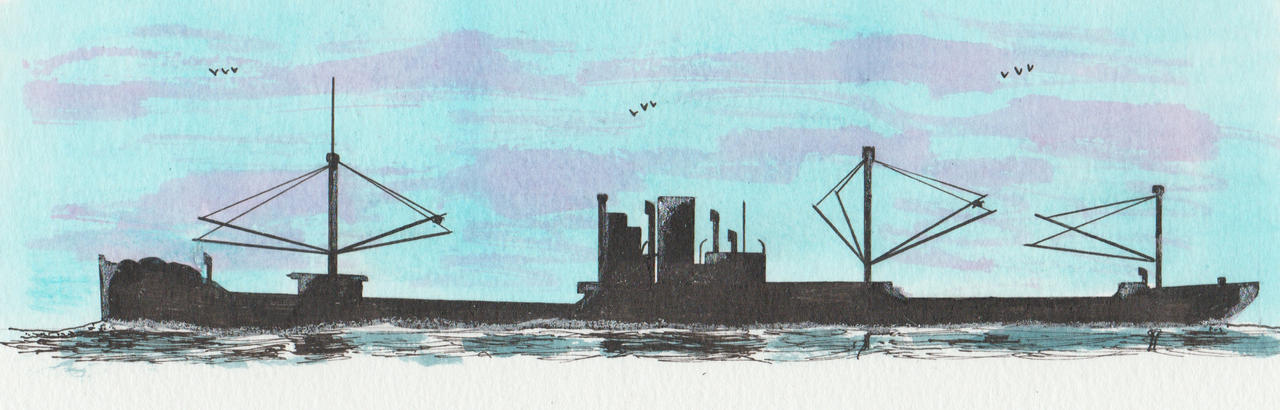
Japanese cargo ship (ex-Keifuku Maru 1921-1938) Keihuku Maru or Keifuku Maru 1938-1943

©Warshipsresearch.blogspot.com

Similar Keihuku Maru, Syokei Maru and Tokozyu Maru. Call sign JPHD. Homeport Tokyo, Japan. Owner in 1939 Department of Railways. Built by Mitsubishi Zosen Kaisha Ltd., Kobe, Japan in 1921, requisitioned by the army as transport and sunk at Rabaul, (Papua) New Guinea during an Allied air attack on 5 January 1943. Gross tonnage 3,620 tons, under deck 2,943 tons, net tonnage 1,382 tons, deadweight 690 tons and as dimensions 360.0 x 46.0 x 28.0 x 15 (loaded) feet. Steam turbine propulsion, 2 screws and speed 17 (normal cruising)-18.5 (maximum) knots. Designed for near seas ferry service. 

Monday, 10 August 2026

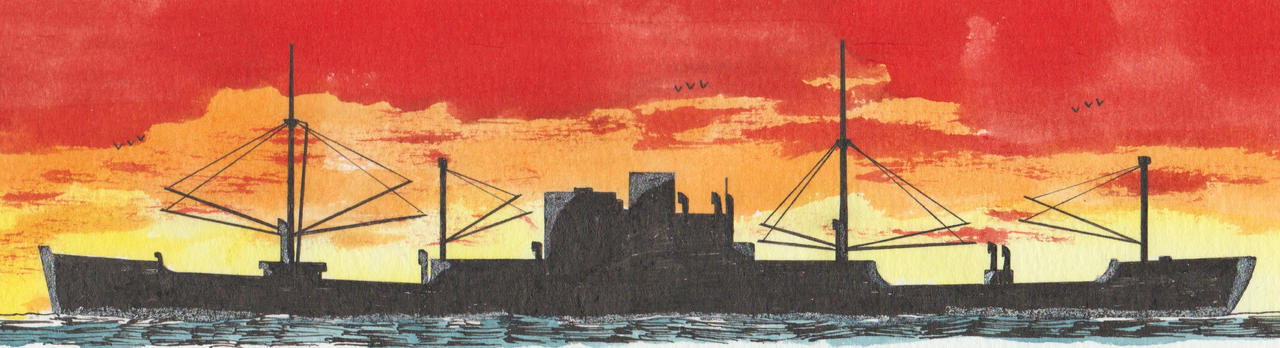
Japanese cargo ship Toyei Maru 1936-1938 and Toei Maru 1938-1944

Kikukawa©Warshipsresearch.blogspot.com

Similar Kikukawa Maru (1936), Kirikawa Maru (1937), Matukawa Maru/Matsukawa Maru (1938), Momokawa Maru (1939), Nippo Maru (1936), Toei Maru (1936) and Toho Maru (1937). Call sign JNWL. Owner Yamaoto Kisen K.K., Kobe, Japan. Laid down by by Kawasaki Dockyard Co., Kobe, Japan on 4 November 1936, launched on 13 March 1937, completed on 19 1937, requisitioned by the army as transport alloted No. 542 in 1938, returned to owners in 1939, requistioned by the navy as a general transport on 16 July 1941, registered as auxiliary transport on 15 October 1941, torpedoed and sunk by American submarine USS Seahorse underway from Palau towards Rabaul on 1 February 1944 and stricken on 31 March 1944. Gross tonnage 4,004 tons, under deck ? tons, net tonnage 2,318 tons and as dimensions 353.6 x 50.00 x 27.6 x 8’6” (light)-23” (loaded) feet. Steam turbine propulsion, horsepower333 nhp, one screw, coal bunker capacity 1,000 tons and range slightly less than 10,000 nautical miles/12 knots and speed 12-14 (normal cruising)-16 (maximum) knots. 

Saturday, 23 May 2026

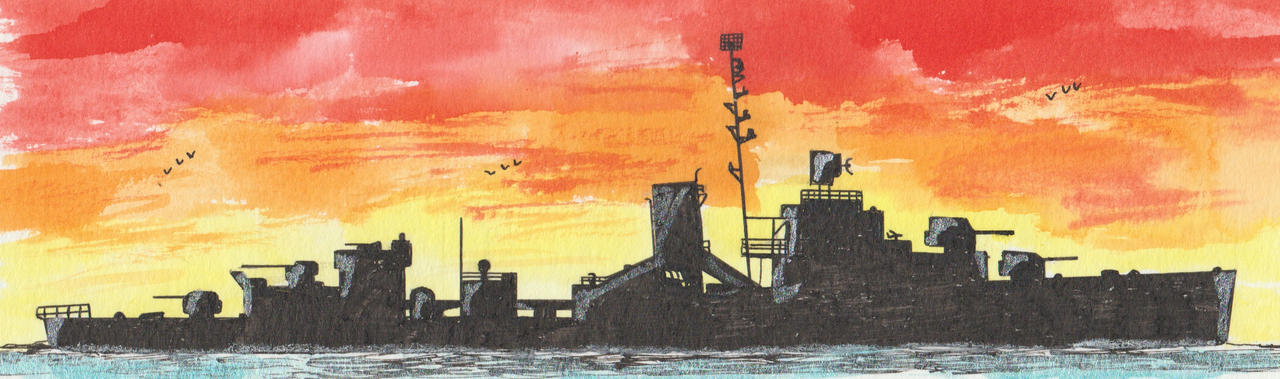
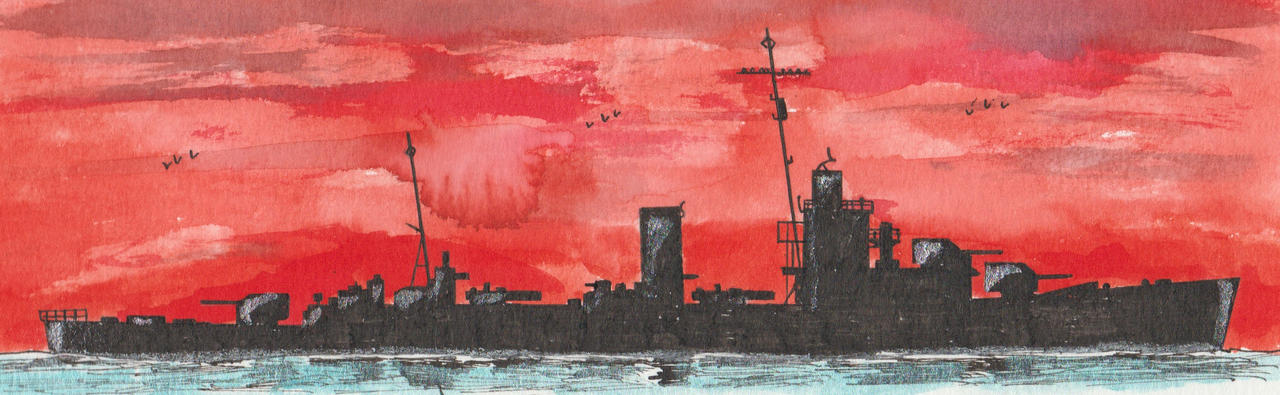
American destroyer USS Henley DD-391 1935-1943

Gridley-class. ©Warshipsresearch.blogspot.com

Bagley-class. ©Warshipsresearch.blogspot.com

Somers-class. ©Warshipsresearch.blogspot.com

Part of Bagley-class preceded by Gridley-class succeeded by Somers-class. Totally eight built between 1935-1937. Laid down by Mare Island Navy Yard on 28 October 1935, launched on 12 January 1937, commissioned on 14 August 1937 and torpedoed sunk by th Japanese submarine Ro-108 off Finschafen, New Guinea on 3 October 1943. 

Thursday, 26 March 2026

Japanese aircraft attacked Allied fleet off New Guinea according to the U.S. Joint Intelligence Committee. Daily summary dated 27 February 1942

An item referred to a statement of the Japanese Imperial Headquarters at Tokyo, Japan reporting that Japanese naval aircraft attacked on 21 February several hundred miles north east of New Guinea an Allied fleet damaging or even possible sinking an aircraft carrier and heavily damaging a second ship.

Source

Map Room Papers (Roosevelt Administration), 1942 - 1945. MR0423. U.S. Joint Intelligence Committee. Daily summary No. 79 dated 27 February 1942

Monday, 19 January 2026

Japanese transferring Rabaul into major base according to the U.S. Joint Intelligence Committee. Daily summary dated 24 February 1942

An item reported that according to the J.I.C. Japanese air and naval reinforcements kept arriving in the Rabual area which was rapidly growing into a major advanced base.

Source

Map Room Papers (Roosevelt Administration), 1942 - 1945. MR0423. U.S. Joint Intelligence Committee. Daily summary No. 76 dated 24 February 1942

Friday, 24 October 2025

Japanese cargo ship Tenyo Maru 1934-1942

©Warshipsresearch.blogspot.com

Similar Akiura Maru, Huzikawa Maru, Kazuura Maru, Kinugawa Maru, Kumagawa Maru, Mogamigawa Maru, Sinanogawa Maru and Tenyo Maru. Call sign JWHJ. Laid down by Mitsubishi Jukoygo K.K., Nagasaki, Japan on 3 July 1934, launched on 22 January 1935, requisitioned by the navy on 9 September 1941, conversion at the Harima shipyard into a minelayer was completed on 31 October 1941, sunk during an American air attack off Lae, New Guinea on 10 March 1942 and stricken on 1 April 1942. Gross tonnage 6,843 tons, under deck 6,068 tons, netto tonnage 4,867 tons and as dimensions 435.0 x 58.5 x 32.8 x 9 (light)-26 (loaded) feet. Diesel propulsion, single screw, horsepower 840 nhp, oil bunker capacity 2,400 tons, range 50,000 nautical miles/13.5 knots and speed 13.5 (normal cruising)-16 (maximum) knots. 

Wednesday, 15 October 2025

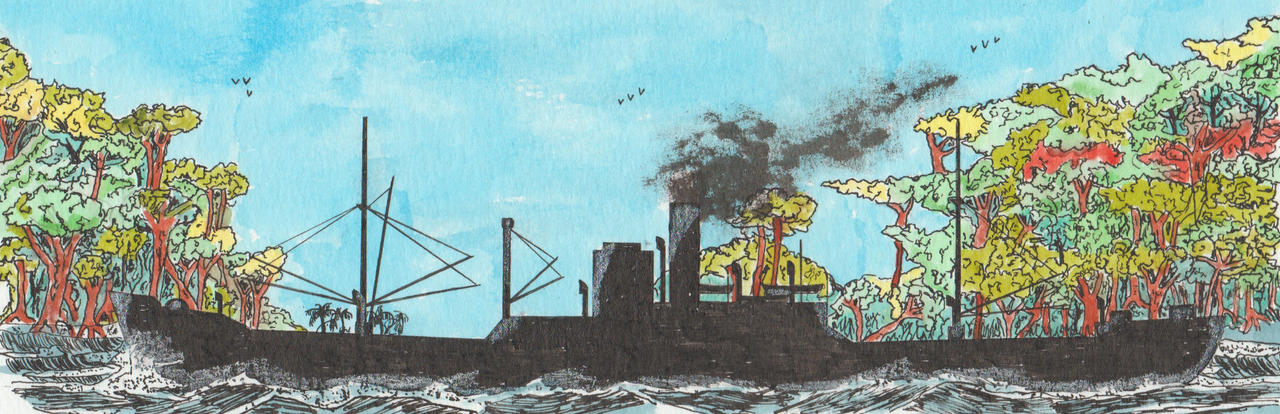
Japanese cargo ship (ex-Kohwa Maru or Kowa Maru 1928-1934) Keisyo Maru or Keisho Maru 1934-1943

©Warshipsresearch.blogspot.com

Call sign JRRB. Laid down by Uraga Dock Co. Ltd., Uraga, Japan on 5 October 1928, launched on 11 March 1929, completed on 27 June 1929, renamed on 22 December 1934, requisitioned by the navy as a transport on 8 July 1941, sunk in an American air attack on Rabaul on 12 October 1943 and stricken on 1 December 1943. Gross tonnage 5,879 tons, under deck 5,380 tons, netto tonnage 3,582 tons and as dimensions 417.0 x 56.0 x 31.7 x 8 (light)-25 (loaded) feet. Diesel propulsion, horsepower 1,170 nhp, bunker capacity 2,300 ton oil including deep tanks, range nautical 50,000 miles/12.5 knots and speed 12.5 (normal cruising)-15.5 (maximum) knots. 

Saturday, 13 September 2025

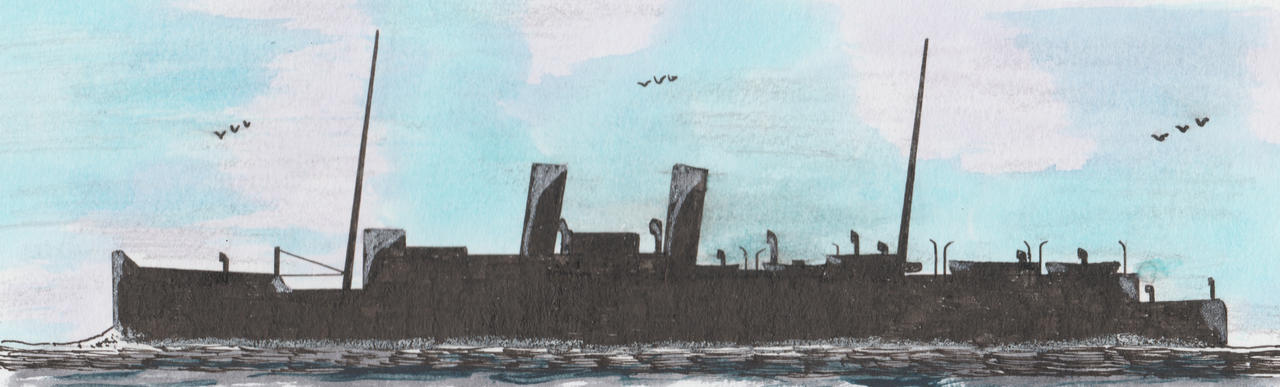
German survey vessel SMS Planet visited the Dutch East Indies in 1906

The Jaarboek van de Koninklijke Nederlandsche Zeemacht 1905-1906 reported that the German survey vessel SMS Planet visited Padang on 25 July 1906, Tandjong Priok between 3-7- August 1906, Makasser on 18 August 1906 and Amboina, Dutch East Indies on 29 August 1906. The Dutch newspaper Bataviaasch nieuwsblad dated 21 May reported that she left Kiel, Germany on 21 January for a scientific deep sea expedition in the South Seas. Via Capetown, South Africa, Madagascar, Mauritius, Ceylon, west coast of Sumatra towards Batavia and Macassar finally completing her voyage in September at Matopi. The De locomotief dated 4 October 1906 referred to a tiding dated Ambon 16 September that the German warship which should arrive on 6 August finally came on 29 August. It was however a big disappointment. Instead off one of the largest en newest German warships with a vip on board came a small survey vessel. The Sumatra-bode dated 25 July reported her arrival underway from Colombo, Ceylon to the South Seas, commanding officer captain lieutenant Lebahn. The Bataviaasch nieuwsblad dated 4 August reported her arrival coming from Emmahaven underway to the South Seas, armed with 5 guns and a crew numbering 8 officers and 85 men. The Soerabaijasch handelsblad dated 4 August reported that she was underway from Malacca to Batavia probably arriving on 4 August at Tandjong Priok. From there she planned to leave on 8 August via Celebes to New Guinea for surveying.(1)

Note

1. Launched at AG Weser, Bremen, Germany on 2 August 1905, commissioned on 16 November 1905 and scuttled off the island of Yap, Caroline Islands [Yap State, part of the Federate States of Micronesia] to prevent capture by the Japanese on 7 October 1914. German colonial empire included German New Guinea with protectorates, German Samoa and the Chinese Kiatschou Bay Leased Territoy. 

Friday, 12 September 2025

Japanese cargo ship Akiura Maru 1937-1944

©Warshipsresearch.blogspot.com

Similar Akiura Maru, Huzikawa Maru, Kazuura Maru, Kinugawa Maru, Kumagawa Maru, Mogamigawa Maru, Sinanogawa Maru and Tenyo Maru. Call sign JMKM. Laid down on 3 December 1937, launched by Mitsubishi Jukoygo K.K., Nagasaki, Japan on 3 May 1938, completed on 20 August 1938,requistioned by the army on 22 September 1941, served as troop transport Assigned UJA No. 896 until she was sunk by the American submarine USS Balao (SS-285) north west of Manokwarki, New Guinea on 28 February 1944. Gross tonnage 6,304 tons, netto tonnage 4,848 tons and as dimensions 437.4 x 58.5 x 32.8 x 9 (light)-26 (loaded) feet. Diesel propulsion, single screw, horsepower 840 nhp, oil bunker capacity 2,400 tons, range 50,000 nautical miles/13.5 knots and speed 13.5 (normal cruising)-16 (maximum) knots. 

Saturday, 28 June 2025

Aircraft sighted nothing during flights Rabaul-Moresby according to the C.O.I.C. Daily Summary of Operational-Intelligence dated 1 August 1941

An item reported a transit flight by a Catalina between Rabaul-Moresby, New Guinea and by an Empire Flying Boat between Moresby-Rabaul without sighting something.

Source

Royal Australian Navy Website. The Combined Operational Intelligence Centre (COIC) supplied so-called 'hot' intelligence to the Central War Room (CWR), New Zealand and Singapore. Website https://seapower.navy.gov.au/publications

Tuesday, 17 June 2025

Operating ASDIC equipment by Sub Lieutenant Dudley Ross and Able Seaman Robert Stutsell on board of HMAS ML426 at New Guinea in 1944

Description: Anti-submarine equipment of HMAS ML426 (ML is motor launch) a ship built in Australia and known as the Fairmile. Sub Lieutenant Dudley Robin Ross, Royal Australian Naval Volunteer Reserves, on the right, is carrying out an attack on an enemy submarine using the ASDIC (Anti Submarine Detection Investigation Committee) equipment in the wheelhouse. On the left, S5176 Able Seaman Robert Myles John Stutsell is relaying the report through to the bridge and steering the Fairmile towards the indicated location of the submarine. Stutsell was trained for this work in England and also served with the Royal Navy.

Source

Wednesday, 14 May 2025

Japanese cargo ship Kinkazan Maru or Kinkasan Maru 1910-1943

©Warshipsresearch.blogspot.com

Call sign JYKD. Laid down by Sir Raylton Dixon&Co. Ld., Cleveland Dockyard, Middlesbrough, England with yard number 559 in end 910, launched on 29 April 1911, completed in July 1911, requisitioned by the army on 2 October 1941, converted into a troop transport and torpedoed and sunk by the American submarine USS Peto (SS-265) on 1 October underway prom Palau towards Rabaul. Gross tonnage 4,891 ton, under deck 4,535 ton, net tonnage 2,615 ton and as dimensions 386.0x 53.5 x 27.2 x 14 (light)-24 (loaded) feet. Reciprocating propulsion, single screw. Horsepower 417 nhp, coal bunker capacity 850 ton, range 5,500 nautical miles/9.5 knots and speed 9.5 (normal cruising 56 rpm)-10.5 (maximum 67rpm) knots.

Monday, 31 March 2025

Possible enemy submarine sighted off Salahuau, New Guina according to the U.S. Joint Intelligence Committee. Daily summary dated 13 January 1942

An item reported the possible sighting of an enemy submarine off Salahuau, New Guina.

Source

Map Room Papers (Roosevelt Administration), 1942 - 1945. U.S. Joint Intelligence Committee. Daily summary dated 13 January 1942 No. 34 

Friday, 28 February 2025

Japanese employing more activities in the Pacific according to the U.S. Joint Intelligence Committee. Daily summary dated 24 January 1942

An item reported that the Japanese naval forces in the Truk area seemed to have a larger operation area then earlier assumed namely attacks and landings between Borneo and New Guinea creating a continuous from Borneo eastward. Submarines copperating with aircraft were to defend Japan against surprise naval raids. In the meantime arrived convoys with reinforcements Luzon, Philippines and Malaya.

Source

Map Room Papers (Roosevelt Administration), 1942 - 1945. U.S. Joint Intelligence Committee. Daily summary No. 45 dated 24 January 1942. 

Monday, 10 February 2025

The positions of the Japanese aircraft carriers according to the U.S. Joint Intelligence Committee. Daily summary dated 22 January 1942

An item reported the estimated positions of the Japanese aircraft carriers: Cardiv 1 and 5 near Rabaul, New Guinea, Cardiv 2 east of the Philippines, Cardiv 3 between Japan and the Phulippines and the Cardiv 4 between the Mandates and Yokosuka.

Source

Map Room Papers (Roosevelt Administration), 1942 - 1945. U.S. Joint Intelligence Committee. Daily summary No. 43 dated 22 January 1942

Tuesday, 4 February 2025

Australian bombers attacked Japanese warships at Rabaul, New Guinea according to the U.S. Joint Intelligence Committee. Daily summary dated 28 January 1942

An item reported that Australian R.A.A.F. bombers attacked Rabaul, New Guinea possible hitting two Japanese warships starting fires. Despite heavy anti aircraft fire the bombers returned safely.

Source

Map Room Papers (Roosevelt Administration), 1942 - 1945. U.S. Joint Intelligence Committee. Daily summary No. 49 dated 28 January 1942

Tuesday, 14 January 2025

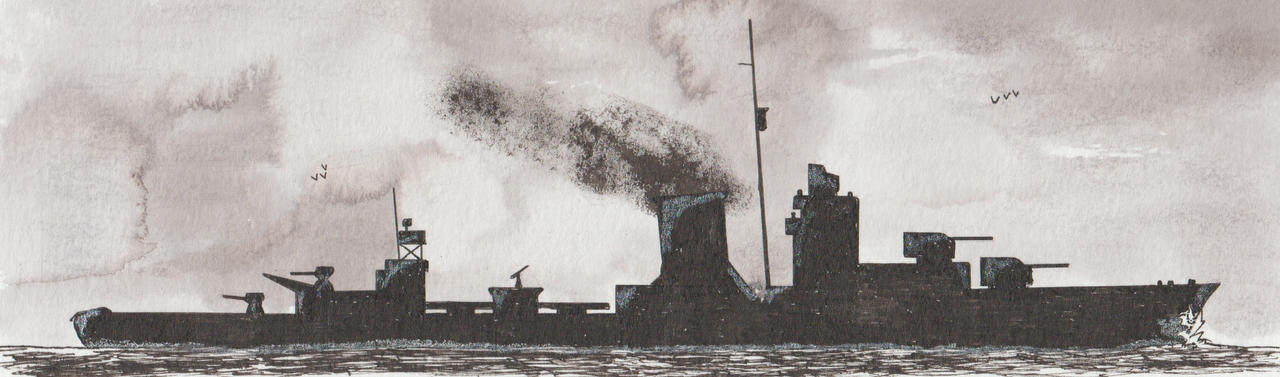
Japanese light cruiser Tenryū 1917-1942

Tenryū . ©Warshipsresearch.blogspot.com

Kuma-class. ©Warshipsresearch.blogspot.com
American Omaha-class. ©Warshipsresearch.blogspot.com

Part of Tenryū-class cruisers preceded by Chikuma-class succeeded by Kuma-class. Planned 8, cancelled 6 and completed 2. Designed as flagship for destroyer flotillas in 1915, ordered in 1915 Fiscal Year. Soon became clear to slow and outgunned by American cruisers like the Omaha-class. Between 1935-1936 considered to convert into a dedicated anti aircraft/anti submarine platforms, funding approved for Fiscal Year 1937, cancelled lacking building capacity and in 1983-1939 again cancelled. Laid down by Yokosuka Naval Arsenal on 7 May 1917, launched on 11 March 1918, commissioned on 20 November 1919, sunk by American submarine USS Albacore off Madang, New Guinea on 91 December 1942 and stricken on 20 January 1943. 

Tuesday, 12 November 2024

Large number of Japanese warships and transports in harbour of Rabaul according to the U.S. Joint Intelligence Committee. Daily summary dated 25 January 1942

An item reported that aircraft sighted 3 Japanese cruisers, 1 aircraft carrier, 1 destroyer and 11 transports in the harbour of Rabaul [Papua New Guinea].

Source

Map Room Papers (Roosevelt Administration), 1942 - 194

Monday, 23 September 2024

Japanese ships damaged in Australian air attack on Rabaul according to the U.S. Joint Intelligence Committee. Daily summary dated 30 January 1942

An item reported a third attack on Rabaul by aircraft. Australian R.A.A.F. bombers scored hits on 1 or 2 ships.

Source

Map Room Papers (Roosevelt Administration), 1942 - 1945. U.S. Joint Intelligence Committee. Daily summary No. 51 dated 30 January 1942

Sunday, 15 September 2024

Japanese admiral Yamamoto visited Tokyo, Japan according to the U.S. Joint Intelligence Committee. Daily summary dated 30 January 1942

Maritime Museum, Hamburg, Germany

An item reported that -although unconfirmed- the Japanse commander-in-chief of the Combined Fleet admiral Yamamoto visited Tokyo, Japan.(1)

Note

1. Isoroku Yamamoto (4 April 1884 Nagaoka, Niigata-18 April 1943 near Pangua, Bougainville, Territory of New Guinea), rank Marshall Admiral, conceived the original plan of the attack on Pearl Harbor, Hawaii, USA on 7 December 1941.

Source

Map Room Papers (Roosevelt Administration), 1942 - 1945. U.S. Joint Intelligence Committee. Daily summary No. 51 dated 30 January 1942