Translate

Showing posts with label Sierra Leone. Show all posts

Thursday, 17 September 2026

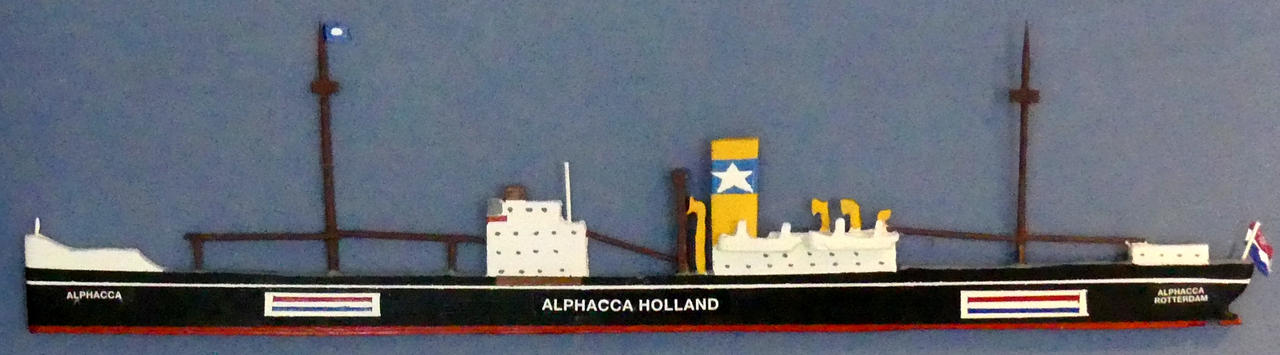
Dutch cargo steamship Alphacca 1928-1942

Exhibition Varen voor Vrijheid. Museum Katwijk

Launched with yard number 1004 by Wm. Gray&Co. Ltd., Sunderland, England on 17 May 1928, delivered to owner/manager Van Nievelt, Goudriaan&Co’s Stoomvaart Maatschappij N.V., Rotterdam, Netherlands on 4 July 1928 and torpedoed and sunk by the German submarine U 505 underway from Cape Town, South Africa towards Freetown, Sierra Leone 150 miles south of Cape Palmas (West-Africa)on 4 April 1942. 

Tuesday, 11 August 2026

British cargo ship Fabian lost according to the War Cabinet Weekly Résumé No. 64 of the Naval, Military and Air Situation 14-21 November 1940

An item reported the loss on 16 November of the British cargo ship Fabian, tonnage 3,059 tons, U/B sunk by a submarine on the position 350 miles south south west of Freetown, Sierra Leone. Not part of a convoy. Of the crew were 6 men missing.

Source

National Archive UK. CAB-66-13-37. 

Monday, 10 August 2026

British cargo ship Kohinur lost according to the War Cabinet Weekly Résumé No. 64 of the Naval, Military and Air Situation 14-21 November 1940

An item reported the loss on 15 November of the British cargo ship Kohinur, tonnage 5,168 tons, underway from Glasgow, Scotland to Takoradi, Gold Coast [Ghana] sunk by a submarine on the position 220 miles south of Freetown, Sierra Leone. Not part of a convoy. Of the crew 35 men were landed at Freetown.

Source

National Archive UK. CAB-66-13-37. 

Friday, 8 May 2026

British destroyer HMS Nestor visited the Azores in September 1941

In his letter No. 1200dated Lisbon 5 September 1941 reported the German naval attaché in Portugal to the Oberkommando der Kriegsmarine at Berlin referring to an Italian source at Ponta Delgada that the British destroyer HMS Ebotor [misspelling] after loading 220 ton nafta on 2 September departed towards Freetown [Sierra Leone].(1)

Note

1. The British destroyer HMS Nestor G02. Part of N-class preceded by Tribal-class succeeded by L- and M-classes. Laid down by Fairfield Shipbuilding and Engineering Company Limited, Scotland in 1939, launched on 9 July 1940, commissioned on 3 February 1941 and scuttled on 16 June 1942 after being damaged in an air attack on 15 June 1942 while underway from Haifa towards Malta but the convoy changed course to Malta with the attack off Greece.

Source

Bundesarchive. RM 11-17. German naval attaché in Portugal. 

Thursday, 26 February 2026

British cargo ship ss Doric Star lost in December 1939


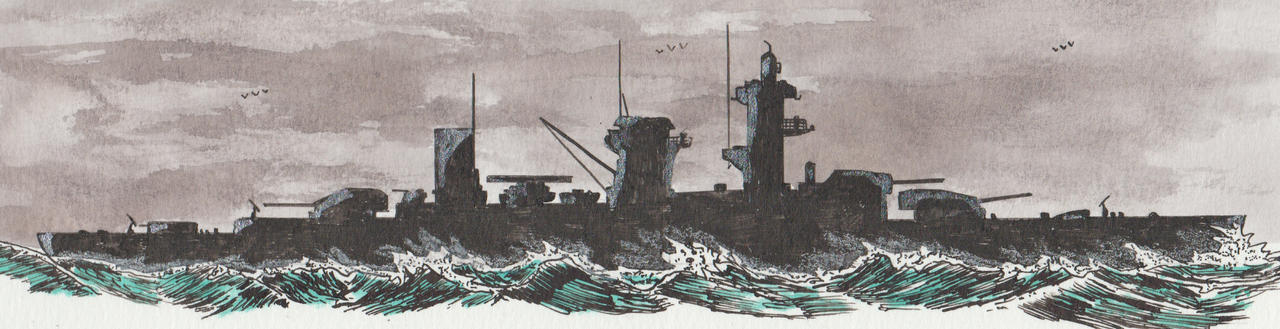
German Admiral Graf Spee original appearance. ©Warshipsresearch.blogspot.com

German Admiral Graf Spee disguised appearance. ©Warshipsresearch.blogspot.com

An item reported that the 10,086 tons cargo ship ss Doric Star (1) loaded with general and refrigerated cargo departed Capetown, South Africa on 28 November bound for Freetown, Sierra Leone was reported as being by artillery fire from a battleship 600 miles east south east of St. Helena in the afternoon of 2 December and presumed to be lost.(1)

Notes

1. Launched by Lithgows, Port Glasgow, Scotland with yard number 731 on 24 February 1921, completed in 1922, taken into service as Doricstar in 1922, renamed Doric Star in 1929 and sunk on 2 December 1939 after leaving Auckland, New Zealand in November 1939.

2. She was destroyed by the German pocket battleship Admiral Graf Spee and not by her sister ship Admiral Scheer. Part of Of the Deutschland-class panzerschiffe, nicknamed pocket battleships by the Allied forces, later classified as heavy cruisers preceded by the Admiral Hipper-class. Main armament 2x3-28cm/11” guns, on fore and aft ship one turret. Building ordered as the Ersatz Braunschweig. Laid down on the Reichmarinewerft, Wilhelmshaven, Germany with yard number 125 on 1 October 1932, launched on 30 June 1934, commissioned on 6 January 1936, successful in destroying 50.089 gross tonnage of merchant ships, participated in the Battle of the Rio de La Plata on 13 December 1939 and finally scuttled to prevent capture on 17 December1939. Her captain was mislead believing that a large Allied naval force was approaching which was not true. Despite being damaged in the battle was she still superior to the Allied ships waiting outside Montevideo, Uruguay who were far more damaged. She was however lacking enough ammunition and had severe problems while the oil purification and desalination plants destroyed.

Sources

The National Archives, Kew Gardens, England CAB-66-4-1 Weekly Résumé (No. 14) of the naval, military and air situation from 12 noon 30 November to 12 noon 7 December 1939.

Lloyd’s Register 1939-1940. 

Saturday, 22 November 2025

British escort vessel HMS Fowey damaged in collission in December 1939

An item reported that the British escort vessel HMS Fowey was damaged in a collision when she was escorting a Sierra Leone convoy.(1)

Note

1. L15`later U14. Part of Shoreham-class sloops developed from the Bridgewater-class design preceded by Hastings-class succeeded by Grimsby-class, ordered on 4 December 1929, laid down by Devonport Dockyard on 24 March 1930, launched on 4 November 1930, commissioned on 11 September 1931, sold to the merchant shipping in October 1946, renamed ss Rowlock and sold to be broken up in Mombasa, Kenya in 1950.

Source

The National Archives, Kew Gardens, England CAB-66-4-1 Weekly Résumé (No. 14) of the naval, military and air situation from 12 noon 30 November to 12 noon 7 December 1939. 

Saturday, 19 July 2025

Enemy submarine activities in the Atlantic Ocean according to the U.S. Joint Intelligence Committee. Daily summary dated 3 January 1942

An item reported that the number of enemy submarines in the Atlantic Ocean increased. There were 5-6 on westerly courses underway towards Newfoundland with others near the Faroes, Azores and Freetown [Sierra Leone?]. One submarine was seen off Swan Island position 16.25 north and 84.00 west in the Caribbean 110 miles north of eastern Honduras and off the Portland (Me.) lightship was a sound contact. The J.I.C. commented that isolate contacts (sound or fleeting views of periscopes) must be considered to be inconclusive.

Source

Map Room Papers (Roosevelt Administration), 1942 - 1945. U.S. Joint Intelligence Committee. Daily summary No. 24 dated 3 January 1942

Wednesday, 25 June 2025

British sloop HMS Gorleston Y 92 visited Ponte Delgada, São Miguel, Azores in September 1941

In his letter No. 1330 dated Lisbon 29 September 1941 reported the German naval attaché in Portugal to the Oberkommando der Kriegsmarine at Berlin referring to an Italian source the arrival of the British sloop HMS Gorleston Y 92 of 983 tons, probably the former American Cayuga at Ponte Delgada, São Miguel, Azores on 26 September coming from Sierra Leone leaving the same afternoon. She was part of a convoy attacked on 21 September by a German submarine. She disembarked around 100 survivors of 4 sunk cargo ships.(1)

Note

1. The former US Coast Guard cutter USGC Itasca. Part of Lake-class cutters preceded by US Active-class and British Black Swan-class succeeded by US Thetis-class. Launched by General Engineering&Dry Dock Company, Alameda, California, USA on 16 November 1929, commissioned on 12 July 1920, decommissioned on 30 May 1941, transfered to the British Royal Navy, renamed HMS Gorleston Y 92 of the Banff-class sloops, returned on 23 April 1946, stricken on 28 September 1950 and sold to be broken up on 4 October 1950. The survivors were 26 of the British merchant ships St. Clair II (sunk west-north west of the Canary Islands by the U-67), 68 of the John Holt and 47 of the Lafian (sunk south west of Madeira by the U-107).

Sources

Bundesarchive. RM 11-17. German naval attaché in Portugal.

Uboat.net

Warshipsresearch.blogspot.com

Friday, 13 June 2025

British hospital ship Vasna visited Ponte Delgado, Azores in June 1941

In his letter No. 855 dated Lisbon 8 July 1941reported the German naval attaché in Portugal to the Oberkommando der Kriegsmarine at Berlin the marine traffic at Ponte Delgada, São Miguel, Azores, Portugal the British hospital ship Vasna. Arriving on 6 June 1941 coming from Freetown, Sierra Leone, departing to England on 7 June, art 25953, gross register tonnage 4,280 tons with on board 236 wounded or sick men returning from the war in Abyssinia [Ethiopia] and loaded oil and water. Since 1935 part of Italian East Africa and in 1941 captured by Allied troops.(1)

Note

1. Built by Alexander Stephen&Sons Ltd., Govan, Glasgow, Scotland with yard number 465 for the British India Steam Navigation Co. Ltd., requisitioned still under construction on 29 May 1917, completed as hospital ship on 30 June 1917, after the war returned to owner and reconverted, requistioned in August 1939, converted into a hospital ship, commissioned as Hospital Ship No. 4 on 2 October and returned to owners in 1946. Finally broken up in 1951.

Source

Bundesarchive. RM 11-17. German naval attaché in Portugal. 

Tuesday, 27 May 2025

British cargo ship Gryfevale 1929-1944 (Charles Dickens 1944-1951, Fukyo Maru 1951

©Warshipsresearch.blogspot.com

Call sign GTFR. Launched by Built by Lithgows Ld., Dock Yard, Port Glasgow, Scotland with yard number 826 on 26 June 1929, completed in September 1929, converted in 1940 into a Water Distilling Ship stationed at Freetown, Sierra Leone and in the North African-Sicily invasions, sold to Japan in 1951 and broken up at Innoshima 30 October 1962. Gross tonnage 4,434 ton, under deck 4,197 tons, net tonnage 2,761 ton and as dimensions 385.0 x 53.5 x 25.2 feet. Coal-fuelled. 

Saturday, 13 July 2024

Argentine cargo ship (ex-USS Vermillion 1943, HMS Smiter 1944-1946) Artillero1946-1965 (President Garcia 1965-1967)

USS Bogue. Warshipsresearch.blogspot.com
HMS Smiter. Warshipsresearch.blogspot.com
Artillero. Warshipsresearch.blogspot.com

Type C3-S-A1. Laid down by Seattle-Tacoma Shipbuilding Corporation as a Bogue-class auxiliary aircraft carrier on 10 May 1943, redesignated as escort carrier on 10 June 1943, lend-lease transfer to United Kingdom on 23 June 193, launched on 27 September 1943, accepted by the UK on 20 January1944, commissioned as the Ruler-class escort carrier HMS Smiter D55, returned to the USA on 20 March 1946, transferred on 6 April 1946, stricken on 6 May 1946, sold to the Newport News Shipbuilding and Drydock Company, Norfolk, Virginia to be converted into a merchant ship on 28 January 1947, sold to Compania Argentina de Navigacion Dodero, S.A., merchant ship ss Artillero since 1948, renamed President Garcia in 1965, wrecked off Guernsey in July 1967 and broken up in November 1967 at Hamburg, Germany. Dutch newspapers referred to her in 1967 as a Philippine vessel, a former 10,826 grt Victory ship loaded with copra underway from Freetown, Sierra Leone to Rotterdam, Netherlands. Salvaged by Dutch tugs and unloaded at Rotterdam. 

Sunday, 23 June 2024

Less enemy submarines active in the western part of the Atlantic Ocean according to the U.S. Joint Intelligence Committee. Daily summary dated 2 August 1942

An item reported that recently the number of enemy submarines in the western part of the Atlantic Ocean seemed to be reduced from the 54 on 27 July were on 1 August 42 locations known, The J.I.C. believed not that was a permanent reduction not of the number of submarines on pasage (the main reduction) either of the submarines patrolling. Largest numbers were in the vicinity of Novo Scotia 6, in the Cape Henry-Cape Lookout area 3, Jacksonville-Miami area 4 and eastern vicinity of Trinidad 5. In the Atlantic to the eastward of the longitude of the Azores on 1 August 14 submarines divided over Rockall area 4, westward of European coast 5, vicinity of Canary Islands 3 and vicinity of Freetown [Sierra Leone?] 2. Despite the sighting reported on 31 July it was uncertain if there was a submarine in the vicinity of Ascension Island.

Source

Map Room Papers (Roosevelt Administration), 1942 - 1945. U.S. Joint Intelligence Committee. Daily summary No.235 dated 2 August 1942.

Tuesday, 28 May 2024

Dutch general cargo ship Simaloer 1918-1941

Warshipsresearch.blogspot.com

Ordered on 10 April 1916, laid down byN.V. Nederlandsche Scheepsbouw-Maatschappij, Amsterdam, Netherlands with yard number 152 on 30 March 1918, launched on 13 October 1920, delivered to N.V. Stoomvaart Maatschappij ‘Nederland’, Amsterdam on 3 April 1921 and loaded with sugar underway from Palembang, Dutch East Indies via Freetown, Sierra Leone bound for London, England set a fire to a German air attack on 2 March 1941, abandoned and sighted a day later still floating. During to her low speed not part of a convoy. Gross tonnage 6,587 tons, net tonnage 4,119 tons, deadweight 9,113 tons, grain capacity 471,800 cubic feet, bale capacity 433,024 cubic feet and dimensions 182.02 x 16.61 x 10.97 metres.Speed 12.50 knots. Small passenger accommodation. 

Thursday, 17 August 2023

Russian tanker Aspindza 1972-1991 (Nino 1991-1994, Romina I 1994-1995, Arian1995, Samar 1995-2008)

Completed by shipyard 212 [STX Finland Rauma, Ruama, Finland] on 30 June 1972 and disposed on Gadani Beach, Pakistan on 23 October 2008. Original homeport Batumi, Georgia, IMO 7211141, call sign UFGQ later J8RX2. Renamed Nina, Malta-flagged, homeport Valletta, Romina I, Malta-flagged, homeport Valletta, Arian Malta-flagged, homeport Valletta, Samar UAE-flagged, St. Vincent&Grenadines-flagged, homeport Kingstown, Iran-flagged, St. Vincent&Grenadines homeport Kingstown and Sierra Leone, homeport Freetow-flagged.

Part of a group consisting of the Altaj, Aktau, Amgun, Aktubinsk, Aykhal, Rauma, Adygeni, Anakliya, Aynazhi, Kola, Izkora, Khersones, Akhaltsikhe, Yugansk, Ararat, Ayon, Omsk, Autse, Biryuza Antares, Zugdidim Auseklis, Zhalgiris, Abava, Prut, Svrgutnef, Anyuy, Neftegoresk, Tarkhankut, Ilim, Aspindza, Dabrecen, Neftekamsk, Sakhalinneft, Sibirneft and Rumbula. The Project 160 or called by the NATO the Altay-class consisted of the Kola, Elnya, Egorlyk, Izhora, Prut and Ilim. General technical characteristics of the Altay, the details could differs from ship to ship. Gross register tonnage 3.674 tons, net register tonnage 1.728 tons, deadweight 4.997.0 tons deadweight cargo capacity 4.314.0 tons and as dimensions 97,00 (between perpendiculars)-106,07 (over all) x 15,40 (moulded) x 7.90 (depth to main deck) x 18,80 (height mast above main deck) s 0,04/650 (fore light-fully loaded)-5,43/650 (aft light-fully loaded)-2.69 /6,50 (light-fully loaded) metres. Speed 13,2 (full loaded)-14,20 (in ballast) knots. Capacity of dry cargo hold 1874,4 M3 grain. Total capacity of cargo oil tanks and deep tanks 5.908,0 M3. Five cargo oil tanks. Could transport all grades of oil including petrol of at least 0,74 kg/m3 specific weight. 

Tuesday, 8 August 2023

Dutch tug (ex-Thomas Letzer 1993-2000, Evergem 2000-2015, Samsun Tug 2015) Multratug 1 2015-

Schelde off Vlissingen, Netherlands 3 June 2023

As the Evergem Belgium-flagged, homeport Antwerp, IMO 9035008, MMSI 205082000 and callsign ORLH. Tonnage 249 gross and 74 net tons and as dimensions 27,28 (between perpendiculars)-31,99 (over all) x 8,70 (over all) x 4,65 (maximum) metres. The horsepower of 2.000 kW allowed a speed 13,5 knots. Bollard pull 39 (ahead) tons, Built in 1993 at the NV Scheepswerf van Rupelmonde, Rupelmonde, Belgium. Owned and managed by the URS-Unie van Redding en Sleepdienst NV of Antwerp, Belgium. Renamed on 25 January 2000 Evergem. Sold in spring 2015 and at Ridderkerk, Netherlands temporarily renamed Samsun Tug with as homeport Freetown, Sierra Leone. Sold in August 2015 to Multraship Towage&Salvage, Terneuzen, Netherlands and renamed Multratug 1 in, Netherlands-flagged, IMO 9035008, MMSI 244870324 and call sign PDCM.

Tuesday, 10 January 2023

Dutch tug (ex-Thomas Letzer 1993-2000, Evergem 2000-2015, Samsun Tug 2015) Multratug 1 2015-

Schelde off Vlissingen, Netherlands 26 December 2022

As the Evergem Belgium-flagged, homeport Antwerp, IMO 9035008, MMSI 205082000 and callsign ORLH. Tonnage 249 gross and 74 net tons and as dimensions 27,28 (between perpendiculars)-31,99 (over all) x 8,70 (over all) x 4,65 (maximum) metres. The horsepower of 2.000 kW allowed a speed 13,5 knots. Bollard pull 39 (ahead) tons, Built in 1993 at the NV Scheepswerf van Rupelmonde, Rupelmonde, Belgium. Owned and managed by the URS-Unie van Redding en Sleepdienst NV of Antwerp, Belgium. Renamed on 25 January 2000 Evergem. Sold in spring 2015 and at Ridderkerk, Netherlands temporarily renamed Samsun Tug with as homeport Freetown, Sierra Leone. Sold in August 2015 to Multraship Towage&Salvage, Terneuzen, Netherlands and renamed Multratug 1 in, Netherlands-flagged, IMO 9035008, MMSI 244870324 and call sign PDCM

Friday, 9 December 2022

Guinean refrigerated cargo carrier (ex-Klipper 1981-1989, Reefer Bay 1989-2001, Ice Bay 2001-2007, Cliff 2007-2008, Aquamarine II 2008-2013) Dubreka 2013-


Las Palmas de Gran Canaria, Canary Islands, Spain under repair 2 December 2022

With out thanks to Rick Vince for allowing us to publish

Dominica-flagged, IMO 8028424, MMSI 325110000 and call sign J7AW4. Guinean owners/managers Sonit Peche, Conakry Guinea although probably Russian principals. Used as frozen fish carrier. As Klipper Netherlands-flagged, call sign PFKH, Aquamarine II Saint Kitts and Nevis-flagged, in 2018 Comores-flagged,call sign D6HQ9. and in 2019 Sierra Leone-flagged. Ex-Klipper renamed January 1989, Reefer Bay renamed November 2011, Ice Bay renamed 7 June 2007, Cliff renamed March 2008 and Aquamarine II renamed December 2013. Laid down by the Ysselwerf, Capelle aan den IJssel, Netherlands on 3 June 1981, launched on 27 November 1981, completed on 8 January 1982 for account of Jaczon Diepvriestransporten/Jaczon Rederij en Haringhandel B.V., Scheveningen, Netherlands.

Gross tonnage 1,541 tons, net tonnage 999 tons, deadweight 3346 tons and as dimensions 74.96 (between perpendiculars)-80.74 (over all) x 15.02 (moulded)-15.09 (over all) x 7.80 (moulded depth) x 5.950 (extreme draught) metres.

Wednesday, 2 November 2022

Enemy submarines became more active off West African coast according to the U.S. Joint Intelligence Committee. Daily summary dated 18 August 1942

An item reported that enemy submarines seemed more and more to be active off the West African coast especally in the vicinity of Freetown, Sierra Leone.

Source

Map Room Papers (Roosevelt Administration), 1942 - 1945. U.S. Joint Intelligence Committee. Daily summary No. 251 dated 18 August 1942.

Monday, 17 October 2022

The positions of the German and Italian submarines according to the U.S. Joint Intelligence Committee. Daily summary dated 6 March 1942

An item reported that the German (unless otherwise mentioned submarines) were believed to be positioned as follows: around 4 in the area off the North American coastline north of latitude 37 North (which is the entrance to the Chesapeake Bay and west of Longitude 50 North (around 100 miles east of Newfoundland; 2-3 in the Chesapeake Bay-Charleston area-Bermuda, 1-2 near the Bahamas or to the eastward; 1 westward of the Florida Straits; 2-5 (included 2 Italian submarines) in the Caribbean (1 near Aruba, Dutch West Indies, 1 near the Virgin Islands); 2 eastbound well east of Nova Scotia; 3 eastbound well off Bermuda; 3-4 south west of Rockall [islet in the North Atlantic Ocean; 2 off Lisbon, Portugal and finally 2 near Freetown, Sierra Leone. Estimated total 34-40 submarines.

Source

Map Room Papers (Roosevelt Administration), 1942 - 1945. U.S. Joint Intelligence Committee. Daily summary No. 86 dated 6 March 1942.

Tuesday, 20 September 2022

British armoured cruiser HMS Antrim bound for Las Palmas, Canary Islands according to the Weekly Intelligence Summary No. 8 dated 25 February 1922


Devonshire-class

An item reported that the British armoured cruiser HMS Antrim departed Sierra Leone towards Las Palmas, Canary Islands.(1)

Note

1. Part of Devonshire-class armoured cruisers, preceded by Monmouth-class, succeeded by Duke of Edinburgh-class, laid down by John Brown&Co., Clydeside on 27 August 1902, launched on 8 October 1903, completed on 23 June 1905, cadet training ship in 1922 and sold to be broken up on 19 December 1922.

Source

The National Archives, Kew Gardens, England CAB-24-133-91