Translate

Showing posts with label Submarine cables. Show all posts

Monday, 17 August 2026

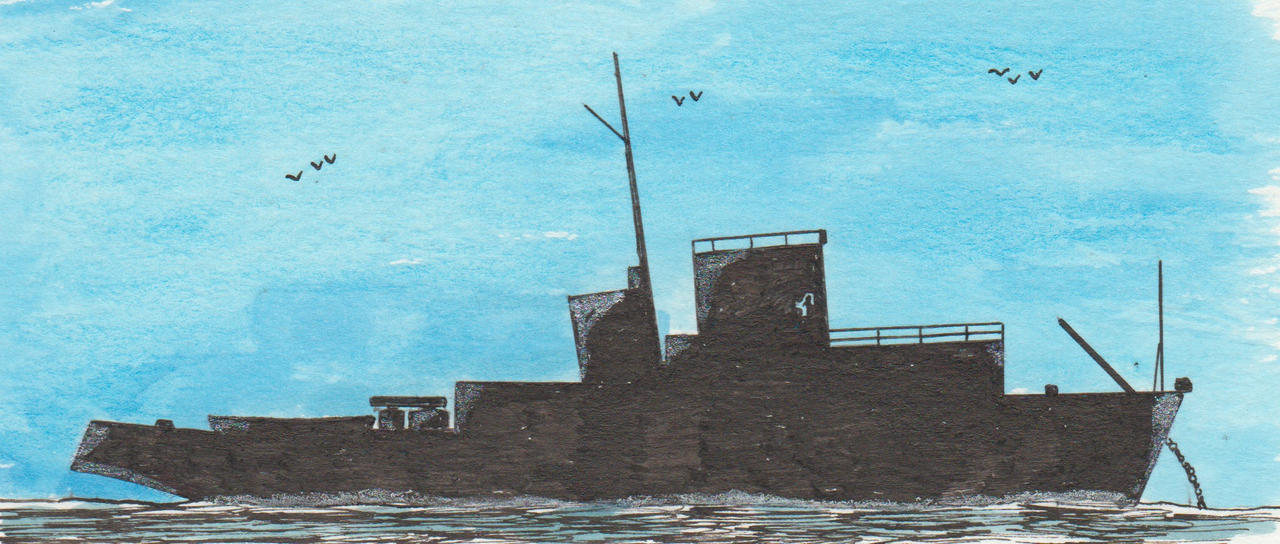
Japanese minesweeper MS 06 1950s

©Warshipsresearch.blogspot.com

Length 68.6 feet. The Chiyozuru-class with as dimensions 95 4/5 (overall) x 18 2/3 x 6 1/2 feeet and a displacement of 130 tons, wood-built between 1943-1945 as auxiliary sub chasers named after birds but which were before known as MS+number? 

Saturday, 2 May 2026

French Navy 1955 shipbuilding programm according to the Australia Station Intelligence Summary dated 1 July 1955

French aircraft carrier Clemenceau (R98) and frigate Le Picard (F766), Lekhaven, Rotterdam, Netherlands 5/9 June 1970. City Archive Rotterdam.

An item reported that the French Navy 1955 shipbuilding programm included 1-22,000 tons aircraft carrier (same tonnage as the Clemenceau already laid down and to be completed in 1958)(1), 1-16,50 ton escort vessel, 3-750 tons submarine chasers of an improved design and 3-1,700 tons Le Corse-class escorts (originally 15 were laid down of which 4 were to completed) (2).

1. Jane’s Fighting Ships 1959-1959 mentioned the Clemenceau PA54 laid down in November 1955 and the Foch PA55 laid down on 15 November 1957 both of 22,000 (standard)-27,307 (full load) tons, both Clemenceau-class preceded by planned Joffre-class and realized Béarn and succeeded by Charles de Gaulle.

2. Jane’s Fighting Ships 1959-1959 mentioned the Le Corse-class E50 type consisting of the Le Bordelais, Le Brestois, Le Boulonnais and Le Corse with a displacement of 1,290-1,528 (trials)-1,702 (full load) tons, designed as seagoing convoy vessels (Escorteurs Rapides Antisubmarins), rerated as Escorteurs de Deuxiène Class in 1951, Escorteurs in 1953 and as Escorteurs Rapides in 1955.

Source

Website Royal Australian Navy, Sea Power Centre.

Tuesday, 7 May 2024

Preliminary French naval building program 1938-1941

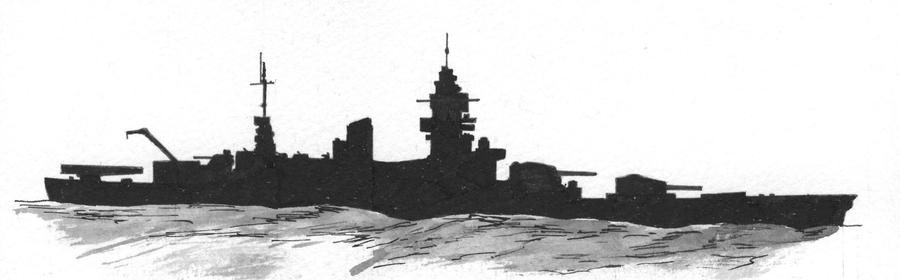
The Dunkerque-class consisting of the Dunkerque and Strasbourg commissioned 1936 respectively 1938 had a displacement of 35,000 respectively 36,380 tons.

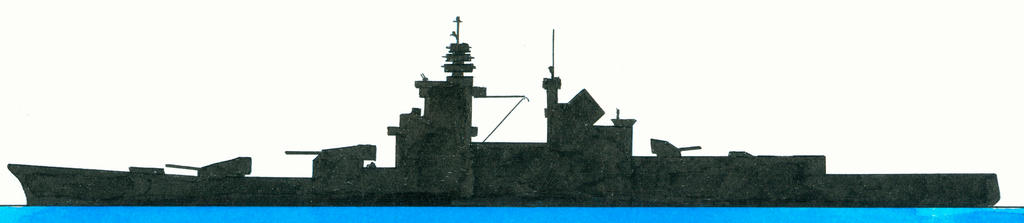
The Richelieu-class consisted of Richelieu (1940, 37,250 tons standard), Jean Bart 1949, 37,250 tons standard) and never completed Clemenceau and Gascogne.

American naval attaché Paris reported on 10 May 1937 No. 278 that the preliminary French building program 1938-1941 presented to the Finance Committee included 2-35,000 ton battleships, 2-19,000 ton carriers, 2-5,000 ton cruisers, 15-20 1,000 ton destroyers and 20-25 1,000 ton submarines.

Source

National Archives USA. Record Group 38: Records of the Office of the Chief of Naval Operations. Series: Secret Naval Attaches Reports. Estimate of potential military strength (pt.). Summaries. Reports from London, Paris, Brussels, Rome and Berlin. Roll M975-001.

Wednesday, 1 June 2022

Cuba allowed American company to lay cables according to the Weekly Intelligence Summary No. 1 dated 8 January 1921

An item reported that the Cuban government allowed the All America Cable Company to land four cables of the coast of Cuba probably for the connections Havana, Cuba-New York, USA, Havana, Cuba-Mexico, Havana, Cuba-Guantanamo, Cuba and Guantanamo, Cuba-Santiago de Cuba.

Source

The National Archives, Kew Gardens, England CAB/24/118/41

German firm ordered to deliver and lay submarine cables in the Dutch East Indies according to the Weekly Intelligence Summary No. 1 dated 8 January 1921

An item reported that the Dutch government ordered the N. German Marine Cable Works to deliver 1,500 miles submarine cable to be realize telegraphic communication with the Dutch East Indies. (1) Germany had handed over her two cable layers to the Allies with a result that a German tramp steamship was to converted into a cable layer to start with cable laying in the Dutch East Indies on short notice.

Note

1. The cable made by Norddeutsche Seekabelwerke A,G., Nordenham was to be used for the connection Makasser-Dongola-Menado and for the connection Makasser-Surabaya. The cable was transported from Germany to the Dutch East Indies by the Flint which was a Norwegian cargo ship chartered by the plant and converted into a cable layer. Within a month were both cables laid.  

Source

The National Archives, Kew Gardens, England CAB/24/118/41