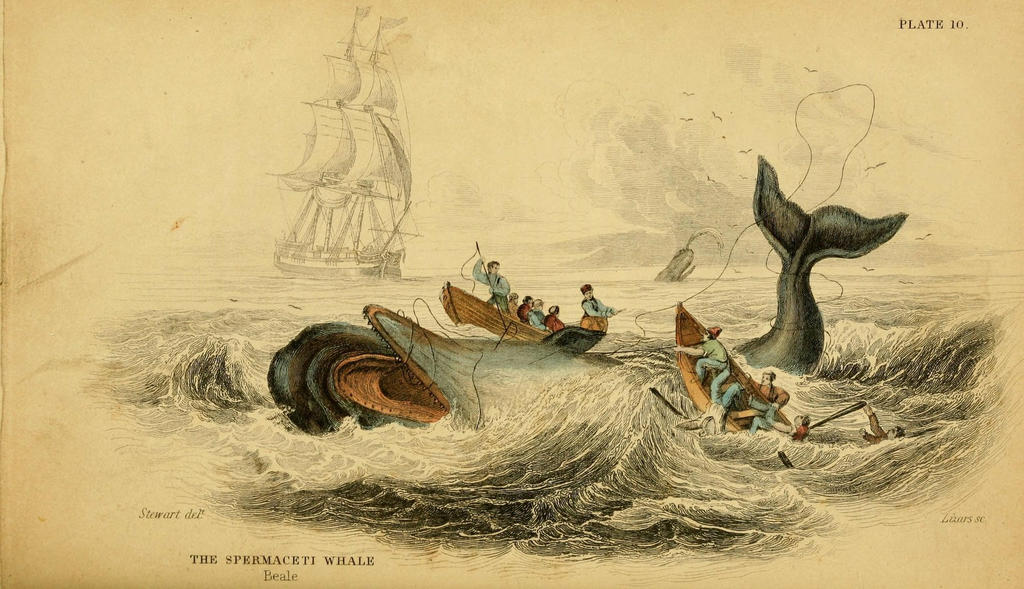
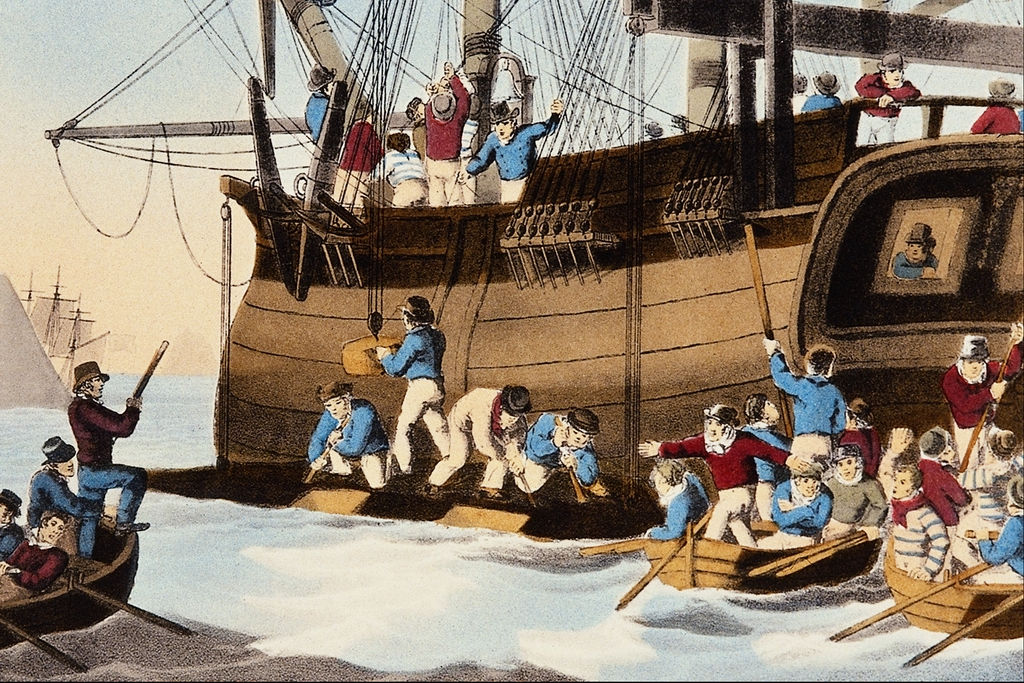
An item referred to the interview with Charles Enderby
of the firm of Charles, Henry and George Enderby, which firm for several years
was involved in the South whaling. His father [Samuel, 17 January 1719
September 1797] started with whaling in the South in 1775. Before he he was
involved via his agents in the USA. He did not gave an exact number of the number
of whalers possessed by his firm, just saying a good many although less then in
the past. Enderby thought that in 1794 the first time ws that one of their
whalers visited New Zealand. Since then they continued visiting New Zealand for
obtaining supplies for instance spars. The timber there was of a very good
quality. A voyage to and back from New Zealand took 4 months; trading vessels
commonly returned via Cape Horn. Natives were also hired as crew member now and
in the past and considered generally to be good and well-behaven seaman.
Enderby even stated much better that British sailors. They served the whole
voyage. Some of them were chiefs and some served as harpooners.
Enderby was asked if he believed that a tax could
cause excesses elsewhere particularly at the Society Islands. He denied the
latter but saying that heavy taxes would result in visits to Papua New Guinea,
in fact all Pacific islands. At the moment was the annual number 100 ships and
it was possible that 40-50 should go elsewhere. He referred to the very high
charges in Chilean and Peruvian harbours with as results that whalers just
occasionally paid a visit. He could not confirm what the charges were in
Valparaiso, Chile while none of his whalers had been there in the last decades.
His whalers were active between the poles, Japan and Sandwich Islands and made
voyages of 2-4 years with an average of 3 years 3 months. One of his ships had
been involved in an excess at the Friendly Islands when an apprentice deserted
and the native refused to assist to get this man. He fired with his six with
grape loaded guns and afterwards landed with a boat of which the crew was cut
off. Such excesses were usually to blaim the masters although quite a lot of
the problems was caused when sailors interfered with women.
Source
Report from the Select Committee of the House of Lords
appointed to inquire into the present state of the islands of New Zealand and
The Expediency of regulating the Settlement of British Subjects therein; with
the minutes of evidence taken before the committee and an index thereto.
Ordered to be printed 3 April 1838.