Translate

Showing posts with label Brazil. Show all posts

Friday, 25 September 2026

English, American, Japanese, Portuguese, Italian and Brazilian navies cooperating in the Mediterranean according to the Kriegsnachrichten No. 61 of the Chef des Admiralstabes der Marine dated 2 July 1918

An item referring to an agent reported recently an unusual number of meetings between admiral Sir Rosslyn Erskine Wemyss and vice admiral Sims participated by the marine attaches of France, Japan, Italy, Portugal and Brazil probably for a combined naval action in the Mediterranean or the Adiatric Sea.

Source

Bundesarchiv RM-40-622

Portuguese galleon Bencao 1649

Of the Companhia Geral do Comercio do Estado do Brasil, mentioned in 1649, tonnage 300 tons, armament 24 guns.

Source

A. Marques Esparteira. Catalogo dos navios brigantinos (1640-1901). Lisboa, 197

Sunday, 6 September 2026

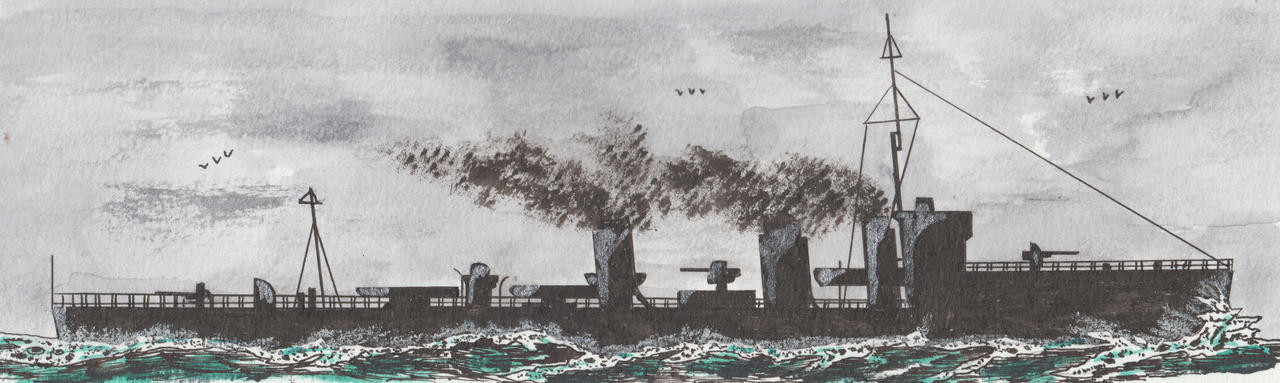
British destroyer HMS Porpoise 1912-1920 (Alexandrino de Alencar 1920-1927, Maranhao 1927-1945)

Admiralty-K-class design©Warshipsresearch.blogspot.com

Laforey- or L-class©Warshipsresearch.blogspot.com

Part of K- or Acasta-class preceded by Acheron-class succeeded by L- or Laforey-class. The class numbered 20 ships, of 12 which built while using the common Admiralty-design and 8 so-called builders’specials. The Acasta-class was in September 1913 redesignated K-class. Built under the Naval Programme of 1911-1912. Builder’s special. Original intended name Kennington. Laid down by Thornycroft, Woolston, England on 14 March 1912, launched on 21 July 1913, completed in January 1914, sold back to Thornycroft on 23 February 1920, sold to Brazil in March 1920, renamed Alexandrino de Alencar, renamed Maranhao in 1927 and disposed in 1945. 

Thursday, 3 September 2026

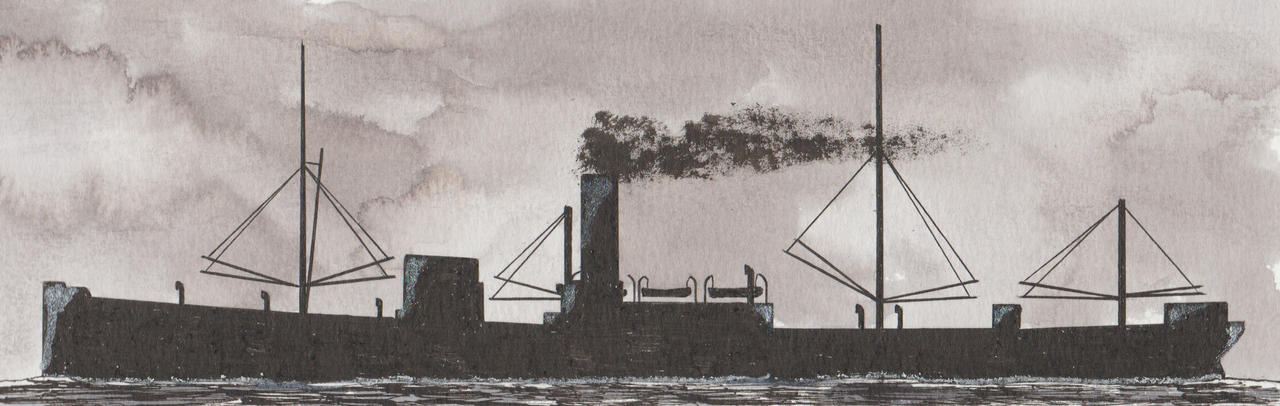
Shipping traffic heading to the west of Gibraltar according to the Kriegsnachrichten of the Chef des Admiralstabes der Marine dated Berlin 21 August 1917

An item reported that at between 14-18 August the shipping traffic from Gibraltar to the west consisted 10 British steamships, 4 Norwegian steamships, 1 British steam transport, 2 Italian passenger ships, 3 armed steamships, 1 Portuguese steamship, 1 Brazilian steamship.

As part of a convoy: 1 British guard ship, 6 British steamships, 1 Greek steamship, 1 Norwegian steamship.

As part of a convoy: Russian torpedo boat Iskussny with 8 steamships.

-1 French steamship, 1 Italian steamship, 1 Italian sailing vessel.

Source

Bundesarchiv RM-40-622

Monday, 27 July 2026

Portuguese galleon Nossa Senhora da Graca, 1649

Of the Companhia Geral do Comercio do Estado do Brasil, mentioned in 1649, 300 tons, 26 guns.

Source

A. Marques Esparteira. Catalogo dos navios brigantinos (1640-1901). Lisboa, 1976.

Saturday, 25 July 2026

Escaped German crew members of the German merchant ship Windrijk arrested according to the U.S. Joint Intelligence Committee. Daily summary dated 7 March 1942

An item reported that 50 miles from Santos, Brazil 10 of the 11 escaped German crew members of the Windrijk were arrested. One men drowned during a storm off Praia Grunde. The German vice consul and ‘other persons’ who helped the sailors were arrested.

Source

Map Room Papers (Roosevelt Administration), 1942 - 1945. U.S. Joint Intelligence Committee. Daily summary No. 87 dated 7 March 1942.

Friday, 24 July 2026

American sailing sealing ship General Putnam between 1828-1930

Antarctic sealing ground African coast. Of Newburyport, Massachusetts, USA. Rigging schooner. Caught in 1828 or 1829 1,500 seal-skins. Condemned at Rio Janeiro, Brazil on 31 March 1829 or 1830.  

Source

Goode, George Brown. The fisheries and fishery industries of the United States. Section V. History and methods of the fisheries. Volume II, Washington, 1887. (1978).

Portuguese galleon Nossa Senhora da Conceicao 1649-1651

Of the Companhia Geral do Comercio do Estado do Brasil, mentioned between 1649-1651, 300 tons, 24 guns.

Source

A. Marques Esparteira. Catalogo dos navios brigantinos (1640-1901). Lisboa, 1976.

Monday, 20 July 2026

Portuguese galleon Jesus Maria Jose 1649

Of the Companhia Geral do Comercio do Estado do Brasil, mentioned in 1649, 300 tons, 26 guns.

Source

A. Marques Esparteira. Catalogo dos navios brigantinos (1640-1901). Lisboa, 1976.

Friday, 17 July 2026

Merchant traffic heading eastward of Gibraltar according to the Kriegsnachrichten of the Chef des Admiralstabes der Marine dated Berlin 14 August 1917

An item reported that between 6-10 August were heading to the east 1 armed French steamship, 1 with 2 guns armed French steamship, 1 Brazilian steamship, 2 armed British transports, 1 armed Italian steamhip, 4 armed British steamships, 1 British hospitalship. As part of a convoy 1 Italian auxiliary cruiser, 2 armed steamships, 1 Greek steamship, 1 Danish steamship and 2 steamships; 1 armed Italian passenger steamship coming from Gibraltar

Source

Bundesarchiv RM-40-622

Thursday, 16 July 2026

German blockade runner Weserland outward bound in 1942

As Weserland. ©Warshipsresearch.blogspot.com

Transport Number P. Name ship Weserland (ex-Ermland). Company Hamburg-Amerika Linie, Hamburg, Germany. Date departure 7 September 1942. Harbour which was left Bordeaux. Date arrival 1 December 1942. Harbour of arrival Yokohama, Japan. Deadweight 3,407 tons. Part of 2. Action “Pfastermundkoch”.(1)

Note

1. Call sign DIRJ. Launched by Blohm&Voss, Hamburg, Germany with yard number 414 on 18 February 1922, commissioned on 92 August 1922, blockade runner since 1940, rename Weserland in 191, left Yokohama, Japan on 26 October 1943 and sunk by the American destroyer USS Somers on 2 January 1944 between Ascension and the Brazilian coast. Gross tonnage 6,528 ton, under deck 6,121 ton, net tonnage 3,802 ton, deadweight 9,475 ton and as dimensions 449.1 x 58.4 x 25.6 x 28 (loaded) feet. Diesel propulsion, 2 screws, oil bunker capacity 1,420 ton, range 20,000 nautical miles and speed 11 (normal cruising)-12.5 (maximum) knots.

Source

Bundesarchiv RM 7/1419 Ausarbeitung "Wirtschaftsfahrten im Zweiten Weltkrieg" (Zusammenstellung der Fahrten von Blockadebrechern nach Ostasien, 1941-1945). 

Sunday, 12 July 2026

Brazilian steam passenger ship Siqueira Campos underway towards Rio de Janeiro, Brazil in 1940

In his letter dated Lisbon dated 3 November 1940 No. 890 to the Oberkommando der Kriegsmarine wrote the German Marineattaché Portugal that according to the newspapers Primeiro de Janeiro dated 30 October and Diario de Lisboa, Lisbon, dated 31 October the Brazilian steam passenger ship Siqueira Campos left on 4 November for Rio de Janeiro. On board she loaded war stores sent with more as 100 wagons from Germany to the Brazilian government. The weight of the large boxes could be around 3,070 kilo. The Brazilian government seemed to have ordered for more as 17 million Reichsmark war stores from Germany.

Source

Bundesarchiv. German Marineattaché Portugal. RM 11-16

Thursday, 2 July 2026

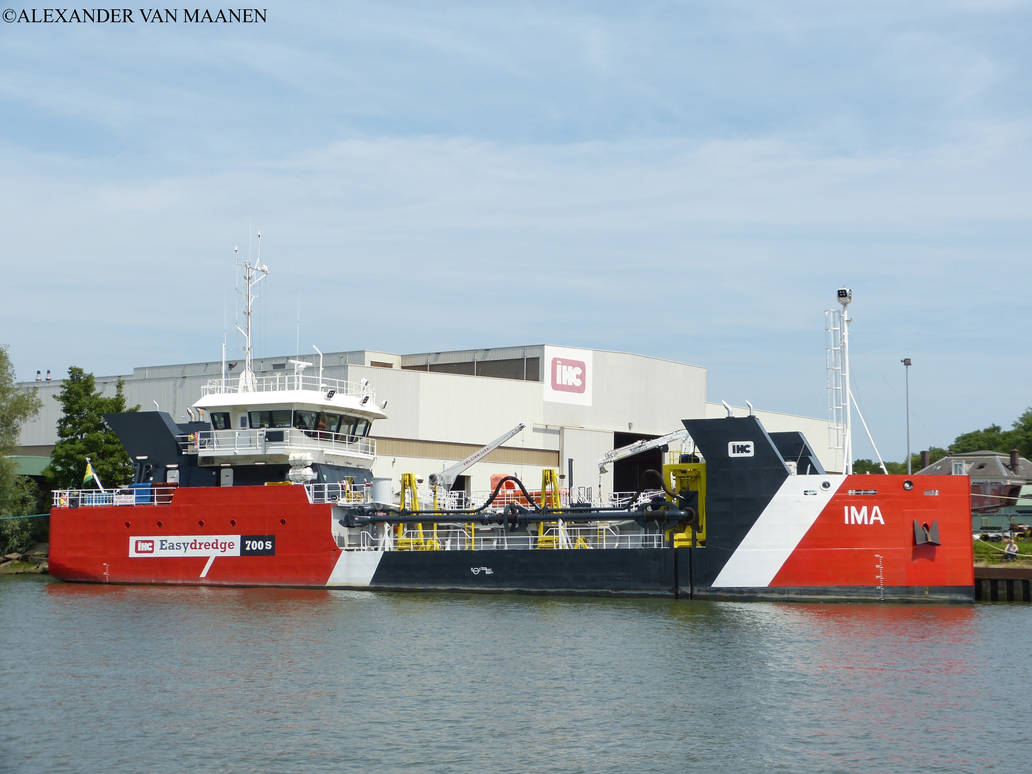
Brazilian trailing suction hopper dredger Ima 2025-


Lek, Netherlands 22 June 2026

St. Vincent&Grenadines-flagged, IMO 9893199, MMSI 376251000 and call sign J8B6611. Built by IHC Holland B.V.with yard number 63484 in 2025 and delivered to Cencesionaria Hidrovia Amazonica SA (COHIDRO. 

Wednesday, 17 June 2026

Shipping traffic coming from Gibraltar heading west according to the Kriegsnachrichten of the Chef des Admiralstabes der Marine dated Berlin 16 August 1917

British Formidable-clas battleships©Warshipsresearch.blogspot.com

An item reported the ships coming from Gibraltar heading west between 10-14 August: 2 French passenger steamships, 11 British steamships, 1 steamship, 1 Brazilian steamship, 4 Spanish steamships; as part of a convoy: 1 British guard vessel, 12 steamships, 1 passenger steamship and British warships Irresistible (1), 1 American steamship armed with 2 guns and 1 Greek steamship; 1 minelayer together with 7 full loaded deep lying cargo ships, 1 Italian steamship, 1 Belgian steam tanker and 1 Greek steamship.

Note

1. Pencil note that she was destroyed on 18 March 1915 in the Dardanelles so that it should be another ship. This note is correct, this Formidable-class battleship was indeed lost on that date. The second part of the note is difficult to understand it says muss also neubau sein [should be new building], but that can’t be correct. Laid down by Chatham Dockyard on 11 April 1898, launched on 15 December 1898, completed in October 1901, commissioned on 4 February 1902 and lost on 18 March 1915. Part of Formidable-class precedeed by Canopus-class succeeded by London-class.

Source

Bundesarchiv RM-40-622

Tuesday, 16 June 2026

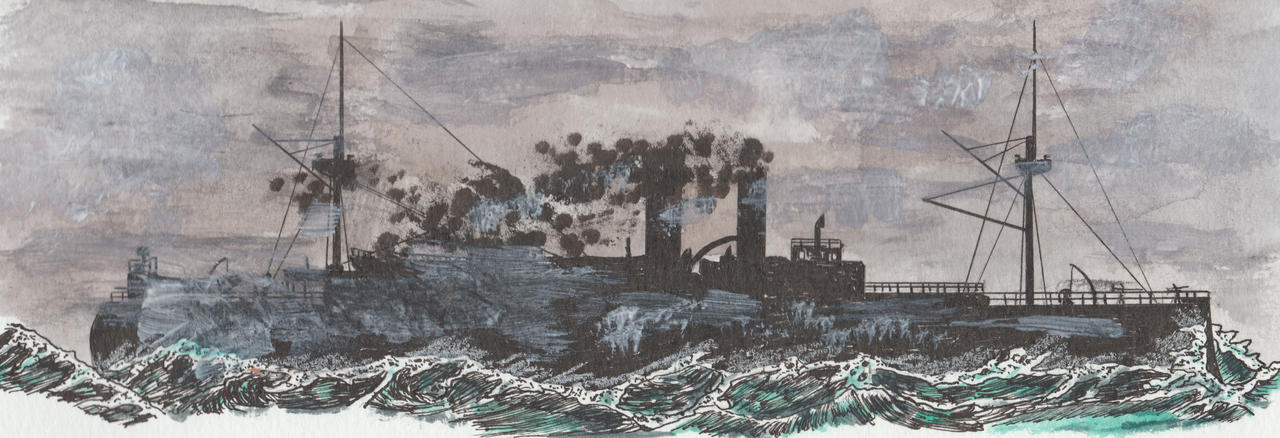
The design of the Bureau of Construction of the Navy Department for the American armoured cruiser USS Maine in 1887

American USS Maine©Warshipsresearch.blogspot.com

Brazilian Riachuelo©Warshipsresearch.blogspot.com

In 1886 was the building of a battleship which became the USS Texas and an armored cruiser which became the USS Maine authorized.(1) The US Navy asked for plans including from parties abroad. For the USS Maine was chosen for an American design although inspired by a Brazilian warship.

The Internal Revenue Record and Customs Journal edition dated 11 April 1887 p. 144 wrote that the Secretary of Navy William C. Whitney on 6 April invited proposals for the building of 5 warships under the Act of 38 March 1887. Further more he considered the details for the Board which was responsible to examine the plans for the two 6,000 tons ships authorized under the Act of 3 August 1886. Expected was that as naval members were to be appointed captain Ramsay, commodore Goodrich and assistant naval constructor Bowles. The names of the civilian members were yet not known. In the meantime were the plans of the Bureau of Construction and Repair his favourite. Of the ten plans for new cruisers were at least six worth of close attention. According to The Nation dated Thursday 7 April 1887 were the plans opened on 1 April.

The Railroad and Engineering Journal, May edition p. 194 reported that the plans for an armored cruiser and an armored battleship were now being studied by a mixed board of naval officers and civilian constructors. The general features were published on page 211: “The armored cruiserwas to have a double-bottomedSteel hull, unsheathed and divided into numerous watertight compartments, fitted with a powerful pumping apparatus, and finished with a perfect drainage and ventilation system throughout. She was to be fitted with a rambow and was to have a steel-armored deck which would run thewhole length of the ship and cover the boilers, engines and magazines. Two-thirds full sail power was required on two or three masts, each with a protected top, carrying one or more machine or rapid-fireguns. The main batterywas to havefour 10-in. guns, each weighing 26½tons, and six 6-in.guns each weighing 5 tons. The secondary battery was to be composed of four 6-pounder, four3-pounder, and two 1-pounder Hotchkiss rapid-fire guns, four 47-millimeters and four 37-millimeters Hotchkiss revolving cannon, and four Gatling guns. The vessel was to be equipped with a torpedo and searchlight outfit, and the guns were to be so arranged as to obtain for bow and stern fire the greates thorizontal and vertical command consistent with other essential conditions. The 10-in. guns were to load in at least two positions,and were to be served and handled by power and protected by at least 10 1/2 inch of steel armor, properly backed, while the 6-in. guns were to be efficiently shielded. The motive machinery was to be below the armored deck and well covered from hostile fire, and the ship was to be driven by twin screws. When fully equipped and with all weights on board, excluding the reserve coal, she was to maintain 17 knots speed per hour over the measured mile. The coal endurance had to be large, the consumption economical, and the distance to be covered at moderate speed as great as practicable. The furnaces were to be arranged to work with forced draught when desired, air for combustion being furnished independently of the ventilating system. Quarters had to be provided for 270 officers and men, with provisions provisi for three months and water for one month. The ship was required to have arrangements for being steered either by power or by hand from several independent positions upon and below the deck. A sufficient number of boats to carry the crew were to be furnished, two of them being second class torpedo boats and two others steam launches or cutters, each of which was able to mount, shielded, one 3 pounder rapid-fire gun. These conditions were to be fulfilled at a maximum draught of 22 feet and on a displacement of about 6,000 tons."

The Railroad and Engineering Journal, July edition p. 311 and 315 reported that the US Navy still considered the building but did not invite yet for bids of shipyards. In the meantime reported the Board to the Secretary of the Navy what the results were of the plans sent by various parties in last April. The Board was appointed on 22 April. Some plans were not conform the requirements and were already rejected. Dealing with the plans of the Barrow Shipbuilding Company, Lieutenant W. I. Chambers. A. H. Grandjean and the Thames Iron Works & Shipbuilding Company was the conclusion that “The marked differences in the essential features of the designs prevent their classification in the order of merit; each exhibits features which strongly commend themselves, but the Board does not consider it advisable for the Government to build a vessel upon any one of these.”

In The Railroad and Engineering Journal, August edition p. 357-359 were the results of the examination discussed. The Board recommended not one of the submitted designs for an armored cruiser. The plans were to be carefully examined before anything could be decided. Yet it was probably the design of the Bureau of Construction of the Navy Department made a good chance to be chosen. It resembled in many ways the Brazilian turret ship Riachuelo but with many improvements.The dimensions were 310 x 54 x 21.6 feet and a displacement of 6,600 tons. Coal bunker capacity 800 tons and speed 17 knots, bark rigging. The armament consisted of 2x2-25.4cm/10” guns in turrets en echelon, 6 x1-15.2cm/6” guns in central pivot carriages making an arrangement possible to fire with all 10” guns and 3-6” guns at one point, 13 quick firing guns and [4-45cm/18”] torpedo tubes for fish torpedoes. Could carry two steam torpedo boats with her. The armour belt had a thickness of 1&’ and a breadth of 6 feet.

The Internal Revenue Record and Customs Journal dated 11 April supplied the details of the cruiser design from the Bureau of Construction of the Navy Department Chief T.D. Wilson.(2) “Displacement 6,000 (?) tons and as dimensions 310 (between perpendiculars) x 54 x 21.6 feet. Sail area 7,000 square feet. Rigging bark. Armament 4-10” guns, 6-6” guns, 13 quick firing guns. Armour 10-17”. Coal bunker capacity 800 ton. Speed 17 knots.

Notes

1. Ordered on 3 August 1886, laid down by New York Naval Shipyard on 17 October 1888, launched on 18 November 1890, commissioned on 17 September 1895 and sunk due to an explosion in the harbour of Havana, Cuba on 15 February 1898 and what was left of her was scuttled in the Strait of Florida on 16 March 1912.

2. Theodore Delavan Wilson (11 May 1840 Brooklyn, New York, USA-29 June 1896 Brooklyn, New York, USA), in service of the US Navy between 1861-1896.

Sources

Engineering. An Illustrated Weekly Journal. London, 1885. 

Internal Revenue Record and Customs Journal. Volume XXXIII, January-December 1887.

The Nation No. 113, p. 286.

The Railroad and Engineering Journal, vol. LXI (Volume 1, new series), New York, 1887.

Hamersly, Lewis Randolph. The Records of Living Officers of the U.S. Navy and Marine Corps. Philadelphia, 1894. 

Sunday, 14 June 2026

The design of A. H. Grandjean, St. Nazaire, France for the American armoured cruiser USS Maine in 1887

American USS Maine©Warshipsresearch.blogspot.com

Brazilian Riachuelo©Warshipsresearch.blogspot.com

In 1886 was the building of a battleship which became the USS Texas and an armored cruiser which became the USS Maine authorized.(1) The US Navy asked for plans including from parties abroad. For the USS Maine was chosen for an American design although inspired by a Brazilian warship.

The Internal Revenue Record and Customs Journal edition dated 11 April 1887 p. 144 wrote that the Secretary of Navy William C. Whitney on 6 April invited proposals for the building of 5 warships under the Act of 38 March 1887. Further more he considered the details for the Board which was responsible to examine the plans for the two 6,000 tons ships authorized under the Act of 3 August 1886. Expected was that as naval members were to be appointed captain Ramsay, commodore Goodrich and assistant naval constructor Bowles. The names of the civilian members were yet not known. In the meantime were the plans of the Bureau of Construction and Repair his favourite. Of the ten plans for new cruisers were at least six worth of close attention. According to The Nation dated Thursday 7 April 1887 were the plans opened on 1 April.

The Railroad and Engineering Journal, May edition p. 194 reported that the plans for an armored cruiser and an armored battleship were now being studied by a mixed board of naval officers and civilian constructors. The general features were published on page 211: “The armored cruiserwas to have a double-bottomedSteel hull, unsheathed and divided into numerous watertight compartments, fitted with a powerful pumping apparatus, and finished with a perfect drainage and ventilation system throughout. She was to be fitted with a rambow and was to have a steel-armored deck which would run thewhole length of the ship and cover the boilers, engines and magazines. Two-thirds full sail power was required on two or three masts, each with a protected top, carrying one or more machine or rapid-fireguns. The main batterywas to havefour 10-in. guns, each weighing 26½tons, and six 6-in.guns each weighing 5 tons. The secondary battery was to be composed of four 6-pounder, four3-pounder, and two 1-pounder Hotchkiss rapid-fire guns, four 47-millimeters and four 37-millimeters Hotchkiss revolving cannon, and four Gatling guns. The vessel was to be equipped with a torpedo and searchlight outfit, and the guns were to be so arranged as to obtain for bow and stern fire the greates thorizontal and vertical command consistent with other essential conditions. The 10-in. guns were to load in at least two positions,and were to be served and handled by power and protected by at least 10 1/2 inch of steel armor, properly backed, while the 6-in. guns were to be efficiently shielded. The motive machinery was to be below the armored deck and well covered from hostile fire, and the ship was to be driven by twin screws. When fullyequipped and with all weights on board, excluding the reserve coal, she was to maintain 17 knots speed per hour over the measured mile. The coal endurance had to be large, the consump tion economical, and the distance to be covered at mod erate speed as great as practicable. The furnaces were to be arranged to work with forced draught when desired, air for combustion being furnished independently of the ventilating system. Quarters had to be provided for 270 officers and men, with provisions provisi for three months and water for one month. The ship was required to have arrangements for being steered either by power or by hand from several independent positions upon and below the deck. A sufficient number of boats to carry the crew were to be furnished, two of them being second class torpedo boats and two others steam launches or cutters, each of which was able to mount, shielded, one 3 pounder rapid-fire gun. These conditions were to be fulfilled at a maximum draught of 22 feet and on a displacement of about 6,000 tons."

The Railroad and Engineering Journal, July edition p. 311 and 315 reported that the US Navy still considered the building but did not invite yet for bids of shipyards. In the meantime reported the Board to the Secretary of the Navy what the results were of the plans sent by various parties in last April. The Board was appointed on 22 April. Some plans were not conform the requirements and were already rejected. Dealing with the plans of the Barrow Shipbuilding Company, Lieutenant W. I. Chambers. A. H. Grandjean and the Thames Iron Works & Shipbuilding Company was the conclusion that “The marked differences in the essential features of the designs prevent their classification in the order of merit; each exhibits features which strongly commend themselves, but the Board does not consider it advisable for the Government to build a vessel upon any one of these.”

In The Railroad and Engineering Journal, August edition p. 357-359 were the results of the examination discussed. The Board recommended not one of the submitted designs for an armored cruiser. The plans were to be carefully examined before anything could be decided. Yet it was probably the design of the Bureau of Construction of the Navy Department made a good chance to be chosen.

The The Railroad and Engineering Journal May edition p. 211 wrote that he “submitted plans for the cruiser, similar in character to several vessels built by the French Government”.

Note

1. Ordered on 3 August 1886, laid down by New York Naval Shipyard on 17 October 1888, launched on 18 November 1890, commissioned on 17 September 1895 and sunk due to an explosion in the harbour of Havana, Cuba on 15 February 1898 and what was left of her was scuttled in the Strait of Florida on 16 March 1912.


Sources

Engineering. An Illustrated Weekly Journal. London, 1885. 

Internal Revenue Record and Customs Journal. Volume XXXIII, January-December 1887.

The Nation No. 113, p. 286.

The Railroad and Engineering Journal, vol. LXI (Volume 1, new series), New York, 1887.

Hamersly, Lewis Randolph. The Records of Living Officers of the U.S. Navy and Marine Corps. Philadelphia, 1894. 

Friday, 12 June 2026

The design of Naval Constructor S. H. Pook, US Navy for the American armoured cruiser USS Maine in 1887

American USS Maine©Warshipsresearch.blogspot.com

Brazilian Riachuelo©Warshipsresearch.blogspot.com

In 1886 was the building of a battleship which became the USS Texas and an armored cruiser which became the USS Maine authorized.(1) The US Navy asked for plans including from parties abroad. For the USS Maine was chosen for an American design although inspired by a Brazilian warship.

The Internal Revenue Record and Customs Journal edition dated 11 April 1887 p. 144 wrote that the Secretary of Navy William C. Whitney on 6 April invited proposals for the building of 5 warships under the Act of 38 March 1887. Further more he considered the details for the Board which was responsible to examine the plans for the two 6,000 tons ships authorized under the Act of 3 August 1886. Expected was that as naval members were to be appointed captain Ramsay, commodore Goodrich and assistant naval constructor Bowles. The names of the civilian members were yet not known. In the meantime were the plans of the Bureau of Construction and Repair his favourite. Of the ten plans for new cruisers were at least six worth of close attention. According to The Nation dated Thursday 7 April 1887 were the plans opened on 1 April.

The Railroad and Engineering Journal, May edition p. 194 reported that the plans for an armored cruiser and an armored battleship were now being studied by a mixed board of naval officers and civilian constructors. The general features were published on page 211: “The armored cruiserwas to have a double-bottomedSteel hull, unsheathed and divided into numerous watertight compartments, fitted with a powerful pumping apparatus, and finished with a perfect drainage and ventilation system throughout. She was to be fitted with a rambow and was to have a steel-armored deck which would run thewhole length of the ship and cover the boilers, engines and magazines. Two-thirds full sail power was required on two or three masts, each with a protected top, carrying one or more machine or rapid-fireguns. The main batterywas to havefour 10-in. guns, each weighing 26½tons, and six 6-in.guns each weighing 5 tons. The secondary battery was to be composed of four 6-pounder, four3-pounder, and two 1-pounder Hotchkiss rapid-fire guns, four 47-millimeters and four 37-millimeters Hotchkiss revolving cannon, and four Gatling guns. The vessel was to be equipped with a torpedo and searchlight outfit, and the guns were to be so arranged as to obtain for bow and stern fire the greates thorizontal and vertical command consistent with other essential conditions. The 10-in. guns were to load in at least two positions,and were to be served and handled by power and protected by at least 10 1/2 inch of steel armor, properly backged, while the 6-in. guns were to be efficiently shielded. The motive machinery was to be below the armored deck and well covered from hostile fire, and the ship was to be driven by twin screws. When fullyequipped and with all weights on board, excluding the reserve coal, she was to maintain 17 knots speed per hour over the measured mile. The coal endurance had to be large, the consump tion economical, and the distance to be covered at mod erate speed as great as practicable. The furnaces were to be arranged to work with forced draught when desired, air for combustion being furnished independently of the ventilating system. Quarters had to be provided for 270 officers and men, with provisions provisi for three months and water for one month. The ship was required to have arrangements for being steered either by power or by hand from several independent positions upon and below the deck. A sufficient number of boats to carry the crew were to be furnished, two of them being second class torpedo boats and two others steam launches or cutters, each of which was able to mount, shielded, one 3 pounder rapid-fire gun. These conditions were to be fulfilled at a maximum draught of 22 feet and on a displacement of about 6,000 tons."

The Railroad and Engineering Journal, July edition p. 311 and 315 reported that the US Navy still considered the building but did not invite yet for bids of shipyards. In the meantime reported the Board to the Secretary of the Navy what the results were of the plans sent by various parties in last April. The Board was appointed on 22 April. Some plans were not conform the requirements and were already rejected. Dealing with the plans of the Barrow Shipbuilding Company, Lieutenant W. I. Chambers. A. H. Grandjean and the Thames Iron Works & Shipbuilding Company was the conclusion that “The marked differences in the essential features of the designs prevent their classification in the order of merit; each exhibits features which strongly commend themselves, but the Board does not consider it advisable for the Government to build a vessel upon any one of these.”

In The Railroad and Engineering Journal, August edition p. 357-359 were the results of the examination discussed. The Board recommended not one of the submitted designs for an armored cruiser. The plans were to be carefully examined before anything could be decided. Yet it was probably the design of the Bureau of Construction of the Navy Department made a good chance to be chosen. In the end is indeed chosen for this design.

Hamersly wrote dealing with his design: “Mr. Pook had previously made the drawings, upon the call of Secretary Chandler, for a cruising-ship of six thousand tons displacement; the plans were not adopted for the reason that it was thought a smaller ship was more desirable, and such a design was completed under the instructions of the Advisory Board.” Pook (2) worked at the New York Navy Yard when the Maine was laid out on the mould-loft floor. The Railroad and Engineering Journal, May edition p. 211 wrote that he “presented a design for an armored cruiser of the central-box casemate type. ”

Notes

1. Ordered on 3 August 1886, laid down by New York Naval Shipyard on 17 October 1888, launched on 18 November 1890, commissioned on 17 September 1895 and sunk due to an explosion in the harbour of Havana, Cuba on 15 February 1898 and what was left of her was scuttled in the Strait of Florida on 16 March 1912.

2. Samuel Hartt Pook. Appointed Assistant Naval Constructor on 17 May 1866 and Naval Constructor on 15 April 1875. He retired with the relative rank of commodore.

Photo: https://www.history.navy.mil/our-collections/photography/numerical-list-of-images/nhhc-series/nh-series/NH-47000/NH-47374.html

Sources

Engineering. An Illustrated Weekly Journal. London, 1885. 

Internal Revenue Record and Customs Journal. Volume XXXIII, January-December 1887.

The Nation No. 113, p. 286.

The Railroad and Engineering Journal, vol. LXI (Volume 1, new series), New York, 1887.

Hamersly, Lewis Randolph. The Records of Living Officers of the U.S. Navy and Marine Corps. Philadelphia, 1894. 

Monday, 8 June 2026

German blockaderunner ms Norderney in 1941

In a letter dated 13 April 1942 No. 1329 to the O.K.M./1 Abteilung Skl. was the so-called ‘Etappen’-organisation of the navy described. In the attachment were the blockade runners decribed used for this purpose. Ms Norderney. Loaded with rubber to return home. Left Parà on 9 August 1941. Mid August set afire and sunk when she met a British cruiser mid August. 

Thursday, 4 June 2026

The design of the Barrow Shipbuilding Company, by William John Barrow, England for the American armoured cruiser USS Maine in 1887

American USS Maine©Warshipsresearch.blogspot.com

Brazilian Riachuelo©Warshipsresearch.blogspot.com

In 1886 was the building of a battleship which became the USS Texas and an armored cruiser which became the USS Maine authorized.(1) The US Navy asked for plans including from parties abroad. For the USS Maine was chosen for an American design although inspired by a Brazilian warship.

The Internal Revenue Record and Customs Journal edition dated 11 April 1887 p. 144 wrote that the Secretary of Navy William C. Whitney on 6 April invited proposals for the building of 5 warships under the Act of 38 March 1887. Further more he considered the details for the Board which was responsible to examine the plans for the two 6,000 tons ships authorized under the Act of 3 August 1886. Expected was that as naval members were to be appointed captain Ramsay, commodore Goodrich and assistant naval constructor Bowles. The names of the civilian members were yet not known. In the meantime were the plans of the Bureau of Construction and Repair his favourite. Of the ten plans for new cruisers were at least six worth of close attention. According to The Nation dated Thursday 7 April 1887 were the plans opened on 1 April.

The Railroad and Engineering Journal, May edition p. 194 reported that the plans for an armored cruiser and an armored battleship were now being studied by a mixed board of naval officers and civilian constructors. The general features were published on page 211: “The armored cruiserwas to have a double-bottomedSteel hull, unsheathed and divided into numerous watertight compartments, fitted with a powerful pumping apparatus, and finished with a perfect drainage and ventilation system throughout. She was to be fitted with a rambow and was to have a steel-armored deck which would run thewhole length of the ship and cover the boilers, engines and magazines. Two-thirds full sail power was required on two or three masts, each with a protected top, carrying one or more machine or rapid-fireguns. The main batterywas to havefour 10-in. guns, each weighing 26½tons, and six 6-in.guns each weighing 5 tons. The secondary battery was to be composed of four 6-pounder, four3-pounder, and two 1-pounder Hotchkiss rapid-fire guns, four 47-millimeters and four 37-millimeters Hotchkiss revolving cannon, and four Gatling guns. The vessel was to be equipped with a torpedo and searchlight outfit, and the guns were to be so arranged as to obtain for bow and stern fire the greates thorizontal and vertical command consistent with other essential conditions. The 10-in. guns were to load in at least two positions,and were to be served and handled by power and protected by at least 10 1/2 inch of steel armor, properly backged, while the 6-in. guns were to be efficiently shielded. The motive machinery was to be below the armored deck and well covered from hostile fire, and the ship was to be driven by twin screws. When fullyequipped and with all weights on board, excluding the reserve coal, she was to maintain 17 knots speed per hour over the measured mile. The coal endurance had to be large, the consump tion economical, and the distance to be covered at mod erate speed as great as practicable. The furnaces were to be arranged to work with forced draught when desired, air for combustion being furnished independently of the ventilating system. Quarters had to be provided for 270 officers and men, with provisions provisi for three months and water for one month. The ship was required to have arrangements for being steered either by power or by hand from several independent positions upon and below the deck. A sufficient number of boats to carry the crew were to be furnished, two of them being second class torpedo boats and two others steam launches or cutters, each of which was able to mount, shielded, one 3 pounder rapid-fire gun. These conditions were to be fulfilled at a maximum draught of 22 feet and on a displacement of about 6,000 tons."

The Railroad and Engineering Journal, July edition p. 311 and 315 reported that the US Navy still considered the building but did not invite yet for bids of shipyards. In the meantime reported the Board to the Secretary of the Navy what the results were of the plans sent by various parties in last April. The Board was appointed on 22 April. Some plans were not conform the requirements and were already rejected. Dealing with the plans of the Barrow Shipbuilding Company, Lieutenant W. I. Chambers. A. H. Grandjean and the Thames Iron Works & Shipbuilding Company was the conclusion that “The marked differences in the essential features of the designs prevent their classification in the order of merit; each exhibits features which strongly commend themselves, but the Board does not consider it advisable for the Government to build a vessel upon any one of these.”

In The Railroad and Engineering Journal, August edition p. 357-359 were the results of the examination discussed. The Board recommended not one of the submitted designs for an armored cruiser. The plans were to be carefully examined before anything could be decided. Yet it was probably the design of the Bureau of Construction of the Navy Department made a good chance to be chosen. In the end is indeed chosen for this design.

The Railroad and Engineering Journal, May edition p. 211 wrote that the Barrow Shipbuilding Company, of Barrow-in-Furness, England, Mr. [William] John, designer, submitted a design “for an armored cruiser'having the 10-in. guns mounted in separate box-shaped, armored casemates on a covered gun deck, so arranges as to fire two aheadm two astern and two abeam.” The Internal Revenu Record and Customs Journal, dated 11 April 1887 p. 114 wrote that she offered a design without supplying more details.

Note

1. Ordered on 3 August 1886, laid down by New York Naval Shipyard on 17 October 1888, launched on 18 November 1890, commissioned on 17 September 1895 and sunk due to an explosion in the harbour of Havana, Cuba on 15 February 1898 and what was left of her was scuttled in the Strait of Florida on 16 March 1912.

Sources

Engineering. An Illustrated Weekly Journal. London, 1885. 

Internal Revenue Record and Customs Journal. Volume XXXIII, January-December 1887.

The Nation No. 113, p. 286.

The Railroad and Engineering Journal, vol. LXI (Volume 1, new series), New York, 1887.

Hamersly, Lewis Randolph. The Records of Living Officers of the U.S. Navy and Marine Corps. Philadelphia, 1894. 
Monday, 1 June 2026

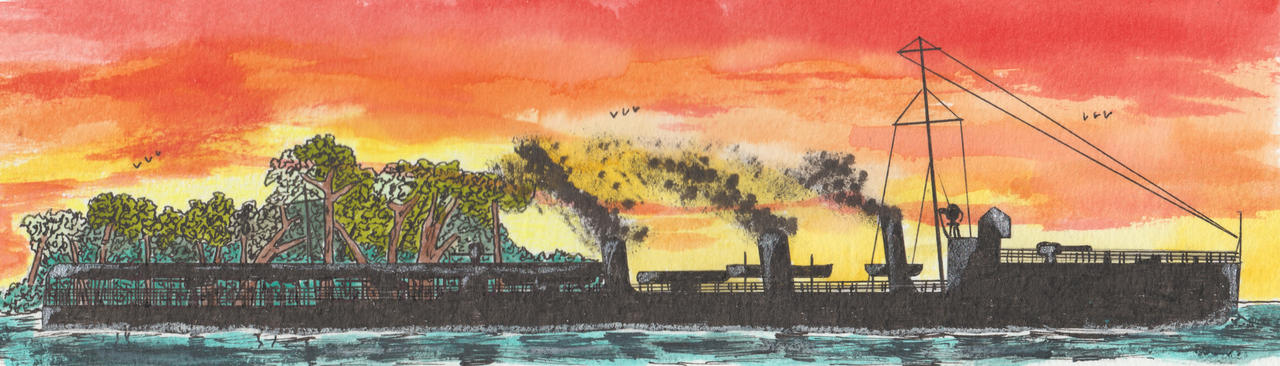
The design of US Navy lieutenant W.I. Chambers for the American armoured cruiser USS Maine in 1887

American USS Maine©Warshipsresearch.blogspot.com

Brazilian Riachuelo©Warshipsresearch.blogspot.com

 In 1886 was the building of a battleship which became the USS Texas and an armored cruiser which became the USS Maine authorized.(1) The US Navy asked for plans including from parties abroad. For the USS Maine was chosen for an American design although inspired by the Brazilian battleship Riachuelo.

The Internal Revenue Record and Customs Journal edition dated 11 April 1887 p. 144 wrote that the Secretary of Navy William C. Whitney on 6 April invited proposals for the building of 5 warships under the Act of 38 March 1887. Further more he considered the details for the Board which was responsible to examine the plans for the two 6,000 tons ships authorized under the Act of 3 August 1886. Expected was that as naval members were to be appointed captain Ramsay, commodore Goodrich and assistant naval constructor Bowles. The names of the civilian members were yet not known. In the meantime were the plans of the Bureau of Construction and Repair his favourite. Of the ten plans for new cruisers were at least six worth of close attention. According to The Nation dated Thursday 7 April 1887 were the plans opened on 1 April.

The Railroad and Engineering Journal, May edition p. 194 reported that the plans for an armored cruiser and an armored battleship were now being studied by a mixed board of naval officers and civilian constructors. The general features were published on page 211: “The armored cruiser was to have a double-bottomed, steel hull, unsheathed and divided into numerous watertight compartments, fitted with a powerful pumping apparatus, and finished with a perfect drainage and ventilation system throughout. She was to be fitted with a rambow and was to have a steel-armored deck which would run thewhole length of the ship and cover the boilers, engines and magazines. Two-thirds full sail power was required on two or three masts, each with a protected top, carrying one or more machine or rapid-fireguns. The main batterywas to havefour 10-in. guns, each weighing 26½tons, and six 6-in.guns each weighing 5 tons. The secondary battery was to be composed of four 6-pounder, four3-pounder, and two 1-pounder Hotchkiss rapid-fire guns, four 47-millimeters and four 37-millimeters Hotchkiss revolving cannon, and four Gatling guns. The vessel was to be equipped with a torpedo and searchlight outfit, and the guns were to be so arranged as to obtain for bow and stern fire the greates thorizontal and vertical command consistent with other essential conditions. The 10-in. guns were to load in at least two positions,and were to be served and handled by power and protected by at least 10 1/2 inch of steel armor, properly backged, while the 6-in. guns were to be efficiently shielded. The motive machinery was to be below the armored deck and well covered from hostile fire, and the ship was to be driven by twin screws. When fullyequipped and with all weights on board, excluding the reserve coal, she was to maintain 17 knots speed per hour over the measured mile. The coal endurance had to be large, the consump tion economical, and the distance to be covered at mod erate speed as great as practicable. The furnaces were to be arranged to work with forced draught when desired, air for combustion being furnished independently of the ventilating system. Quarters had to be provided for 270 officers and men, with provisions provisi for three months and water for one month. The ship was required to have arrangements for being steered either by power or by hand from several independent positions upon and below the deck. A sufficient number of boats to carry the crew were to be furnished, two of them being second class torpedo boats and two others steam launches or cutters, each of which was able to mount, shielded, one 3 pounder rapid-fire gun. These conditions were to be fulfilled at a maximum draught of 22 feet and on a displacement of about 6,000 tons."

The Railroad and Engineering Journal, July edition p. 311 and 315 reported that the US Navy still considered the building but did not invite yet for bids of shipyards. In the meantime reported the Board to the Secretary of the Navy what the results were of the plans sent by various parties in last April. The Board was appointed on 22 April. Some plans were not conform the requirements and were already rejected. Dealing with the plans of the Barrow Shipbuilding Company, Lieutenant W. I. Chambers (2), A. H. Grandjean and the Thames Iron Works & Shipbuilding Company was the conclusion that “The marked differences in the essential features of the designs prevent their classification in the order of merit; each exhibits features which strongly commend themselves, but the Board does not consider it advisable for the Government to build a vessel upon any one of these.”

In The Railroad and Engineering Journal, August edition p. 357-359 were the results of the examination discussed. The Board recommended not one of the submitted designs for an armored cruiser. The plans were to be carefully examined before anything could be decided. Yet it was probably the design of the Bureau of Construction of the Navy Department made a good chance to be chosen. In the end is indeed chosen for this design.

The Internal Revenue Record and Customs Journal dated 11 April commented “he one submitted by a young Naval officer, Ensign W. I. Chambers, is spoken of very highly, and he claims for the vessel proposed a capacity to steam across the Atlantic at an average speed of 17 knots. The deign of Mr. Chambers includes a novel rig, which gives great spread of fore and aft sail, admits of being quickly cleared for action and allows of tow military tops to each masts, in the lower of which are mounted four 87mm revolving canon. There are six torpedo tubes, giving an all around torpedo fire. The two which fire ahead are fixed in line with the keel under water. The gun deck battery and the berth deck compartments are protected against bursting shells by double splinter screens between the guns and by several continuous athwartship bulkheads. The design includes two armored conning towers, widely separated, so situated that a clear view all around may be obtained from each. The engines are especially deisgned for continuous working at high speed. This ship has no projecting sponsons along the side, is provided with torpedo defence nettings and will carry fourteen boats, two of which are second class torpedo boats and two steam cutters.Horsepower 10,800 hp. Rigging brig. Armament 4-10” guns, 6-6” guns, 12 quick firing guns. Armour 11”. Coal bunker capacity 580 tons. Speed 18.25 knots. Displacement 6,020 tons and as dimensions 315 (between perpendiculars) x ? x 19.9 feet.”

The The Railroad and Engineering Journal, vol. LXI (Volume 1, new series), New York, 1887. p. 211 supplied a somewhat different design: “

in which the 10-in. guns are grouped in pairs in barbette turrets on the middle line of the vessel, each pair having unobstructed arcs of fire of 280 degrees, and mounted at a height of 24½ ft.above water. There are also six 6-in. rifles, two of which are on thespar deck, and have a fire ahead, astern and abeam, through arcs of 180 degrees, the remainingfour being mounted on the gun-deck so as to fire two ahead, two astern and two abeam through arcs of 135 degrees. On the gun deck are mounted eight 6-pounder rapid-firing guns, with arcs of 140 degrees, so arranged as to be easily easily transported to fire all eight from the same broadside. At the extremities on thegun deck are four 47-millimeters revolving cannon in towers which give them nearly 18o degrees arc of fire. Above the spar deck is a spacious bridge extending from the forward conning tower to amidships, where it exte ds from side to side. At the ends of this bridge, amidships, are 3-pounder rapid-firing guns so arranged as to enable all four to be fired ahead, astern and abeam. Two Gatlings and two 1-pounder boat guns are also mounted on this bridge. The side armor is 11 inch thick and the barbette armor 10.4 inch”. 

Notes

1. Ordered on 3 August 1886, laid down by New York Naval Shipyard on 17 October 1888, launched on 18 November 1890, commissioned on 17 September 1895 and sunk due to an explosion in the harbour of Havana, Cuba on 15 February 1898 and what was left of her was scuttled in the Strait of Florida on 16 March 1912.

2. For Chambers see for instance “The requirements of warships” in: Engineering. An Illustrated Weekly Journal dated 30 October 1885 p. 451 and Friday 4 December 1885 p. 543. Identical to Washington Irving Chambers (4 April 1856 Kingston, New York, USA-23 September 1934 Chillicothe, Ohio, USA), ending his career in the rank of captain?

Sources

Engineering. An Illustrated Weekly Journal. London, 1885. 

Internal Revenue Record and Customs Journal. Volume XXXIII, January-December 1887.

The Nation No. 113, p. 286.

The Railroad and Engineering Journal, vol. LXI (Volume 1, new series), New York, 1887.

Hamersly, Lewis Randolph. The Records of Living Officers of the U.S. Navy and Marine Corps. Philadelphia, 1894.