Translate

Showing posts with label Portuguese Angola. Show all posts

Wednesday, 3 December 2025

Portuguese cargo ship Maria Christina visited Lisbon, Portugal in July 1941

In his letter No. 855 dated Lisbon 8 July 1941 reported the German naval attaché in Portugal to the Oberkommando der Kriegsmarine at Berlin the marine traffic at Lisbon between 29 June-5 July 1941. Portuguese cargo ship Maria Christina, departed on 5 July towards Lobito, Portuguese Angola [nowadays People’s Republic of Angola]. Article 29223. Gross tonnage 3,265 ton. Loaded general cargo.

Source

Bundesarchive. RM 11-17. German naval attaché in Portugal. 

Friday, 21 November 2025

The German blockade runner Windhuk in November 1939

In a letter dated 13 April 1942 No. 1329 to the O.K.M./1 Abteilung Skl. was the so-called ‘Etappen’-organisation of the navy described. In the attachment were the blockade runners decribed used for this purpose. Ms. Windhuk. Not nloaded. Left Lobito, Portuguese Angola on 18 November 1939, arrived at Santos, Brazil on 7 December 1939. Transfer. Sabotaged in November 1941 and scuttled in harbour after opening the valves.(1)

Note

1. Launched by Blohm&Voss, Hamburg with yard number 506 on 27 August 1936, delivered to Woermann Linie A.G., Hamburg on 13 March 1937, active on the shipping line Germany-South West Africa-South Africa, arrived at Brazil disguised as the Japanese merchant ship Santos Maur, purchased by the USA from Brazil on 12 August 1942, towed to Rio de Janeiro, Brazil for repairs in January 1943, commissioned as troop transport USS Lejeune (AP-74) on 12 May 1944, decommissioned on 9 February 1948, stricken in July 1957 and broken up in 1966. 

Sunday, 5 October 2025

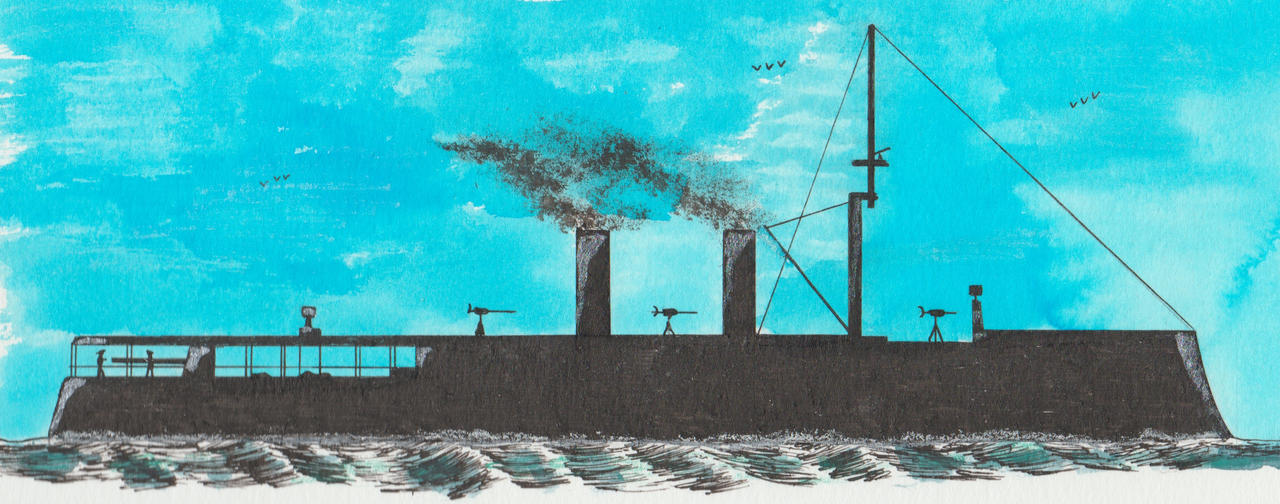
Portuguese gunboat Patria 1903-1931

©Warshipsresearch.blogspot.com

Built with the funds of the Great National Subscription after the 1890 British Ultimatum when Portugal claimed a large area between her colonies Mozambique and Angola covering most of Zimbabwe and Zambia and a large part of Malawi resulting in witdrawing Portuguese forces from areas which both countries claimed. Launched at Lisbon, Portugal on 27 June 1903, sent to the Macau Naval Station in 1908 and sold to China in 1931. 

Wednesday, 6 August 2025

Axis submarines stationed at Novo Redondo, Portuguese Angola according to the U.S. Joint Intelligence Committee. Daily summary dated 30 December 1941

An item reported that 3 Axis submarines were stationed at Novo Redondo [nowadays Sumbe], [Portuguese] Angola [ nowadays Republic of Angola]. The J.I.C. commented that the same source reported this on 8 and 18 Decembers and later sighted a British seaplane submarines.

Source

Map Room Papers (Roosevelt Administration), 1942 - 1945. U.S. Joint Intelligence Committee. Daily summary No. 20 dated 30 December 1941

Sunday, 6 July 2025

Portuguese steamship Pungue arrived at Lisbon, Portugal in October 1942

In his letter No. 1932 dated 26 October 1942 referred the German naval attaché in Portugal to the Oberkommando der Kriegsmarine at Berlin to the newspaper Seculo, Lisbon dated 18 October 1942 reporting that the Portuguese steamship Pungue coming from Luanda, Portuguese Angola [nowadays Republic of Angola] arrived at Lisbon with 90 pieces of cattle.

Source

Bundesarchive. RM 11-18. German naval attaché in Portugal. 

Wednesday, 6 December 2023

Portuguese fragatinga Luanda 1782-1800

Built at Luanda [Angola?] in 1782, last mentioned in 1800, armament of 26 guns.

Source

A. Marques Esparteira. Catalogo dos navios brigantinos (1640-1901). Lisboa, 1976.

Tuesday, 27 June 2023

Fish-meal plant established at Porto Alexandre, Angola according to the Commercial Fisheries Review dated January 1960 no. 1

An item reported that a Norwegian firm equipped a complete fish-meal plant at Porto Alexandre, Angola with a daily capacity of 150 metric tons. Contract price was 80,000 pound sterling of 224,000 US dollars. The Norwegian firm would technically support the plant during a half year after it start operating. The contaxt between the firm and Angola dated from 1956 when the German market refused sundried fish meal, produced by many small plants.