Translate

Showing posts with label Atlantic Ocean. Show all posts

Thursday, 10 September 2026

British cargo ship mv Hylton torpedoed and sunk by an enemy submarine according to the War Cabinet Weekly Résumé No. 83 of the Naval, Military and Air Situation 27 March-3 April 1941

An item reported that on 29 March was torpedoed and sunk by an enemy submarine the British merchant ship mv Hylton, tonnage 5,917 tons , loaded with wheat and lumber , underway from Vancouver, Canada to the Tyne, part of convoy yes, on the position 570 miles north west of Bloody Foreland. Crew landed at Londonderry, Northern Ireland.

Source

National Archive UK. CAB-66-16-1. 

British tanker Chama torpedoed and sunk by enemy submarine torpedoed and sunk according to the War Cabinet Weekly Résumé No. 83 of the Naval, Military and Air Situation 27 March-3 April 1941

An item reported that on 23 March was torpedoed and sunk by an enemy submarine the British m/v tanker Chama, tonnage 8,077 tons, in ballast, underway from Ardrossan, Scotland to New York, USA, part of convoy no, on the position 520 miles west of Scillies. Fate crew unknown.

Source

National Archive UK. CAB-66-16-1. 

Saturday, 5 September 2026

American sailing sealing ship Atlas in 1836-1937

Antarctic sealing ground South Atlantic. Tonnage 261 tons. Rigging ship. Captain Barnum, left New London on 17 May 1835 or 1836, returned on 9 April 1837 with 1,650 barrels sea-elephant oil.

Source

Goode, George Brown. The fisheries and fishery industries of the United States. Section V. History and methods of the fisheries. Volume II, Washington, 1887. 

Friday, 28 August 2026

American sailing sealing ship Eveline in 1835

Antarctic sealing ground South Atlantic Ocean. Rigging schooner. Arrived at Stonington on 3 May 1835 with 622 fur-seal skins, 890 hair-seal skins and 34 barrels seal-elephant oil.

Source

Goode, George Brown. The fisheries and fishery industries of the United States. Section V. History and methods of the fisheries. Volume II, Washington, 1887. 

Thursday, 27 August 2026

British cargo ship Maidan lost according to the War Cabinet Weekly Résumé No. 64 of the Naval, Military and Air Situation 14-21 November 1940


An item reported the loss on 5 November of the British cargo ship Maidan , tonnage 7,908 tons, loaded with general stores and motor trucks, underway from Baltimore, USA to Liverpool, England sunk by a surface raider on the position approximate 52.26 North and 32.34 West; Part of a convoy. Further details were yet unknown.(1)

Note

1. The raider was the German pocket battleship Admiral Scheer. She was part of the convoy HX84 escorted by the armed merchant cruiser HMS Jervis Bay.

Source

National Archive UK. CAB-66-13-37. 

British cargo ship Kenbane Head lost according to the War Cabinet Weekly Résumé No. 64 of the Naval, Military and Air Situation 14-21 November 1940

An item reported the loss on 5 November of the cargo ship Kenbane Head, tonnage 5,225 tons, loaded with general stores, underway from Montreal, Canada to Beefast, Northern Ireland sunk by a surface raider on the position approximate 52.26 North and 32.34 West; Part of a convoy. Of the crew landed 20 men in Newfoundland.(1)

Note

1. The raider was the German pocket battleship Admiral Scheer. She was part of the convoy HX84 escorted by the armed merchant cruiser HMS Jervis Bay.

Source

National Archive UK. CAB-66-13-37. 

American sailing sealing ship Betsey in 1835-1837

Antarctic sealing ground South Atlantic etc. Rigging schooner. Captain William Noyes, left New London in July 1835, returned in May 1837 with 500 fur-seal skins, 15,000 hair-seal skins and 600 otter skins.

Source

Goode, George Brown. The fisheries and fishery industries of the United States. Section V. History and methods of the fisheries. Volume II, Washington, 1887.

American sailing sealing ship Atlas in 1835

Antarctic sealing ground South Atlantic. Rigging ship. Arrived at Stonington in 1835 with 1,500 fur-seal skins, 600 hair-seal skins and 71 bullocs’ hides on freight.

Source

Goode, George Brown. The fisheries and fishery industries of the United States. Section V. History and methods of the fisheries. Volume II, Washington, 1887. 

Wednesday, 26 August 2026

British aircraft carrier HMS Furious arrived in England retrning from Canada according to the War Cabinet Weekly Résumé No. 45of the Naval, Military and Air Situation 4-12 July 1940

Courageous-class battle cruisers©Warshipsresearch.blogspot.com

HMS Furious©Warshipsresearch.blogspot.com

Fairey Swordfish going down in lift

An item reported that the British aircraft carrier HMS Furious (1) arrived at Liverpool, England on 7 July retuening from Canada with aircraft and ammunition.(1)

Note

1. Laid down as a Courageous-classs battle cruiser by Armstrong Whitworth, Wallsend on 8 June 1915, launched on 18 August 1916, commissioned on 26 June 1917, reclassified as an aircraft carrier in September 1925 and sold to be broken up in 1948.

Source

National Archive UK. CAB-66-9-42. 

Sunday, 23 August 2026

British navy desperately searching for German pocket battleship Admiral Scheer according to the War Cabinet Weekly Résumé No. 64 of the Naval, Military and Air Situation 14-21 November 1940

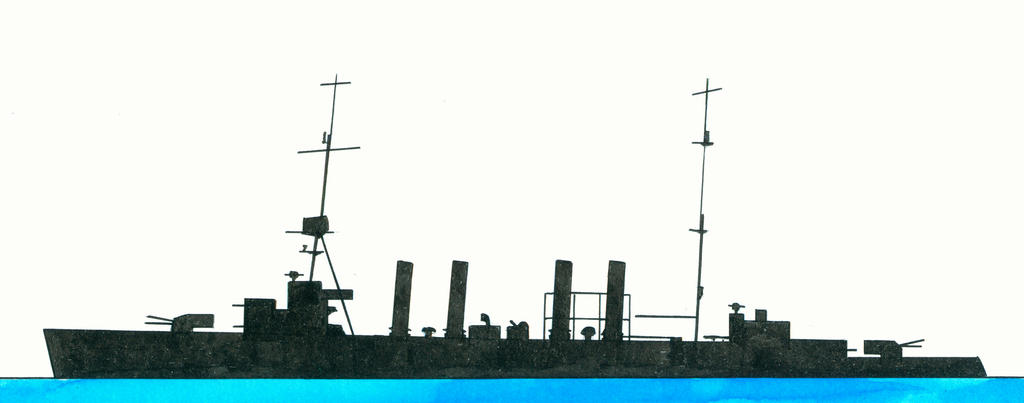
British HMS Rodney©Warshipsresearch.blogspot.com

British Revenge-class©Warshipsresearch.blogspot.com

German pocket battleship Admiral Scheer. Source Werft-Reederei-Hafen 15 April 1933

An item reported that ships part of the British Home Fleet still were searching for the German pocket battleship Admiral Scheer and for survivors of the Halifax (Nova Scotia)-England convoy HX84 escorted by the armed merchant cruiser HMS Jervis Bay. This convoy numbered 37 ship and was attacked by the Admiral Scheer on 5 November on the Southern Atlantic. The Jervis Bay sacrified herself. Still another 7 ships of her convoy were destroyed. On 17 November was stopped with the search for survivors forced by the continuous. The British battleship HMS Rodney escorted the homeward-bound convoys and the HMS Revenge the outward bound convoys.

Notes

1. Part of Deutschland armored ships later reclassified as heavy cruisers, succeeded by realized Admiral Hipper-class and planned D-class, laid down by Reichsmarinewerft Wilhelmshaven, Germany on 25 June 1931, launched on 1 April 1933, commissioned on 12 November 1934, sunk during an Allied air attack on 9 April 1945, after the war partially broken up and buried.

2. Launched by Vickers Limited, Barrow-in-Furness, England as TSS Jervis Bay for account of the Commonwealth Line active between the United Kingdom and Australia on 17 August, sold to the White Star Line in 1928, requisitioned by the Royal Navy in August 1939, converted into an armed merchant cruiser with as main armament aged 7x1-15.2cm/6”Mk VII guns.

3. Part of Nelson-class, preceded by realized Revenge-class and planned N3-class, succeeded by King George V-class, ordered in 1922, laid down by Cammell Laird, Birkenhead, England on 28 December 1922, launched on 17 December 1925, completed in August 1927, commissioned on 7 December 1927, out of service in August 1946 and sold to be broken up on 26 March 1948.

4. Part of Revenge-class, preceded by Queen Elizabeth-class, succeeded by planned N3-class and realized Nelson-class, laid down by Vickers Limited, Barrow-in-Furness, England on 22 December 1913, launched on 29 May 1915, commissioned on 1 February 1916, converted into a trainingshp  for boiler room personnel in 1944, sold to be broken up in July 1948 arriving at the scrapyard on 5 September 1948

Source

National Archive UK. CAB-66-13-37. 

Saturday, 22 August 2026

Just two German submarines in the Western Approaches present according to the War Cabinet Weekly Résumé No. 45of the Naval, Military and Air Situation 4-12 July 1940

An item reported that just two German submarines seemed to be operating in the Western Approaches.

Source

National Archive UK. CAB-66-9-42. 

British destroyer Whirlwind sunk by German submairne U-34 according to the War Cabinet Weekly Résumé No. 45of the Naval, Military and Air Situation 4-12 July 1940

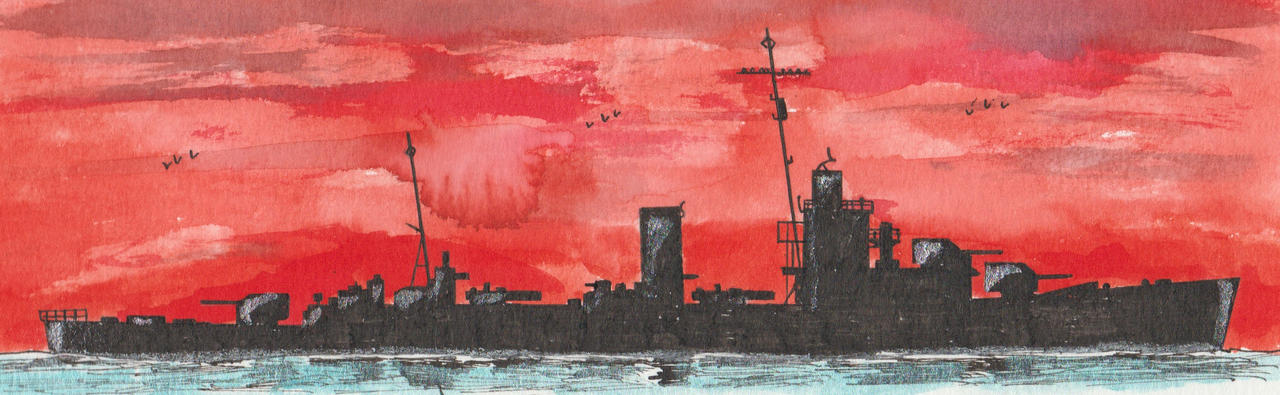
HMS Seymour, Parker-class flotilla leader. ©Warshipsresearch.blogspot.com

HMS Wakeful, Admiralty W-class. ©Warshipsresearch.blogspot.com

HMS Amazon.  ©Warshipsresearch.blogspot.com

An item reported that the British destroyer HMS Whirlwind (1) was torpedoed by a enemy submarine [U-34 (2)] on 5 July in the Western Approaches and had to be sunk by HMS Westcott.(3) Of her crew were 57 men killed and 15 men (including 2 officers) wounded.

Notes

1. Admiralty W-class destroyer preceded by S- an Parker-classes succeeded by Thornycroft type destroyer leaders Ambuscade and Amazon, ordered on 9 December 1916, laid down by Swan Hunter&Wigham Richardson, Wallend in May 1917, launched on 15 December 1917 and torpedoed on 5 July 1940 by German submarine U-34 and lost.

2. Type VIIA submarine. Ordered on 25 March 1934, laid down with yard number 557 by Germaniawerft, Kiel, Germany on 15 September 1935, launched on 17 July 1936, commissioned on 12 September 1936, sunk due to a collission with the U-boat tender Lech in the Baltic on 5 August 1943. salvaged on 5 August 1943 and stricken on 8 September 1934

3. Admiralty W-class destroyerpreceded by S- an Parker-classes succeeded by Thornycroft type destroyer leaders Ambuscade and Amazon, ordered in December 1916, laid down by William Denny and Brothers Limited, Dumbarton, Scotland on 30 March 1917, launched on 14 February 1918, commissioned on 12 April 1918, converted into a long-range escort in 1943, de commissioned on 26 June 1945, sold to BISCO and broken up in 1946.

Source

National Archive UK. CAB-66-9-42. 

Wednesday, 19 August 2026

Swedish merchant ship Bissen sunk by enemy submarine according to the War Cabinet Weekly Résumé No. 45of the Naval, Military and Air Situation 4-12 July 1940

An item reported that on 7 July the Swedish merchant ship Bissen, tonnage 1,515 tons, loaded with ... , underway from ... to ... was torpedoed 90 miles outh of Bantry Bay [Ireland?]. Not part of convoy

Source

National Archive UK. CAB-66-9-42. 

Dutch tanker Lucrecia sunk by enemy submarine according to the War Cabinet Weekly Résumé No. 45of the Naval, Military and Air Situation 4-12 July 1940

An item reported that on 7 July the Dutch tanker Lucrecia, tonnage 2,584 tons, loaded with ... , underway from Aruba, Dutch West Indies to England torpedoed 300 miles west of Lands’End was torpedoed. No part of convoy. Of her crew were the master Cornelis Smit, 1st mate died and 30 men landed at Oporto [Portugal].(1)

Note

1. Launched with yard number 203 by Cantiere Naval Triestino, Montfalcone, Italy in 1928, delivered to owner/manager N.V. Curacaosche Scheepvaart Maatschappij, Willemstad, Dutch West Indies in July 1928, torpedoed by German submarine U-34, she was bound for Falmouth. Master and one other crew member died directly, 1st mate who was wounded next day, survivors rescued by Portuguese ship Alferrarede.

Source

National Archive UK. CAB-66-9-42. 

Tuesday, 18 August 2026

British minesweeping sloop HMS Asphodel 1915-1920 and Danish HDMS Fylla 1920-1954

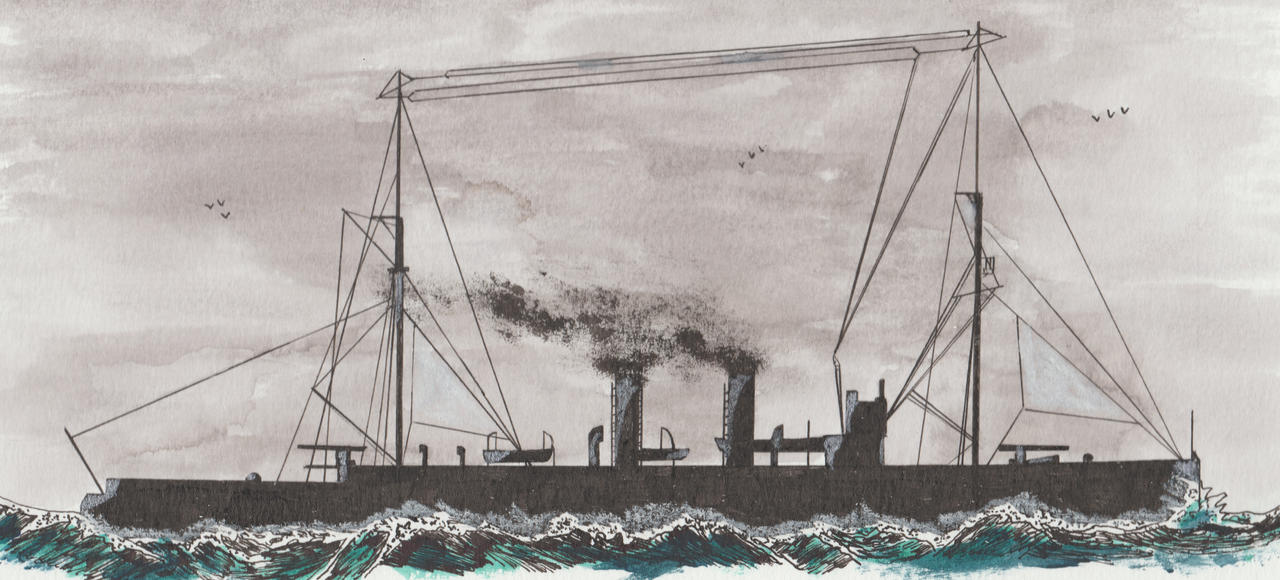
Arabis-class©Warshipsresearch.blogspot.com

Built under the Emergency War Programme of the First World War. At the end of 1914 was the design completed and in JUly 1915 were 36 ships in 3 batches ordered for the British Royal Navy. British shipyards built an additional 8 vessels for the French Navy. Part of Arabis-class preceded by Azalea- and Acacia classes and preceded by Aubrietia-class. The Arabis-class was just like 4 other subclasses part of the so-called Flower-class, the later also known as Cabbage-class or the Herbacous Borders. Launched by D.&W. Henderson and Company, Partick, Scotland on 21 December 1915, sold to Denmark on 16 JUne 1920, renamed HDMS Fylla, served as fishery inspection vessel on the North Atlantic and around Iceland and Greenland and stricken in 1954. 

American sailing sealing ship Betsey in 1834-1836

Antarctic sealing ground African coast. Rigging schooner. Captain G.L. Allyn. Departed on 28 July 1834 with 21 crew members to the African coast for whaling and sailing and returned home [New London?] in March 1836 with 1,800 fur-seal skins and 100 barrels whale oil.

Source

Goode, George Brown. The fisheries and fishery industries of the United States. Section V. History and methods of the fisheries. Volume II, Washington, 1887. (1978).

American sailing sealing ship Betsey in 1834

Antarctic sealing ground South Atlantic. Rigging schooner. Captain Elliot, arrived at New London on 7 May 1834 with 1,390 fur-seal skins, 500 pup seal-skins, 74 bullock hides and some whale oil from the South Atlantic.

Source

Goode, George Brown. The fisheries and fishery industries of the United States. Section V. History and methods of the fisheries. Volume II, Washington, 1887. (1978).

Sunday, 16 August 2026

British motor cargo shipApapa lost according to the War Cabinet Weekly Résumé No. 64 of the Naval, Military and Air Situation 14-21 November 1940

An item reported the loss on 15 November of the British cargo ship Apapa, tonnage 9,333 tons, loaded with African products, underway from Lagos, Nigeria to Liverpool, England sunk when bombed and set on fire by German aircraft on the position 300 miles west south west of The Bloody Foreland.(1) Part of convoy. Of the crew+passengers of 261 persons were 236 landed.

Note

1. The Bloody Foreland or Cnoc Fola is a red colored headland in County Donegal along the Atlantic Ocean, Ireland near the Parish of Gweedore.

Source

National Archive UK. CAB-66-13-37. 

Saturday, 15 August 2026

Belgian cargo ship Anvers lost according to the War Cabinet Weekly Résumé No. 64 of the Naval, Military and Air Situation 14-21 November 1940

An item reported the loss on 13 November of the Belgian cargo ship Anvers, tonnage 4,398 tons, loaded with steel, underway from Philadelphia, USA to London, England sunk when bombed by German aircraft on the position off Rattray Head. Part of convoy. All men saved.

Source

National Archive UK. CAB-66-13-37. 

Friday, 14 August 2026

British cargo ship Empire Wind lost according to the War Cabinet Weekly Résumé No. 64 of the Naval, Military and Air Situation 14-21 November 1940

An item reported the loss on 12 November of the British cargo ship Empire Wind, tonnage 7,459 tons, in ballast, underway from Tyne, United Kingdom to Vancouver, Canada sunk when bombed by aircraft on the position 360 miles west of Bantry Bay. Part of convoy. Crew landed at Greenock, Scotland.

Source

National Archive UK. CAB-66-13-37.