Translate

Showing posts with label Aircraft carriers. Show all posts

Tuesday, 6 October 2026

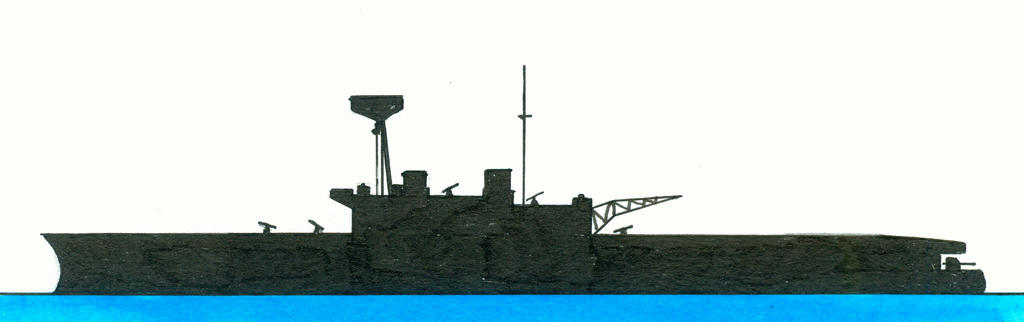
Specifications for a new to be built Russian aircraft carrier in 1925

The American Military Attaché at Riga, Latvia supplied in his report dated 17 November 1925 No. 4896 the specifications of the planned aircraft carrier of which the Naval Staff approved the designs. He got the information from what he called a reliable source. With a deadweight of 7,550 tons and as dimensions 107 x 15.5 metres. The turbine propulsion delivered 9,500 hp allowing a speed of 20.8 knots. Twin screws. Fuel supply 500 tons. Fitted out with 2 elevators and 2 cranes for lifting the aircraft. The Military Attaché wrote that the specifications were the same as supplied by several other sources. The French Naval Attaché however made clear that for a ship with this tonnage the proposed 9,500 hp and a speed of 21 knots was impossible. The designs were presumably to be changed. Furthermore it was yet unknown is her engines were coal or oil fuelled.

Source

National Archive. Record Group 165: Records of the War Department General and Special Staffs Series: Security Classified Correspondence and Reports. File Unit. Russia: Navy - MID 2503-16 THRU 2503-265. Roll 1443.

Friday, 2 October 2026

Japanese aircraft carrier Kurama or Kaimon (Ship No. 5008) 1943-1944

Unryu-class©Warshipsresearch.blogspot.com

Part of Unryu-class (project number G16) Ikoma-subclass preceded by Taiho succeeded by planned but not realized Project Number G18. Design resembles more the Hiryu than that of the Taiho. There were 16 planned namely under the Maru Kyu Programme ship No. 301 in 1941 and under the Kai-Maru 5 Programme Ships No. 5001-5015, at the end were 13 were cancelled. There were 2 subclasses namely Unryu (Nos. 302, Modified Unryu Class 5001-5006 and Ikoma (unofficial Modified Ship Number 302-class in fact a simplified Unryu model Nos. 5007-5015). To be laid down by Mitsubishi, Nagasaki, Japan in November 1943, was to be completed by December 1945 but cancelled on 5 May 1944. 

Monday, 28 September 2026

Japanese aircraft attacking Darwin, Australia according to the U.S. Joint Intelligence Committee. Daily summary dated 20 February 1942

American Clemson-class destroyer©Warshipsresearch.blogspot.com

An item reported that the Japanese attacked twice the shipping and airfield at Darwin, Australia on 19 February. At least 2 ships including a destroyer (1) were lost and at least 3 other ships heavily damaged. There was no information available about the airfields. The J.I.C. commented that again the Japanese skills in air attacks was proven. The shipping at Darwin included the convoy which was forced to return from Koepang, Dutch Timor after it was attacked in the Timor Sea and shadowed afterwards by the Japanese. The fighters involved in both raids as escorts of the bombers must be carrier-borne regarded their radius.

Note

1. USS Peary DD-226 part of Clemson-class, laid down by William Cramp&Sons, Philadelphia, USA with yard number 492 on 9 September 1919, launched on 6 April 1920, commissioned on 22 October 1920, lost on 19 February 1942 and stricken on 8 May 1942.

Source

Map Room Papers (Roosevelt Administration), 1942 - 1945. MR0423. U.S. Joint Intelligence Committee. Daily summary No. 72 dated 20 February 1942

Sunday, 27 September 2026

Heavy cruiser sighted at Bremen, Germany according to the War Cabinet Weekly Résumé No. 45of the Naval, Military and Air Situation 4-12 July 1940

Sister ship Admiral Hipper. ©Warshipsresearch.blogspot.com

An item reported that on 9 July at Bremen, German one 8” (heavy) cruiser was sighted, probably the Seydlitz which was now to be completed.(1)

Note

1. Part of Admiral Hipper-class preceded by Deutschland-class succeeded by planned P-class. Five planned of which 3 three were completed and 2 cancelled. Laid down by Deutsche Schiff- un Maschinenbau Bremen, Germany on 29 December 1936, launched on 19 January 1939, work stopped in summer 1940 although she was nearly 90% completed, decided to convert into an auxiliary aircraft carrier with 10 Bf 109 fighters and 10 Ju 87 dive bombers, work stopped in 1943, incomplete towed to Königsberg and scuttled there to prevent capture by Russians on 29 January 1945, seized by Russians and later broken up.

Source

National Archive UK. CAB-66-9-42. 

Italian destroyer Nembo 1925-1940

Italian Turbine-class destroyer©Warshipsresearch.blogspot.com

British aircraft carrier HMS Eagle©Warshipsresearch.blogspot.com

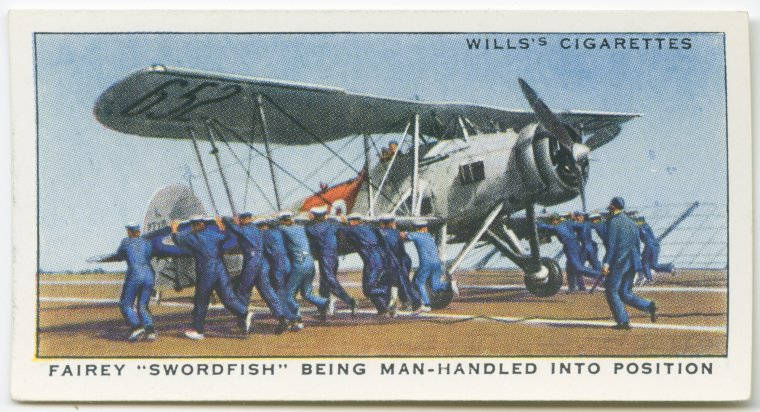
Part of Turbine-class preceded by Sauro-class succeeded by Navigatori-class. Identification code NB. Laid down by Cantieri del Tirreno (CNT), Riva Trigoso, Italy on 21 January 1925, launched on 27 January 1927, completed on 24 October 1927 and sunk in an attack by Swordfish torpedo bombers of the British aircraft carrier HMS Eagle on the harbour of Tobruk, Libya on 20 July 1940. 

Friday, 25 September 2026

British armed merchant cruiser Corfu and HMS aircraft carrier Hermes collided according to the War Cabinet Weekly Résumé No. 45 of the Naval, Military and Air Situation 4-12 July 1940

HMS Hermes©Warshipsresearch.blogspot.com

An item reported that in a dense tropical storm the British armed merchant cruiser Corfu (1) and HMS aircraft carrier Hermes (2) on 10 July collided. The Corfu was escorting a convoy from Freetown, Sierra Leone but heavily holed forward was forced to go under escort to Freetown.

Notes

1. Ordered by P&O Line on 25 June 1930, laid down by Alexander Stephen and Sons, Glasgow, Scotland with yard number 535 on 9 September 1930, launched on 20 May 1941, maiden voyage begun on 16 October 1931, requisitioned by the navy in September 1939, armed merchant cruiser until February 1944, troop trasnport until the end of the Second World War and broken up at Osaka, Japan in 1961.

2. Based on a cruiser hull-design using a seaplane carrier design dating 1916 but which was enlarged and modified in a design dating April 1917. Building ordered in April 1917, laid down by Armstrong Whitworth on 15 January 1918, launched on 11 September 1919, commissioned on 18 February 1924, reclassified as training ship on 16 July 1938, again as aircraft carrier on 24 August 1939 and sunk during a Japanese air attack on 9 April 1942.

Source

National Archive UK. CAB-66-9-42. 

Thursday, 24 September 2026

French merchant ship Bougainville 1913-1942 and Japanese Teifu or Teihu or Taihu Maru 1942-1945

©Warshipsresearch.blogspot.com

Call sign FNLR. Owner in 1939 Compagnie Maritime des Chargeurs Réunis S.A., Le Havre, France. Laid down by Forges et chantiers de la Méditerranée, Le Havre, France in 1913, launched in 1914, completed in April 1914, part of the Vichy France fleet after 25 June 1940, requisitioned by Japan on 12 April 1942, bombed by American Task Force carrier based aircraft and sunk on 21 January 1945. Gross tonnage7,110 tons, net tonnage 4,363 tons, deadweight 9,200 tons and as dimensions 414.0 x 53.8 x 34.8 x 27 (loaded) feet. Coal fuelled propulsion, horsepower 416 nhp and speed 12 (normal cruising)-13 (maximum) knots. 

Wednesday, 23 September 2026

Italian destroyer Ostro 1925-1940

Italian Turbine-class©Warshipsresearch.blogspot.com

British aircraft carrier HMS Eagle©Warshipsresearch.blogspot.com

Part of Turbine-class preceded by Sauro-class succeeded by Navigatori-class. Identification code OT. Laid down by Ansaldo, Genoa on 29 April 1925, launched on 2 January 1928, completed on 9 June 1928, commissioned on 9 October 1928 and sunk in an attack by Swordfish torpedo bombers of the British aircraft carrier HMS Eagle on the harbour of Tobruk, Libya on 20 July 1940. 

Tuesday, 22 September 2026

Japanese aircraft carrier Ikoma (Ship No. 5007) 1943-1947

Unryu-class©Warshipsresearch.blogspot.com

Part of Unryu-class (project number G16) Ikoma-subclass preceded by Taiho succeeded by planned but not realized Project Number G18. Design resembles more the Hiryu than that of the Taiho. There were 16 planned namely under the Maru Kyu Programme ship No. 301 in 1941 and under the Kai-Maru 5 Programme Ships No. 5001-5015, at the end were 13 were cancelled. There were 2 subclasses namely Unryu (Nos. 302, Modified Unryu Class 5001-5006 and Ikoma (unofficial Modified Ship Number 302-class in fact a simplified Unryu model Nos. 5007-5015). Laid down by Kawasaki, Kobe, Japan on 5 July 1943, launched on 17 November 1944, 60% completed when building stopped on 9 November 1944, was to be completed by October 1945, and broken up between 4 July 1946-10 March 1947. 

Sunday, 20 September 2026

Number of Japanese ships at Rabaul, New Guinea increased according to the U.S. Joint Intelligence Committee. Daily summary dated 22 February 1942

An item reported that reconnaissance above Rabaul on 18 February pointed out that there were more Japanese ships were lying than earlier reported. Now were there 4 light cruisers, 1 air craft carrier, 1 oiler, 1 minelayer and 12 merchant ships.

Source

Map Room Papers (Roosevelt Administration), 1942 - 1945. MR0423. U.S. Joint Intelligence Committee. Daily summary No. 74 dated 22 February 1942

Friday, 18 September 2026

Japanese aircraft carrier Ship No. 5005 1943

Unryu-class©Warshipsresearch.blogspot.com

Part of Unryu-class (project number G16) Unryu-subclass preceded by Taiho succeeded by planned but not realized Project Number G18. Design resembles more the Hiryu than that of the Taiho. There were 16 planned namely under the Maru Kyu Programme ship No. 301 in 1941 and under the Kai-Maru 5 Programme Ships No. 5001-5015, at the end were 13 were cancelled. There were 2 subclasses namely Unryu (Nos. 302, Modified Unryu Class 5001-5006 and Ikoma (unofficial Modified Ship Number 302-class in fact a simplified Unryu model Nos. 5007-5015). To be built by Yokosuka Naval Arsenal but cancelled in 1943 and material used for the aircraft carrier Shinano. 

Thursday, 17 September 2026

Several ships lost during Japanese air attack on Darwin, Australia according to the U.S. Joint Intelligence Committee. Daily summary dated 22 February 1942

American Clemson-class destroyer©Warshipsresearch.blogspot.com

An item reported that in the Japanese air attack on Darwin, Australia (1) one destroyer (2)  and six merchant ships were lost, 2 merchant ships heavily damaged six more slightly damaged. The losses of aircraft were 9 on the ground and 12 in combat.(1)

Notes

1. Darwin was on 19 February 1942 attacked by 188 Japanese carrier-based and 54 land-based aircraft in two separate raids.

2. USS Peary DD-226 part of Clemson-class, laid down by William Cramp&Sons, Philadelphia, USA with yard number 492 on 9 September 1919, launched on 6 April 1920, commissioned on 22 October 1920, lost on 19 February 1942 and stricken on 8 May 1942.

Source

Map Room Papers (Roosevelt Administration), 1942 - 1945. MR0423. U.S. Joint Intelligence Committee. Daily summary No. 74 dated 22 February 1942

Tuesday, 15 September 2026

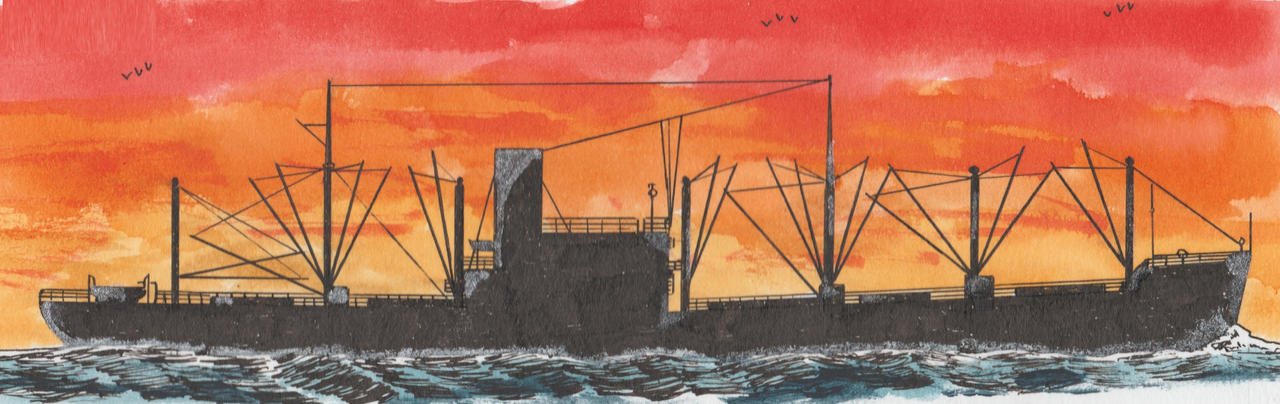
American simplified Ingall Shipbuilding Corporation C-3 type design

Type C-3 design©Warshipsresearch.blogspot.com

Bogue-class escort carriers©Warshipsresearch.blogspot.com

Dimensions 465.0 (between perpendiculars)-492.0 (over all) x 69.6 (moulded) x 42.6 (depth to shelter deck)-33.6 (depth to 2nd deck moulded) x 10.3 1/2 (light draught)-28.6 7/8 (draught loaded) feet. Gross ronnage (approx.) 7,940 tons, net tonnage (appox.) 4,700 tons, total deadweight tonnage 12,109 tons, displacement tonnage loaded draught 17,600 tons and 5,491 tons at light draught. Passenger accommodation for 6x2-12 passengers. Maximum trial speed 16.5 knots. Crago capacity 714,790 cubic feet, bale capacity 657,730 cubic feet. Total ship’s storage space 16,366 cubic feet and refrigerated cargo 38,040 cubic feet bale.

Preceded by Type C2 and succeeded by Type C 4. The United States Maritime Commission (MARCOM) designed the Type C3 in the late 1930s and which was to be a general purpose ship which could be modified for specific purposes. Between 162 were built between 1939-1946 and another 75 were completed using Type C3 hulls and engines but not as cargo ship. During the Second World War were several of the Type C3 ships converted into war ships as the Bogue-class escort carrier. 

Japanese naval force gathered above the Anambas Islands according to the U.S. Joint Intelligence Committee. Daily summary dated 23 February 1942

An item reported that according to aerial reconnaissance dated 21 February above the Anambas Islands were 2 Japanese aircraft carrier. 2 light cruisers, 1 heavy cruiser and 10 destroyers. The J.I.C. commented that these area was used by as a rendezvous-point for convoys and destroyers. The vessels which were now described apparently were waiting for the arrival of transports with on board reinforcements for the Java campaign.

Source

Map Room Papers (Roosevelt Administration), 1942 - 1945. MR0423. U.S. Joint Intelligence Committee. Daily summary No. 75 dated 23 February 1942

Saturday, 12 September 2026

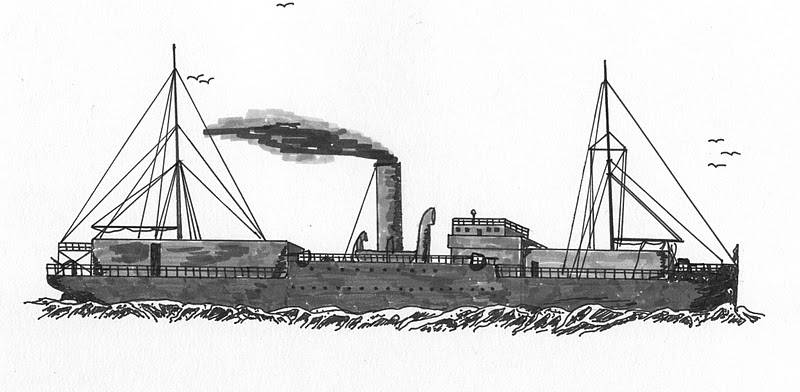
Russian submarine work ships in 1925

Orlitsa as seaplane tender ©Warshipsresearch.blogspot.com

cargoship Sovet ©Warshipsresearch.blogspot.com

Komuma©Warshipsresearch.blogspot.com

The Military Attaché at Riga, Latvia wrote in his report dated 17 November 1925 No. 4896 that the Baltic Fleet at the present possessed two submarine bases namely the Orlitza (1) and the Kommuna. The first one was also reported as being an aircraft carrier. Probably the Soviet of the Volunteer Fleet was sometimes used as an auxiliary for carrying planes. She was fitted out with a superstructure which could be removed or fitted from time to time when necessary. Possible she served also as a temporarily mother ship.

Notes

1. Call sign UNYF. Homeport Vladivostok. Built by Caledon Shipbuilding&Engineering Co. Ltd., Dundee, Scotland as the cargo ship Vologda or Wologda in 1903, renamed Imperatritza Aleksandra in 1910, bought by the Russian Imperial Navy in 1913, renamed Orlitsa, rebuilt as a seaplane carrier completed in February 1915, cargo ship Sovet since 1918 or 1923, military transport since 1938 and broken up between 1958-1964.

2. Submarine salvage vessel. In 1912 was she laid down at the Putilov Yard as Volov in 1912, launched on 17/30 November 1913, commissioned in the Russian Imperial navy on 14 July 1915, renamed Kommuna on 31 December 1922, modernized at the shipyard of Kon.Mij. De Schelde, Vlissingen, Netherlands between 1950-1951 and nowadays still in service.

Source

National Archive. Record Group 165: Records of the War Department General and Special Staffs Series: Security Classified Correspondence and Reports. File Unit. Russia: Navy - MID 2503-16 THRU 2503-265. Roll 1443.

Tuesday, 8 September 2026

Japanese cargo ship (ex-Eastern 1899-1924) Terukuni Maru 1924-1944

©Warshipsresearch.blogspot.com

As ss Eastern operated by the Eastern&Australian Steamship Co., London, England. Call sign JBDB. Owner in 1939 Harada Kisen K.K. Homeport Kobe, Japan. Built by R. Napier&Sons Ld., Glasgow, Scotland in April 1899 and sunk by American carrier aircraft on 18 October 1944 off Luzon/Camiguin, Philippines. Gross tonnage 3,589 tons, under deck 2,958 tons, net tonnage 2,272 tons, deadweight 4,284 tons and as dimensions 352.0 x 42.2 x 19.8 x 14.6 (light)-24 (loaded) feet. Reciprocating propulsion, one screw, coal bunker capacity 1,117 tons, horsepower 469nhp, range 6,000 nautical miles/11 knots and speed 11 (normal cruising)-14 (maximum) knots. 

Sunday, 6 September 2026

Japanese aircraft carrier Unryu (Ship No. 302) 1942-1944

Unryu-class©Warshipsresearch.blogspot.com

Part of Unryu-class (project number G16) Unryu-subclass preceded by Taiho succeeded by planned but not realized Project Number G18. Design resembles more the Hiryu than that of the Taiho. There were 16 planned namely under the Maru Kyu Programme ship No. 301 in 1941 and under the Kai-Maru 5 Programme Ships No. 5001-5015, at the end were 13 were cancelled. There were 2 subclasses namely Unryu (Nos. 302, Modified Unryu Class 5001-5006 and Ikoma (unofficial Modified Ship Number 302-class in fact a simplified Unryu model Nos. 5007-5015). Ordered under Rapid Naval Armaments Supplement Programme in 1941, laid down by Yokosuka Naval Arsenal on 1 August 1942, launched on 25 September 1943, commissioned on 6 August 1944, sunk by the American submarine USS Redfish in the East China Sea on 19 December 1944 and stricken on 20 February 1945. 

Saturday, 5 September 2026

Italian destroyer Zeffiro 1925-1940

Italian Turbine-class©Warshipsresearch.blogspot.com

British aircraft carrier HMS Eagle©Warshipsresearch.blogspot.com

Part of Turbine-class preceded by Sauro-class succeeded by Navigatori-class. Identification code ZF. Laid down by Ansaldo, Genoa on 29 April 1925, launched on 27 May 1927, completed on 15 May 1928 and sunk in an attack by Swordfish torpedo bombers of the British aircraft carrier HMS Eagle on the harbour of Tobruk, Libya on 5 July 1940. 

Thursday, 3 September 2026

Dutch cargo ship ss (ex-USS Kedive 1943, HMS Kedive 1943-1946, Kedive 1946-1947) Rempang 1948-1968 (Daphne 1968-1975)

Bogue-class©Warshipsresearch.blogspot.com

Rempang©Warshipsresearch.blogspot.com

Escort carrier, first classifed as AVG-39, then ACV-39 and since 15 July 1943 CVE-39 USS Cordova as part of the Bogue-class and in British service Ruler-class. The U.S. Navy (USN) started with the hull classification Aircraft Escort Vessels (AVG) for escort aircraft carriers nicknamed ‘jeep carriers’ or even ‘baby flattop’ by the USN and ‘Woolworth Carrier’ by the British Royal Navy, that became Auxiliary Aircraft Carriers (ACV) on 5 August 1942 followed on 15 July 1943 Escort Aircraft Carriers (CVE). The last classification supplied an better impression of their combat and support roles.  Being (much) smaller and slower than a standard fleet carrier were they mainly used for convoy duties, supporting amphibious landings or just as a kind of cargo ship especially for transporting aircraft across the ocean.

Laid down by Seattle-Tacoma Shipbuilding Corporation as USS Cordova on 22 September 1942, launched on 30 January 1943, transferred to the British Royal Navy, renamed HMS Khedive D62, commissioned on 25 August 1943, decommissioned on 19 July 1946, as Kedive owner/manager United States Maritime Commission, Washington, USA since 20 January 1946, bought by Waterman Steamship Corporation, Mobile, USA and converted into a cargo ship by the Gulf Shipbuilding Corporation, Mobile in 1946, bought by the Dutch government on 23 January 1947, as Rempang owner/manager N.V. Stoomvaart Maatschappij Nederland, Amsterdam, Netherlands since 15 January 1948, sold, renamed Daphne and owner Atlas Enterprises Inc., Panama, manager Africa Liner Agencies Inc. S.A., Genoa, Italy since 4 July 1968, sold to owner/manager Comaran Africa Line (Compagnie Maritime de L'Afrique Noire S.A., Vlahakis), Abidjan, Ivory Coast, sold to be broken end 1975, arrived at Gandia, Spain on 20 January 1976 and breaking up by Hierros Ardes S.A. begun in February 1976.