Translate

Showing posts with label navy guns. Show all posts

Saturday, 9 May 2026

Shipping traffic along the Spanish Mediterranean coast increasing according to the Kriegsnachrichten No. 60 of the Chef des Admiralstabes der Marine dated 28 June 1918

An item referring to a reliable source reported that the since mid April reported suddenly decrease of the shipping traffic along the Spanish Mediterranean coast gradually increased. Recently was sighted that here too the convoys became larger/stronger.

Source

Bundesarchiv RM-40-622

Friday, 13 February 2026

Torpedo attacks more effectieve than gunfire for enemy submarines in October-November 1939

An item reported that in October 70% of the attacks by enemy submarines were made by torpedoes and 30% by gunfire. The torpedo attack percentage decreased in November tot just 33% despite that torpedo attacks were more effective with 80 against 60% by gunfire. Of the 16 ships sunk in October were 4 defensively armed, of the 7 that escaped 3. In November were 12 ships sunk none was defensively armed but of the 6 escaped 4 were.

Source

The National Archives, Kew Gardens, England CAB-66-4-1 Weekly Résumé (No. 14) of the naval, military and air situation from 12 noon 30 November to 12 noon 7 December 1939. 

Saturday, 20 September 2025

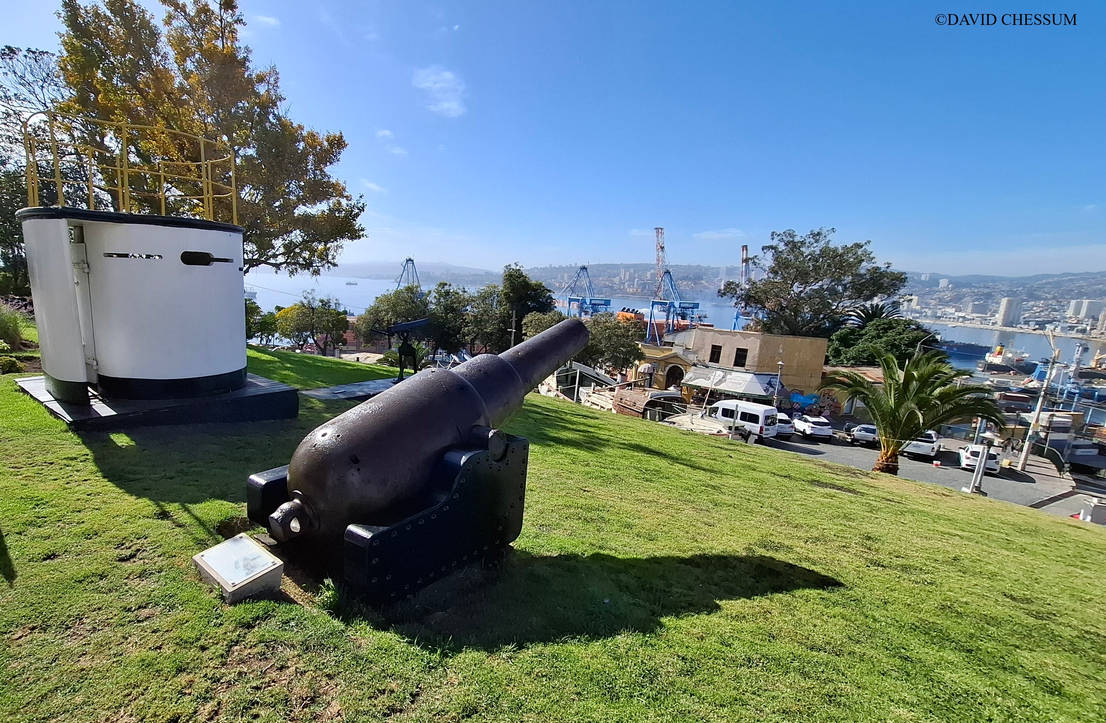
Chilean 19th Century Armstrong 115-pounder gun

Photo taken April 2025

Originally mounted on a slide carriage on deck of the Chilean gunboat Magallanes.(1) It was the first Chilean naval gun that fired during the War of the Pacific (2) in the Battle of Chipana on 12 April 1879 on the Peruvian ships Unión (3) and Pilcomayo.(4) In the night of 10 July she fired on the Peruvian ironclad Huascar and was also active in the Battle of Antofafasta on 28 August 1879. Despite the Magallanes served after the Chilean Civil War of 1891 as survey vessel the gun stayed on board until 1903. In 1906 she was sold to a merchant shipowner and wrecked in 1907.

Notes

1. Ordered by Law of 4 March 1872, launched by Raenhill&Co., London, England on 28 July 1873 and commissioned on 28 December 1874. Screw steam corvette.

2. Between Chile and the Bolivia-Peruvian alliance 14 February 1879-20 October 1883 (peace signed with Peru)-1884 (armistice with Bolivia).

3. Screw steam corvette, ordered by the Confederate States of America on 6 June 1863, contract name Shanghai but was to become Georgia, bought by Peru in November 1864, laid down by Chantiers Dubigeon, Nantes, France in December 1864, launched on 26 January 1865, completed in June 1865and stranded, partially burned and machinery destroyed scuttled after the Blockade of Callao to prevent capture by Chile on 16 January 1881.

4. Gunboat. Laid down by Money Wigram and Sons, Blackwall, England in 1873, launched in 1874, commissioned in 1874, captured by the Chilean ironclad Blanco Encalada at the Tocopilla on 14 November 1879, became a survey vessel and training ship for midshipmen and converted into a pontoon in Talcahuano in 1909.

5. Ironclad turret ship. Ordered by the Peruvian government on 4 August 1864, launched by Laird Brothers, Birkenhead, England on 7 October 1865, commissioned on 8 November 1866, captured by Chile at the Battle of Angamos on 8 October 1879, modernized in 1885 and 1887, decommissioned in 1897, submarine tender between 1917-1930, reinstated in 1934 and now museum ship.

Thursday, 12 December 2024

Naval steamship Explorateur of Zanzibar in 1897

Ex-Georgina. Iron built at London, England in 1868. Single screw. Schooner-rigged. Dimensions 138 x 19.9 x 10.7 (depth in hold) feet and gross tonnage 213 tons. Horsepower 50 nhp.

Source

W. Laird Clowes. Naval Pocket-Book. Second year. London, 1897. 

Saturday, 23 November 2024

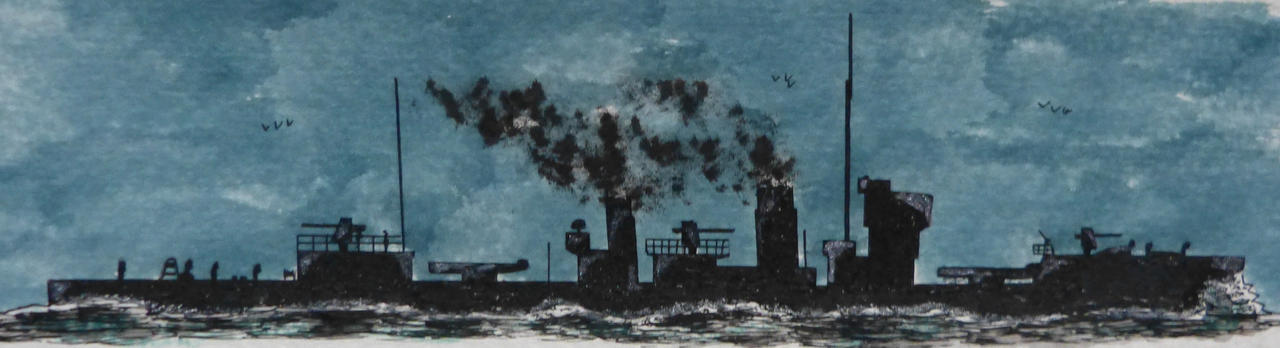
Japanese destroyer (ex-Dai-8 1923-1928) Hatakaze 1928-

Wakatake-class. Warshipsresearch.blogspot.com

Kamikaze-class. Warshipsresearch.blogspot.com

Mutsuki-class. Warshipsresearch.blogspot.com

Part of Kamikaze-class (some times referred to as Kiyokaze-class) preceded by Wakatake-class succeeded by Mutsuki-class, 27 planned, 9 completed and 18 cancelled. By some experts consided to be a modified Minekaze-class destroyer. Laid down by Maizuru Naval Arsenal on 3 July 1923, launched on 15 March 1924, completed on 30 August 1924, involved in the Battle of Sunda Strait and sinking of the American cruiser USS Exeter, Australian cruiser HMAS Perth and Dutch destroyer Hr.Ms. Evertsen in the night of 28 Feburary-1 March1942, sunk in an attack by aircraft of the American aircraft carrier USS Ticonderoga on 15 January 1945 and stricken on 10 March 1945.

Thursday, 3 February 2022

Second World War German tank design Landkreuzer P.1000 Ratte armed with 28cm naval guns in 1942


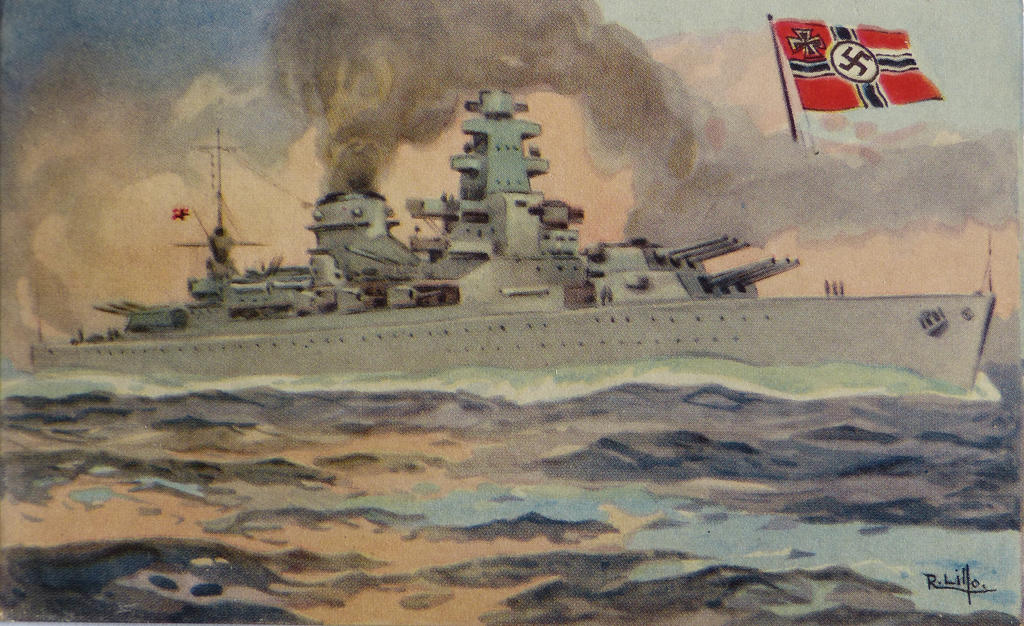
Scharnhorst, sister ship Gneisenau. Original postcard La Estrella


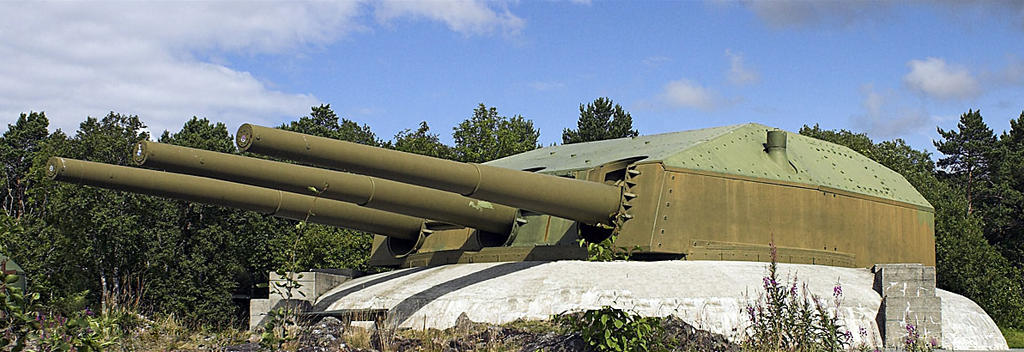
Designed by Krupp director Edward Grotte but never constructed with the project canceled by Minister of Armaments Albert Speer in begin 1943. She would have a weight of 1.000 tonnes with as dimensions 35 (hull)-39 (guns forwards) x 14 x 11 (height) metres or 115-128 x 36 x 26 feet. Her crew would number between more as 20 and 41 men. She was protected by 15cm/5.9”-36cm/14.2” thick armour. The propulsion was to consist of 8 Daimler-Benz MB501 20-cylinder marine diesels (used in E-boats) or 2 MAN V12732/44 24-cylinder diesels (used in submarines) and with a horsepower of 16.000-17.000 hp her top speed was calculated to be 40 kilometres. The armament consisted of 2-28,3cm/11.1” 54.5 SK C/34 guns (in one turret similar to the 3-guns turret of the Gneisenau although one gun less), 1-12,8cm anti tank guns and 8-2cm Flak 38 anti aircraft guns. The details dealing with the secondary armament differs.

Monday, 27 December 2021

Turkish 18th Century naval mortar


Naval Museum, Varna, Bulgaria 2 September 2019

Manufactured in 1773-1774. Salvaged from the Black Sea bottom in the Varna harbour region in 1969. 

Wednesday, 8 December 2021

Italian midget submarine CB 16 1943-1944

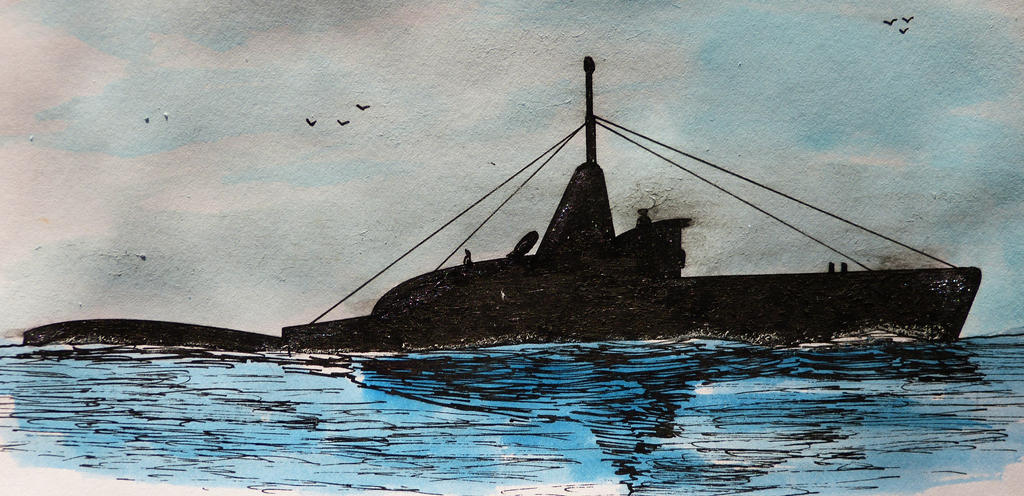
Of the CB-class preceded by CA-class. Displacement 36 (surfaced)-45 (submerged) tons and as dimensions 15 x 3 x 2.10 metres. Crew numbered 4 men including 1 officer. Armament consisted of 2-45cm/17.7 torpedo tubes. Speed 7.5 (surfaced)-7 (submerged) knots. Range surfaced 1.400 nautical miles/5 knots respectively 450/7.5 and submerged 50/3 respectively 7/7.

Built by Caproni-Taliedo. Captured by the Germans after the Italian armistice of 3 September 1943, handed over to the Italian Social Republic, lost in 1 October 1944 and stricken on Italian naval list 27 February 1947.

Sources

Erminio Bagnasco, Submarines of World War Two, Cassell & Co, London. 1977

Paolo M. Pollina. I Sommergibili Italiani. Ufficio Storico della Marina Militare. Rome, 1963

Several editions of Jane’s Fighting Ships

https://www.marina.difesa.it/

http://www.regiamarina.net/

http://warshipsresearch.blogspot.com/

Thursday, 4 November 2021

American cruiser USS Quincy bound for South America according to the Dutch newspaper Soerabaijasch handelsblad dated 2 June 1940

An item dated New York, USA 1st June reported that the American cruiser USS Quincy was bound for the South American coast officially on a good will mission. The American newspaper New York Times reported that she was to support the South American governments in case of activity of the national socialistic 5th column. At Montevideo, Uruguay were the Uruguayan authorities very concerned about the well organized national socialistic department there which seemed to supervise all Germans present in Uruguay.(1)

Note

Part of the New Orleans-class consisting of the New Orleans, Astoria, Minneapolis, Tuscaloosa, San Francisco, Quincy and Vincennes, preceded by the Portland-class and succeeded by the Wichita. Originally called the Astoria-class but renamed after the losses in 1942 and the following modernization of the remaining ships. Due to the limited displacement as a result of the Washington Naval Treaty (1922) was she known as a so-called Treaty cruiser classified as light cruiser but later reclassified as heavy cruiser due to the calibre of her main guns. There were three different designs for the ships in this class, namely for the New Orleans, Astoria and Minneapolis (all 3 originally laid down as Portland-class cruisers), the Tuscaloosa and San Francisco and the Quincy and Vincennes. Building ordered on 13 February 1929, awarded on 9 January 1933, laid down at the Bethlehem Steel Corporation, Fore River Shipyard, Quincy, Massachusetts, USA on 15 November 1933, launched on 19 June 1935, commissioned on 9 June 1936 and sunk in the Battle of Savo Island on 9 August 1942.

Tuesday, 13 July 2021

Sunday, 4 April 2021

Movements of German heavy cruisers according to the U.S. Joint Intelligence Committee. Daily summary dated 19 May 1942


An item reported that the German heavy cruiser Prinz Eugen (1) escorted by 4 destroyers and the Luftwaffe was attacked on 17 May off Lister, southwest Norway by at least 39 aircraft of the British Coastal Command consisting of Beaufort torpedo planes, Hudsons, Blenheims and Beaufighters. She received at least two torpedo hits with a claimed third one although it was stated that she sunk. The British lost 9 and the German 5 aircraft. There was no recht information about the positions of the pocket battleships Admiral Scheer (2) and Lutzow (3). Probably the latter returned into the Baltic lacking favorable weather conditions.

Notes

1. Of the Admiral Hipper-class heavy cruisers, preceded by Deutschland-class. Laid down by Germaniawerft, Kiel on 23 April 1936, launched on 22 August 1938, commissioned on 1 August 1940, decommissioned on 7 May 1945, surrendered on 8 May 1945, handed over to the USA and sunk on 22 December 1946 during nuclear tests.

1. Of the Deutschland-class panzerschiffe later classified as heavy cruisers preceded by the Admiral Hipper-class. Main armament 2x3-28cm/11”guns on fore and aft ship one turret. Laid down by Kriegsmarinewerft Wilhelmshaven, Germany on 25 June 1931, launched on 1 April 1933, commissioned on 12 November 1934, sunk during an air attack at Kiel, Germany on 9 April 1945, partly broken up and the remains used of filling up the inner part of the dockyard.

1. Of the Deutschland-class panzerschiffe later classified as heavy cruisers preceded by the Admiral Hipper-class. Main armament 2x3-28cm/11”guns on fore and aft ship one turret. Laid down by Deutsche Werke, Kiel, Germany as Deutschland on 5 February 1929, launched on 19 May 131, commissioned on 1 April 1933, renamed Lützow in January 1940, sunk in April 194 during an British RAF air attack, salvaged by Russian forces in 1947 and sunk while used as a target on 22 July 1947.

Source

Map Room Papers (Roosevelt Administration), 1942 - 1945. U.S. Joint Intelligence Committee. Daily summary No. 160 dated 19 May 1942

Wednesday, 18 November 2020

Russian battleship Slava 1902-1917


Original postcard

Of the Borodino-class. Building ordered on 30 January 1900, laid down at the Baltic Shipyard, Saint Petersburg, Russia on 1 November 1902, launched on 29 August 1930, commissioned in October 1905, participated not in the Russo-Japanese war due to late delivery, used as training ship for new officers after 1906, added to the Baltic Fleet after 1910, grounded in the Moon Sound Strait near the island of Muhu while she -being heavily damaged by the German SMS König- could not escape from the German naval forces and sunk by Russian destroyers on 17 October 1917, stricken from the Navy List on 29 May 1918 and broken up by Estonian inhabitants in 1935

Saturday, 14 November 2020

Nameplate of the British screw steam fishery protection vessel HMY Helga (1908)

National Museum of Ireland, Dublin

Built by Dublin Liffey Dockyard in 1908 for the Department of Agriculture as the Helga II, used as the armed yacht Helga during the First World War for anti submarine patrol and escort duties, returned in 1919 to continue her prewar tasks. Renamed in August 1923 into Muirchu and handed over to the Irish Department of Agriculure and Fisheries who handed her in 1939 over to the Marine and Coastwatching Service in 1939 and finally sunk of the Saltee Islands 8 May 1947 on her last voyage to the scrapyard of Hammon Lane Scrap Merchants, Dublin. As the fishery protection vessel HMY Helga she arrived in the morning of Wednesday 26 April 1916 on the Liffey and started firing at the Liberty Hall in Dublin during the so-called Easter Rising supporting the British Army. Gross tonnage 323 tons, under deck 2651 tons, net tonnage 111 tons and as dimensions 155.6-166.0 (over all) x 24.6 x 12.6 feet. Call sign EIBW. Armament originally 1-3pounder quick firing Hotchkiss gun, later 2x2-12pounder 12 cwt quick firing naval guns.

Irish 12 pounder coastal defence gun

National Museum of Ireland, Dublin

Example of the guns used by the Republic Ireland to protect the so-called Treaty Ports during the Second World War. The deep water ports Berehaven, Queenstown (Cobh) and Lough Swilly were retained by the United Kingdom under the Anglo-Irish Treaty of 6 December 1921. In the First World War German submarines were very active off the Irish coasts and the United Kingdom wanted to prepare for a rehearsal. In 1938 however the ports were handed over to Ireland.

Sunday, 11 October 2020

French screw steam ship of the line Tilsitt 1832-1872


Laid down at Cherbourg, France as a sailing ship of the line Diomède on 2 March 1832, renamed 23 November 1839, converted into a mix of steam and sailing ship, launched on 30 March 1854, stricken on 22 July 1872 , hulked and replacing the Fleurus as floating headquarters of the French naval division stated at Saigon, French Indochina [nowadays Vietnam] and finally broken up. Of the Suffren-class preceded by Bucentaure-class and succeeded by Hercule-class. Designed by Jacques-Noël Sané (1740-1831). Built under supervision of Louis Nicholas Frédéric Sollier. With a displacement of 4.070 tons and as dimensions60,17 (waterline)- 60,50 (gundeck) x 15,75 (waterline)-16,28 x 8,5 metres. Sail area 3.114 square metres and 450hp horsepower. Crew numbered 810-846 men. Original armament consisted of 30-30pd long guns on the lower deck, 32-30pd short guns on the middle deck and on the upper decks 24-30pd carronades and 4-18pd guns. Between 1839-1840 was the armament changed into respectively 26-30pd long guns & 4-22cm Paixhans guns, 32-30pd short guns and 24-30pd carronades & 4-16cm Paixhans guns.

Wednesday, 17 July 2019

French experiment with bomb-guns according to the Nederlandsche Staatscourant dated 23 December 1824

Paris, France, 19 December. At Brest were very successful experiments with so called bomb-guns which shoot with a less arched elevation as mortars. Probably they were based on the flight of a rocket. It was expected that this invention was valuable for sea warfare especially for smaller vessels while attacking of defending against larger ships.

Friday, 5 July 2019

Problems with French gun turrets according to the Dutch newspaper De Sumatr Post dated 15 February 1911

An item referred to a telegram received from Toulon that during the latest gun exercises were on board of five of the six ships problems with the 12”-gun turrets which clutched. The commanding admiral stated in an interview that problem would be immediately solved.

Friday, 28 June 2019

Burmese motor gunboat MGB 107 1951-


Former USA 83-feet Coast Guard Cutter (CGC) handed over to Burma under the so-called Mutual Defense Assistance Program announced on 8 November 1950) converted into gunboats for inland services. On 15 February 1951 acquired by Burma from the US Navy. Fitted out with a new hull in Burma completed in 1960.

Displacement 45 (light)-80 (full) tons and as dimensions 83 1/6 x 15 1/6 x 5 feet. Armament consisted of 2-4cm Bofors quick firing guns. Crew numbered 15 men. Propulsion consisted of 4-6 cylinder 2 stroke General Motor diesel engines tandem geared supplying via 2 shafts 1.600 bhp allowing a speed of 14 knots. The diesels replaced the original petrol fuelled engines. 

Saturday, 11 May 2013

Heavy guns reserve at Devonport increased according to the Dutch magazine Marineblad 1912-1913 no. 7

An item reported that the British Admiralty ordered to increase the reserve of heavy guns for the harbour of Devonport with 2-34,3cm guns of the latest model, each with a weight of 76 ton (around 7 more as the older guns with the same calibre). The weight of the projectiles was 643 kilo.