Translate

Showing posts with label Czechoslavakia. Show all posts

Thursday, 12 September 2024

Romanian river monitor Ivan Bratianu in 1908

As the Russian monitor Mariupol around 1944. ©Warshipsresearch.blogspot.com

Dimensions 62 x 10 x 1.8 metres. Displacement 581 tons. Horsepower 1,800 hp. Speed 14 knots. Armament 5-12cm guns, 4-4.7cm guns and 2 machine guns; delivered by Czechslovakian Skoda. Crew numbers 80 men. Built at Stabilimento tecnico triestino, Austro-Hungary built, disassembled, transported to Galatz, Romania, assembled and launched in 1907. Remarks Wireless telegraph, spotlights, 25-65 mm thick armour belt and turrets protected by 2-3cm thick armour.

Source

“Die Donauflotillen”, in Die Flagge. Organ des Vereines zur Förderung der österreichischen Schiffahrt, nr. 11, 1908. 

Monday, 26 August 2024

Romanian river monitor Mihail Cogalniceanu in 1908

Dimensions 62 x 10 x 1.8 metres. Displacement 581 tons. Horsepower 1,800 hp. Speed 14 knots. Armament 5-12cm guns, 4-4.7cm guns and 2 machine guns; delivered by Czechslovakian Skoda. Crew numbers 80 men. Built at Stabilimento tecnico triestino, Austro-Hungary built, disassembled, transported to Galatz, Romania, assembled and launched in 1907. Remarks Wireless telegraph, spotlights, 25-65 mm thick armour belt and turrets protected by 2-3cm thick armour.

Source

“Die Donauflotillen”, in Die Flagge. Organ des Vereines zur Förderung der österreichischen Schiffahrt, nr. 11, 1908. 

Sunday, 25 August 2024

Romanian river monitor Lahovary in 1908

Dimensions 62 x 10 x 1.8 metres. Displacement 581 tons. Horsepower 1,800 hp. Speed 14 knots. Armament 5-12cm guns, 4-4.7cm guns and 2 machine guns; delivered by Czechslovakian Skoda. Crew numbers 80 men. Built at Stabilimento tecnico triestino, Austro-Hungary built, disassembled, transported to Galatz, Romania, assembled and launched in 1907. Remarks Wireless telegraph, spotlights, 25-65 mm thick armour belt and turrets protected by 2-3cm thick armour.

Source

“Die Donauflotillen”, in Die Flagge. Organ des Vereines zur Förderung der österreichischen Schiffahrt, nr. 11, 1908. 
Thursday, 22 August 2024

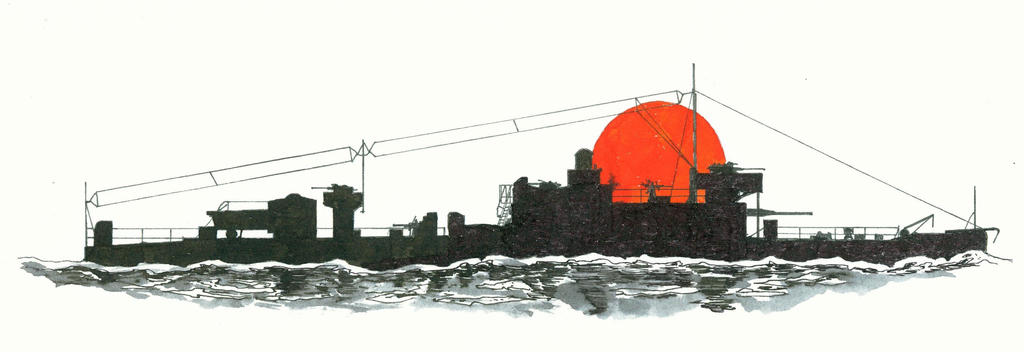
Romanian river monitor Lascar Catargi in 1908

Dimensions 62 x 10 x 1.8 metres. Displacement 581 tons. Horsepower 1,800 hp. Speed 14 knots. Armament 5-12cm guns, 4-4.7cm guns and 2 machine guns; delivered by Czechslovakian Skoda. Crew numbers 80 men. Built at Stabilimento tecnico triestino, Austro-Hungary built, disassembled, transported to Galatz, Romania, assembled and launched in 1907. Remarks Wireless telegraph, spotlights, 25-65 mm thick armour belt and turrets protected by 2-3cm thick armour.

Source

“Die Donauflotillen”, in Die Flagge. Organ des Vereines zur Förderung der österreichischen Schiffahrt, nr. 11, 1908. 
Friday, 12 July 2024

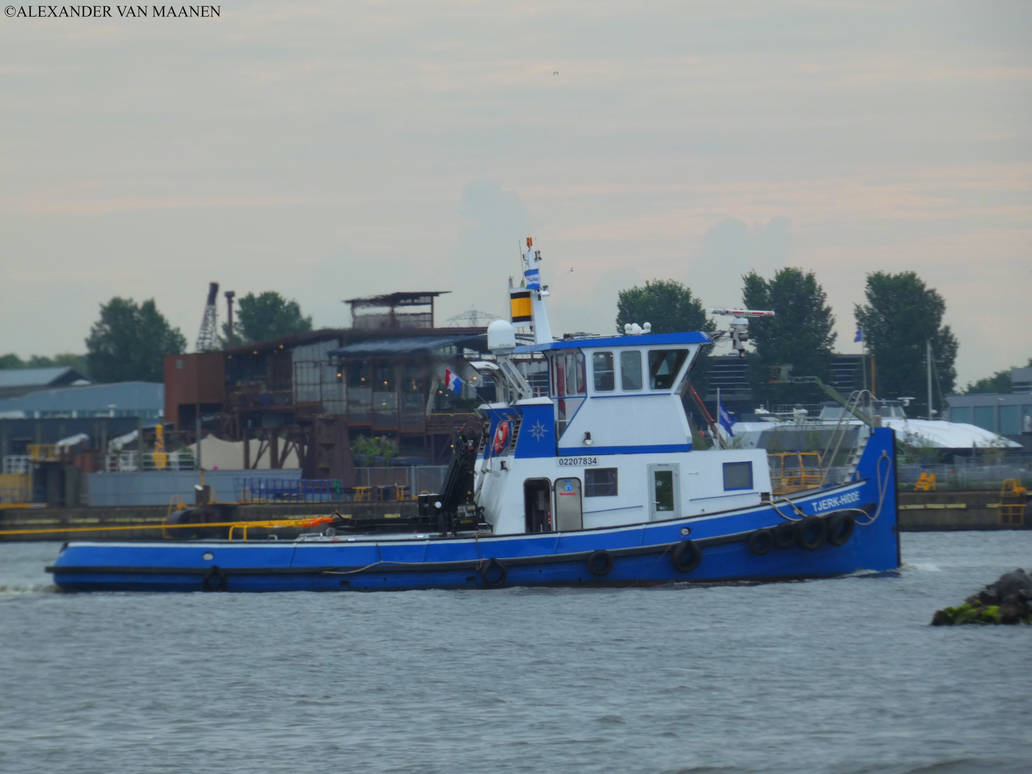
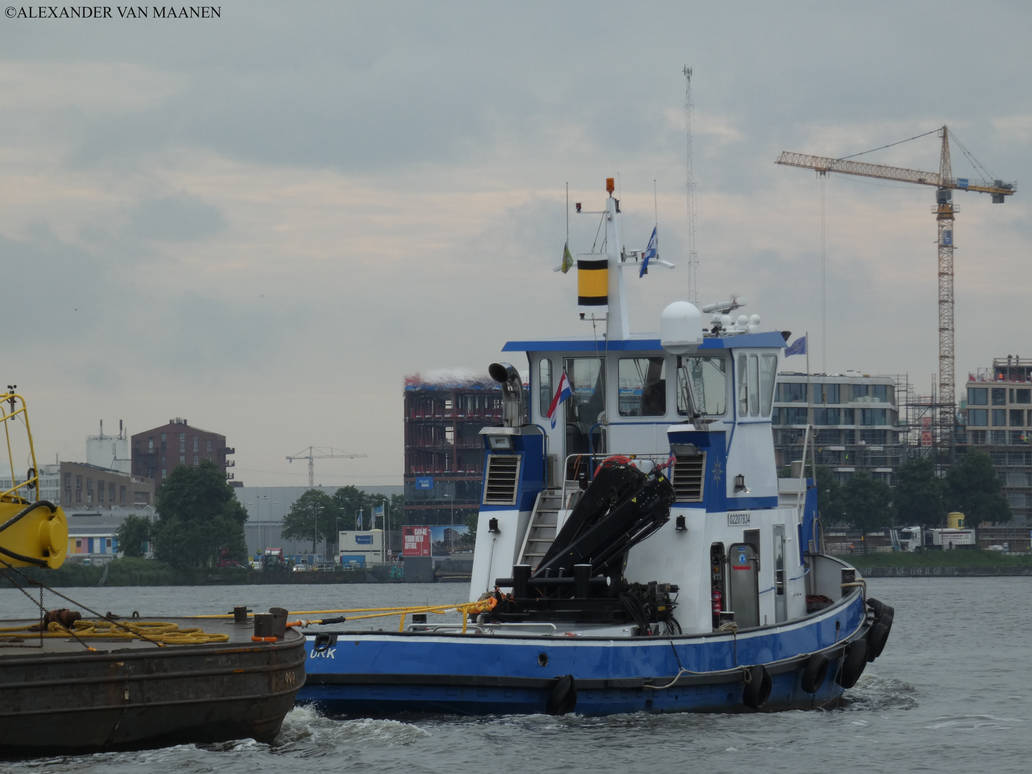
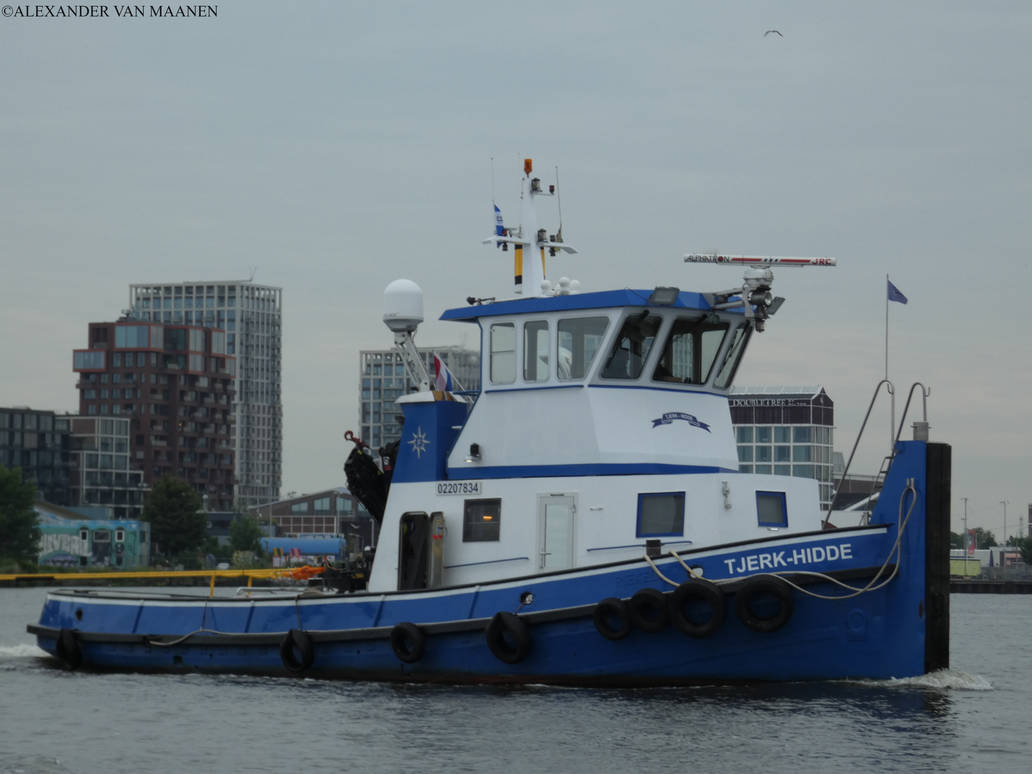
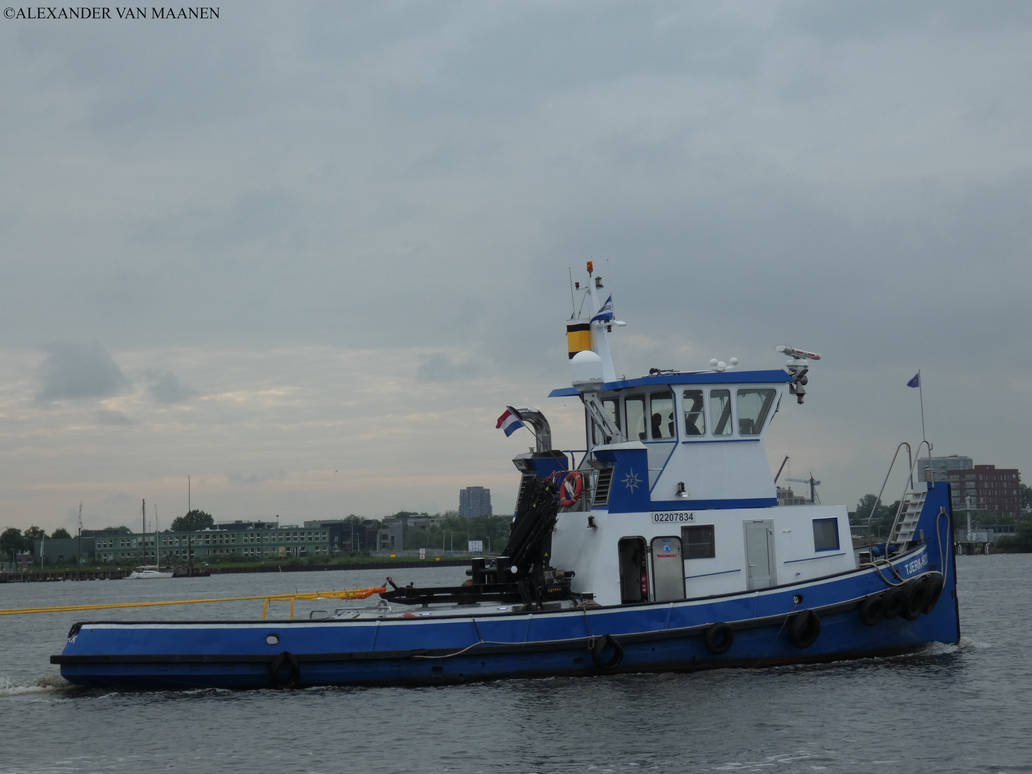
Dutch inland tug (ex-Vitezny Unor 1956-1967, PR 1 1967-1997, Riekelt 1997-2007) Tjerk Hidde 2007-


Amsterdam, Netherlands 29 May 2024

Netherlands-flagged, homeport Urk, ENI 02207834, MMSI 244660711 and call sign PD5034. Built by VEB Neptunwerft, Rostock, East Germany in 1956. Tonnage 35 ton and dimensions 20.35 x 6.16 x 2.30 metres. As PR 1 owned by unknown firm at Hamburg, Germany and as Vitezny Unor owner Tschechoslowakische Elbe Oder Schiffahrt, Prag [nowadays Czech Republic], shipping company CSPL. 

Monday, 13 November 2023

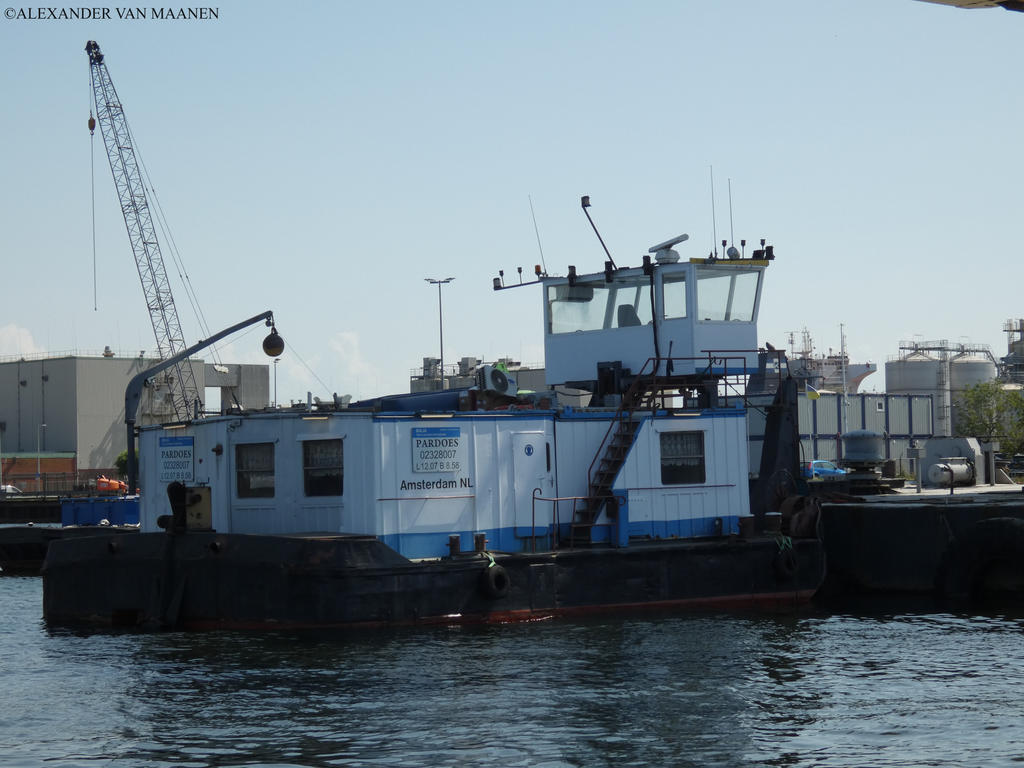
Dutch inland tug (ex-TR 500 1976-2002, Cursor 2002-2006, Statum 2006) Pardoes 2006-

Amsterdam, Netherlands June 2023

Netherlands-flagged, homeport Vlaardingen, Netherlands, ENI 02328007. MMSI 244780007 and call sign PD4043? Dimensions 11.82-12.07 x 8.58 x 2.19 metres. As TR 500 owner, C.S.P.L.O, Decin, Czechoslovakia and as Cursor H. Bonnevie, Marchienne au Pont, Belgium. Dimensions 11.82 x 8.50 x 2.19 metres. Built by Ceske Lodenice, Praha, Czech Republic in 1976.

Wednesday, 26 July 2023

Dutch inland pusher tug (ex-TR 500 1976-2002, Cursor 2002-2006, Statum 2006) Pardoes 2006-


Amsterdam, Netherlands 13 July 2023

Netherlands-flagged, homeport Amsterdam, ENI 02328007. MMSI 244780007 and call sign PD4043? Dimensions 11.81-12.07 x 8.50-8.58 x 2.19 metres. The 2x206hp Skoda engines are replaced by x2461hp Volvo engines. Built by Ceske Lodenice, Praha, Czech Republic for CSPL/C.S.P.L.O, Decin in 1976. As Cursor Belgian-owned, homeport Marchienne a/Pont. 

Tuesday, 11 July 2023

Poland interested in building tuna fishing vessels and plant for Mexico according to the Commercial Fisheries Review dated July 1967 No. 2

An item reported that Poland wanted to sell tuna fishing vesssels to Mexico to be built in Poland. Further more wanted Poland to deliver the machinery for a process plant to be bought in Czechoslovakia. A team of Polish experts and Mexican technicians were studying the details of the proposal and the selection of the plant site. All processed fish was to be bought by Poland against world market prices.

Sunday, 9 July 2023

British Danube Flotillla arrived at Bratislava, Czechoslovakia according to the Weekly Intelligence Summary No. 19 for the week ending 27 August 1921

An item reported the arrival on 2 August at Bratislava, Czechoslovakia [nowadays Slovakia] of the British Danube Flotillla upstream bound. The French officers showed a very noticeable display of coolness probably while resenting the visit.

Source

The National Archives, Kew Gardens, England CAB-24-127-74

Saturday, 1 July 2023

Dutch inland tug (ex-Listopad 1956-1957, PR 4 1957-1992, Bever 1992-1995, Alcyon 1995-1999, Miakel 1999-2004, Argo 2004-2012, Alany 2012-2016) Riejanne 2016-


Rotterdam, Netherlands 27 June 2023

Netherlands-flagged, homeport Urk, Netherlands, ENI 02011010, MMSI 244710557 and call sign PD2005. Built by VEB Neptun Werft, Rostock, DDR in 1956 for the Tschechoslowakische Elbe Oder Schiffahrt (CSPL), Prague in 1956. As RP 4 as homeport Decin, Czech Republic. Dimensions 19.88 x 6.14 x 1.90 metres. 

Tuesday, 3 January 2023

No former Austro-Hungarian warships for Czecho-Slovakia according to the Weekly Intelligence Summary No. 5 dated 5 February 1921

An item reported that the Conference of Ambassadors informed Czecho-Slovakia that it was not possible to hand over Austro-Hungarian ships part of the Danube War Flotilla as they requested. The vessels suitable for police tasks were under the Treaty of Peace handed over to Austria and Hungary.

Source

The National Archives, Kew Gardens, England CAB-24-119-53

Sunday, 17 July 2022

Unsuccessful Allied raid on Dieppe, France according to the U.S. Joint Intelligence Committee. Daily summary dated 21 August 1942

An item reported the loss of one destroyer and a fairly large number of landing craft during the allied raid on Dieppe, France.(1)

Note

1. Raid was on 19 August executed by troops from Canada, United Kingdom, USA, Free France, Poland and Czechoslovakia. Losses destroyer HMS Berkely, 33 landing craft, a large number of aircraft and large number of men killed, wounded or taken prisoner.

Source

Map Room Papers (Roosevelt Administration), 1942 - 1945. U.S. Joint Intelligence Committee. Daily summary No. 254 dated 21August 1942

Wednesday, 9 March 2022

Czech inland pusher tug (TR 3 1970-1999, Rio 2 1999-2003) Vera 1 2003->2009) Praha 1

Waal, Netherlands 24 August 2009

Homeport Decin, EU 9548024, PB32105131. Dimensions 24,84 x 9,12 x 1,20 metres and tonnage 30 tons. The 2x425hp Skoda are later replaced by 2x390Hp Deutz engines. Built by Ceske Lodenice, Melnik, Czech Republic for account of CSPLO, Prague. In 2008 owned by B.G.M. Capital, Decin, Czech Republic.

Monday, 3 January 2022

Romania shocked when Germany created a Danibe flotilla according to the Dutch newspaper De Tijd dated 27 March 1938

An item dated Bucharest, Romania 26 March reported that the public opinion in Romania was shocked when the decision of the German cabinet of creating a Danube flotilla became known. The newspaper Universul wrote that such flotilla was not for defensive purposes while neither Hungary, Romania, Yugoslavia or Czechoslovakia intended to attack Germany. The Algemeen Handelsblad dated 27 March referred to the newspaper Curentul which reminded what in 1917 happened when Germany seized Romanian grain and petrol. Nowadays needed Germany more as ever petrol.

Friday, 26 November 2021

Russian and Czech military escaped from Vladivostok to Japan according to the Secret Admiralty Weekly Intelligence Summary Nr. 63 for the week ending 28 February 1920

An item reported that Russian naval cadets and some Czech officers escaped with the Russian ship Orel captain Kititsyn from Vladivostok seeking refugee in Japan and asked the British government for stores and fuel to be able to go to Europe.

 Source

The National Archives CAB-24-99-82. Weekly appreciation of matters of naval interest for the week ended 28th February 1920

Wednesday, 6 October 2021

The Hungarian River Guard before the Second World War according to a CIA report dated 19 May 1953

An item reported that the Hungarian Danube River Police or River Guardwas founded after the First World War. The personnel consisted at that moment mainly of ex Austro-Hungarian Navy men and Royal Marines. In the beginning was this force responsible for supervising vessels including cargo and passengers in the Hungarian Danube sector. After 1930 however was the River Police reorganized and became a semi-military force including converting her fleet. Instead of the small patrol boats were now 6 larger river gunboats with a main armament of 8cm guns, 3 mine laying-sweeping vessels and 2 suppliers When a war broke out was the Danube to be mined at the Yugoslavian and Austro-Czechoslovakian borders. For that purpose were all ships stationed on the Danube except for one mine laying-sweeping vessel and one supplier which were stationed on the Tisza. Before 1938/1939 was the force independent but subordinated to the Ministry of Internal Affairs with ranks and ratings similar to the navy although not identical. Afterwards was she integrated in the Hungarian army as the River Forces Command without changing her internal organisation structure.

The force numbered 2 battalions each of around 250 men and armed with 2 guns and fitted out with a radio communication unit. Two battalions were stationed at the Danube shore stations at Budapest, Baja and Komaron (one battalion partly at Budapest and partly at Baja and one at Komaron) and the third battalion at Szeged along the Tisza. Except for the underground mine-storage facility at Dunafoldvar along the Danube manned by 30-35 men were all storage facilities located at Budapest where also the headquarters with a staff of 30-35 officers was. Totally numbered the force between 800-1.000 men.

Source
The report was published on www.archive.org, document number CIA-RDP80-00809A000600040089-0

Friday, 1 October 2021

Hungarian inland barge No. 673 to be ceded to Czechoslovakia in 1921

After the First World War (1914-1918) lost by the German, Austro-Hungarian and Ottoman Empires was Walker D. Hines appointed as international arbitrator responsible for the ceding of tugs and other inland vessels by Germany, Bulgaria, Austria and Hungary to the Allied Powers. For Austria respectively Hungary were the Treaties of St. Germain and Trianon leading. Lists were made of the involved vessels including some details and what their fate was to be.

A list dated Paris, France 2 August 1921 reported that Hungary possessed for service on the Danube the MFTR inland barge No. 673 with a tonnage of 667 tons which was to ceded to Czechoslovakia and already in Czechoslovakian possession.(1)

Notes
1. MFTR=Mahart (Magyar Folyam – és Tengerhajózási Részvénytársaság).

Source
Reports of International Arbitral Awards. Navigation on the Danube, 2 August 1921, volume 1. UN, 2006

Express tug Kaukasus lying in reserve at Ismail, Ukraine according to a CIA report dated 21 May 1952

An item reported that at Ismail, Ukraine part of the port was not accessible and guarded by Soviet military and where a large number of Hungarian, Czechoslovakian, Rumanian, Bulgarian and Yugoslavian ships were anchored apparently ready to be used at one although nothing was known more about this reserve. From Vienna was the Express tug Kaukasus sent to this reserve.

Source
The report was published on www.archive.org, document number CIA-RDP82-00457R011900230009-0

Czechoslovakian shipyard at Komarno building tugs and barges according to a CIA report dated 10 November 1953

An item reported that the shipyard at Komarno, Czechoslovakia built 800hp tugs and 670 tons barges which were used for the Oder river shipping. Furthermore built the same shipyard 3.000 tons self propelling sea-going barges for the Soviet Union.

Source
The report was published on www.archive.org, document number CIA-RDP80-00810A002700680007-1

Thursday, 30 September 2021

Austrian inland barge No. 105 to be ceded to Czechoslovakia in 1921

After the First World War (1914-1918) lost by the German, Austro-Hungarian and Ottoman Empires was Walker D. Hines appointed as international arbitrator responsible for the ceding of tugs and other inland vessels by Germany, Bulgaria, Austria and Hungary to the Allied Powers. For Austria respectively Hungary were the Treaties of St. Germain and Trianon leading. Lists were made of the involved vessels including some details and what their fate was to be.

A list dated Paris, France 2 August 1921 reported that Austria possessed for service on the Danube the SDG inland barge No. 105 with a tonnage of 727 tons which was to ceded to Czechoslovakia.(1)

Note
1. The Süd Deutsche Donau Dampfschiffahrt Geselsschaft, a German company, however entirely owned by the Austrian Empire.

Source
Reports of International Arbitral Awards. Navigation on the Danube, 2 August 1921, volume 1. UN, 2006.