Lying at Ferrol, Spain on 5 February 1597. Measurement 80 toneladas. Of the crown. British. Part of the Spanish Armada or Third Spanish Armada in 1597?
Source
Cesáreo Fernández Duro . Historia de la Armada Española, vol.

Lying at Ferrol, Spain on 5 February 1597. Measurement 80 toneladas. Of the crown. British. Part of the Spanish Armada or Third Spanish Armada in 1597?
Source
Cesáreo Fernández Duro . Historia de la Armada Española, vol.
Lying at Ferrol, Spain on 5 February 1597. Measurement 430 toneladas. Of the crown. Part of the Spanish Armada or Third Spanish Armada in 1597?
Source
Cesáreo Fernández Duro . Historia de la Armada Española, vol. 3.
Part of the Armada de Barlovente returning from New Spain. Tonnage 80 tons. Captain Luis de Ayllon.
Source
Huguette et Pierre Chaunu. Seville et l’Atlantique 1504-1650, vol. 3.
Part of the Armada de Barlovente returning from New Spain. Tonnage 300 tons. Captain Pedro Allende.
Source
Huguette et Pierre Chaunu. Seville et l’Atlantique 1504-1650, vol. 3.
Part of the Armada de Barlovente returning from New Spain. Tonnage 250 tons. Captain Francisco Duarte.
Source
Huguette et Pierre Chaunu. Seville et l’Atlantique 1504-1650, vol. 3.
Part of the Armada de Barlovente returning from New Spain. Tonnage 400 tons. Captain Antonio Velasco. Criollo.
Source
Huguette et Pierre Chaunu. Seville et l’Atlantique 1504-1650, vol. 3.
Part of the Armada de Barlovente returning from New Spain. Tonnage 400 tons. Captain Marcos Lopez.
Source
Huguette et Pierre Chaunu. Seville et l’Atlantique 1504-1650, vol. 3.
Part of the Armada de Barlovente returning from New Spain. Tonnage 300 tons. Captain Francisco de Orostigui.
Source
Huguette et Pierre Chaunu. Seville et l’Atlantique 1504-1650, vol. 3.
Part of the Armada de Barlovente returning from New Spain. Tonnage 650 tons. Captain Sebastian?
Source
Huguette et Pierre Chaunu. Seville et l’Atlantique 1504-1650, vol. 3.
An item reported that there had been no recent contacts with enemy submarines off the Atlantic coast and very few were located over the northern trade routes. There seemed to be 10-16 submarines between the Azores and Portugal destined to the north. The J.I.C. commented that many of these submarines had been active well south of the Cape Verdes. It was possible that their supplyer was lost forced them to return home. Furthermore is discounted the reported presence of a submarine base in the C. Verdes or Canaries.
Source
Map Room Papers (Roosevelt Administration), 1942 - 1945. U.S. Joint Intelligence Committee. Daily summary No. 13 dated 23 December 1941.
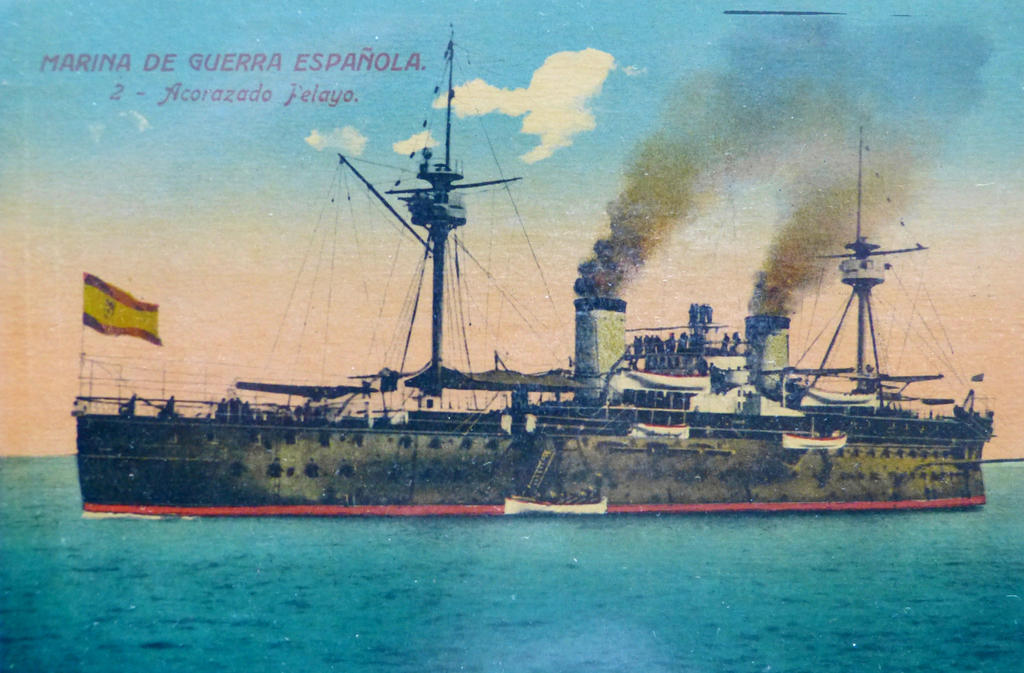
Postcard
Barbette ship. Building ordered in November 1884, laid down by Forges et Chantiers de la Méditerranée La Seyne, France in April 1885, launched on 5 February 1887, completed in summer 1888, reconstructed between 1897-1898, training ship since 1912, disarmed in 1923 and broken up in 1925.
An item dated Amsterdam, Netherlands 11 September reported the arrival at San Sebastian. Spain of 4 Greenland whalers, one with 1 whale 20 quardelen oil, the other 3 together 1 whale, went to Iceland returning from there with 400, 300 and 240 quardelen stating that in Greenland 5 French whalers were lost.
An tem reported that a warship loaded with azogues or mercury bound for New Spain [Mexico] was lying in the bay waiting for the first good wind to depart.
An item dated Cadiz, Spain 21 December reported the recent arrival of a warship, a register ship and an aviso around October returning from Havana, Cuba. The warship (the Almirante) was nearly lost when entering the harbour lossing 3 anchors on the Arenas Gordas passing the St. Lucar. The Capitana commanded by general Savala still not arrived when she lost contact off Cape St. Vincent 3-4 days earlier. The aviso from New Spain arrived reporting that the flotilla would leave Veracruz, Mexico on 28 August but still not arrived on 12 October at Havana. Possible it would stay the winter at Vera Cruz.
An item dated Cadiz, Spain 25 July reported that the fleets of New Spain [Mexico] would returned at the same time in July but that commander in chief Velasco died. After the arrival was it possible to determine the time of departure by the galleones towards Tierra Firme.

