Translate

Showing posts with label Pocket battleships. Show all posts

Tuesday, 15 September 2026

Positions of German warships according to the U.S. Joint Intelligence Committee. Daily summary dated 24 February 1942

U.S. Naval History and Heritage Command, MH 71390
Tirpitz anchored in the Alta Fjord, Norway between 1943-1944
pocket battleship/heavy cruiser Admiral Scheer. Werft-Reederei-Hafen 15 April 1933

Admiral Hipper-class heavy cruisers©Warshipsresearch.blogspot.com

An item reported that early 23 February 1 German pocket battleship, 1 cruiser and 3 destroyers were sighted off the Norwegian coast between Bergen and Trondheim. Probably the Admiral Scheer and Prins Eugen underway to join the battleship Tirpitz already lying at Trondheim.

Source

Map Room Papers (Roosevelt Administration), 1942 - 1945. MR0423. U.S. Joint Intelligence Committee. Daily summary No. 76 dated 24 February 1942

Positions of German warships according to the U.S. Joint Intelligence Committee. Daily summary dated 24 February 1942

U.S. Naval History and Heritage Command, MH 71390
Tirpitz anchored in the Alta Fjord, Norway between 1943-1944

Gneisenau©Warshipsresearch.blogspot.com

Scharnhorst©Warshipsresearch.blogspot.com

pocket battleship/heavy cruiser Admiral Scheer. Werft-Reederei-Hafen 15 April 1933

Admiral Hipper-class heavy cruisers©Warshipsresearch.blogspot.com

light cruiser Nürnberg©Warshipsresearch.blogspot.com

An item reported that according to photos made during reconnaissance flights on 22 February the German battleship Gneisenau and light cruiser Nürnberg were lying at Kiel, Germany, the battleship Scharnhorst at Wilhelmshaven, the pocket battleship Admiral Scheer and probably the heavy cruiser Prinz Eugen [Admiral Hipper-class] at Bergen, Norway and the battleship Tirpitz at Trondheim, Norway.

Source

Map Room Papers (Roosevelt Administration), 1942 - 1945. MR0423. U.S. Joint Intelligence Committee. Daily summary No. 76 dated 24 February 1942

Thursday, 27 August 2026

British cargo ship Maidan lost according to the War Cabinet Weekly Résumé No. 64 of the Naval, Military and Air Situation 14-21 November 1940


An item reported the loss on 5 November of the British cargo ship Maidan , tonnage 7,908 tons, loaded with general stores and motor trucks, underway from Baltimore, USA to Liverpool, England sunk by a surface raider on the position approximate 52.26 North and 32.34 West; Part of a convoy. Further details were yet unknown.(1)

Note

1. The raider was the German pocket battleship Admiral Scheer. She was part of the convoy HX84 escorted by the armed merchant cruiser HMS Jervis Bay.

Source

National Archive UK. CAB-66-13-37. 

British cargo ship Kenbane Head lost according to the War Cabinet Weekly Résumé No. 64 of the Naval, Military and Air Situation 14-21 November 1940

An item reported the loss on 5 November of the cargo ship Kenbane Head, tonnage 5,225 tons, loaded with general stores, underway from Montreal, Canada to Beefast, Northern Ireland sunk by a surface raider on the position approximate 52.26 North and 32.34 West; Part of a convoy. Of the crew landed 20 men in Newfoundland.(1)

Note

1. The raider was the German pocket battleship Admiral Scheer. She was part of the convoy HX84 escorted by the armed merchant cruiser HMS Jervis Bay.

Source

National Archive UK. CAB-66-13-37. 

Sunday, 23 August 2026

British navy desperately searching for German pocket battleship Admiral Scheer according to the War Cabinet Weekly Résumé No. 64 of the Naval, Military and Air Situation 14-21 November 1940

British HMS Rodney©Warshipsresearch.blogspot.com

British Revenge-class©Warshipsresearch.blogspot.com

German pocket battleship Admiral Scheer. Source Werft-Reederei-Hafen 15 April 1933

An item reported that ships part of the British Home Fleet still were searching for the German pocket battleship Admiral Scheer and for survivors of the Halifax (Nova Scotia)-England convoy HX84 escorted by the armed merchant cruiser HMS Jervis Bay. This convoy numbered 37 ship and was attacked by the Admiral Scheer on 5 November on the Southern Atlantic. The Jervis Bay sacrified herself. Still another 7 ships of her convoy were destroyed. On 17 November was stopped with the search for survivors forced by the continuous. The British battleship HMS Rodney escorted the homeward-bound convoys and the HMS Revenge the outward bound convoys.

Notes

1. Part of Deutschland armored ships later reclassified as heavy cruisers, succeeded by realized Admiral Hipper-class and planned D-class, laid down by Reichsmarinewerft Wilhelmshaven, Germany on 25 June 1931, launched on 1 April 1933, commissioned on 12 November 1934, sunk during an Allied air attack on 9 April 1945, after the war partially broken up and buried.

2. Launched by Vickers Limited, Barrow-in-Furness, England as TSS Jervis Bay for account of the Commonwealth Line active between the United Kingdom and Australia on 17 August, sold to the White Star Line in 1928, requisitioned by the Royal Navy in August 1939, converted into an armed merchant cruiser with as main armament aged 7x1-15.2cm/6”Mk VII guns.

3. Part of Nelson-class, preceded by realized Revenge-class and planned N3-class, succeeded by King George V-class, ordered in 1922, laid down by Cammell Laird, Birkenhead, England on 28 December 1922, launched on 17 December 1925, completed in August 1927, commissioned on 7 December 1927, out of service in August 1946 and sold to be broken up on 26 March 1948.

4. Part of Revenge-class, preceded by Queen Elizabeth-class, succeeded by planned N3-class and realized Nelson-class, laid down by Vickers Limited, Barrow-in-Furness, England on 22 December 1913, launched on 29 May 1915, commissioned on 1 February 1916, converted into a trainingshp  for boiler room personnel in 1944, sold to be broken up in July 1948 arriving at the scrapyard on 5 September 1948

Source

National Archive UK. CAB-66-13-37. 

Monday, 17 August 2026

British cargo ship Trewelward lost according to the War Cabinet Weekly Résumé No. 64 of the Naval, Military and Air Situation 14-21 November 1940

An item reported the loss on 5 November of the British cargo ship , tonnage 5,201 tons, loaded with steel , underway from Boston, USA to Liverpool, England sunk by a surface raider on the position approximate 52.26 North and 32.34 West; Part of a convoy. Of the crew were 25 men landed in Newfoundland.(1)

Note

1. The raider was the German pocket battleship Admiral Scheer. She was part of the convoy HX84 escorted by the armed merchant cruiser HMS Jervis Bay.

Source

National Archive UK. CAB-66-13-37. 
Tuesday, 30 June 2026

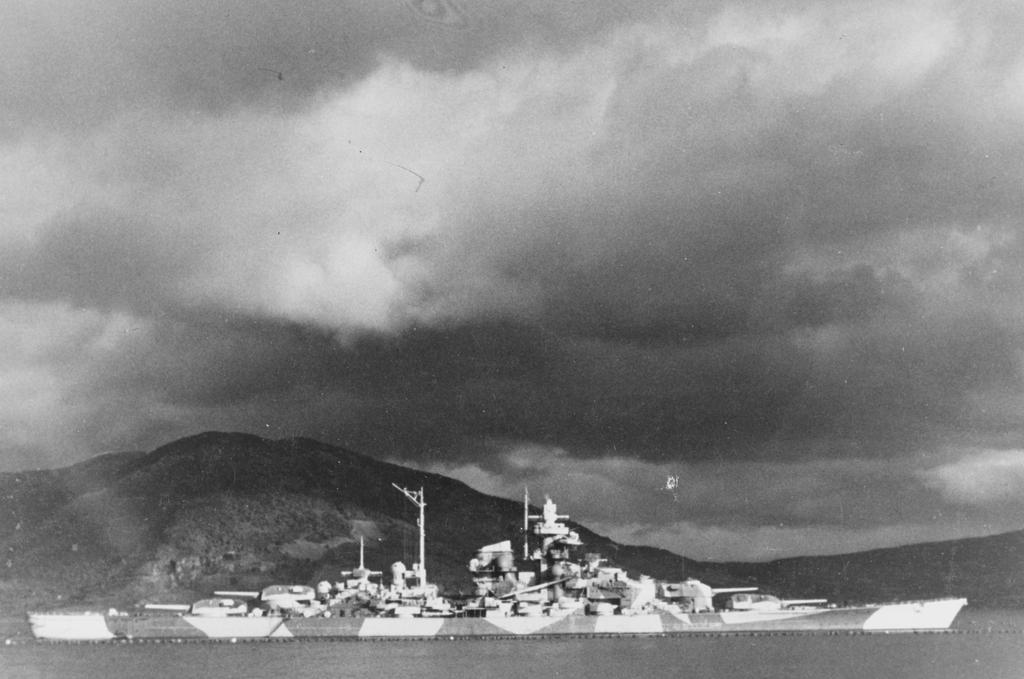
Concept of an armoured cruiser in the future dated 13 March1943

Drawing by Logan U. Reavis (1887, Saint Louis, USA, 1 June 1958 (Hempstead, USA)(1)

Admiral Graf Spee©Warshipsresearch.blogspot.com

Japanese imaginary pocket battleship Kadekuru or Kazekuru. ©Warshipsresearch.blogspot.com

Described as logical evolution of the existing heavy cruiser designs which escorted aircraft carriers during task force duties. Her much improved horizontal armour against air attacks was superior to that of existing cruisers. And further more could she with her anti aircraft armament provide a shield against enemy planes. This kind of cruisers were in fact highly mobile gun power with a speed of 28 knots, a displacement of 20,000 tons and as main dimensions 655 x 84 feet.(2,3) 

Legend for the drawing

1. Dual mount 27,94cm/11” guns in separated turrets

2. Scouting seaplane on retractable catapult

3. Retractable range finders

4. Narrowed superstructure

5. Armoured hatch cover

6. hangar

7. Dual purpose 15,24cm/6” guns

8. Quick firing anti aircraft armament

9. 20,32cm/8” deck armor

10.crane

11. Fire directors

12. Side smoke vent

Notes

1. He was an industrial and marine working as illustrator and writers for newspapers but also for the United States Lines and other shipbuilding related industry. In the 1950s he made promotional maps and brochures to celebrate the passenger ship ss United States which won the Blue Riband in 1932. 

2. Calibre of main armament comparable with the German heavy cruiser or armoured ship Admiral Grafspee although 8 (4x2) against 6 (2x3) 11"gums and which had a full load displacement of 16,280 tomns, as dimemnsion 610.3 x 71 x 24.1 feet.Speed 28,5 knots. 

3. It was believed that the Japanese navy also possessed pochet battleships with a displacement of 12,000 tons-14,000 tons but with 6-30,48cm/12cm" guns heavier armed.(3)

Source

‘The shape of ships to come’ in: The navy of the Future, The Collier’s, 13 March 1943.


Thursday, 26 March 2026

British submarine HMS Trident attacked German pocket battleship Admiral Scheer according to the U.S. Joint Intelligence Committee. Daily summary dated 25 February 1942

An item reported that the British submarine HMS Trident (1) claimed a possible torpedo hit on the German pocket battleship Admiral Scheer (2) lying in the Norwegian Lo Fjord. For the attack would she have to enter the fjord.

Notes

1. N52. Laid down by Cammell Laird&Co. Limited, Birkenhead, England on 12 January 1937, launched on 7 December 1938, commissioned on 1 October 1939 and sold to be broken up on 17 February 1946. Part of T-class preceded by Grampus-class succeeded by U-class.

2. Of the Deutschland-class panzerschiffe later classified as heavy cruisers preceded by the Admiral Hipper-class. Main armament 2x3-28cm/11” guns on fore and aft ship one turret. Laid down by Kriegsmarinewerft Wilhelmshaven, Germany on 25 June 1931, launched on 1 April 1933, commissioned on 12 November 1934, sunk during an air attack at Kiel, Germany on 9 April 1945, partly broken up and the remains used of filling up the inner part of the dockyard.

Source

Map Room Papers (Roosevelt Administration), 1942 - 1945. MR0423. U.S. Joint Intelligence Committee. Daily summary No. 77 dated 25 February 1942

Tuesday, 24 March 2026

German pre design for the Deutschland-class pocket battleships I/35 dated 27 May 1925

Design I/35. ©Warshipsresearch.blogspot.com

Admiral Graf Spee. ©Warshipsresearch.blogspot.com

Admiral Hipper-class. ©Warshipsresearch.blogspot.com

Planned D-class. ©Warshipsresearch.blogspot.com

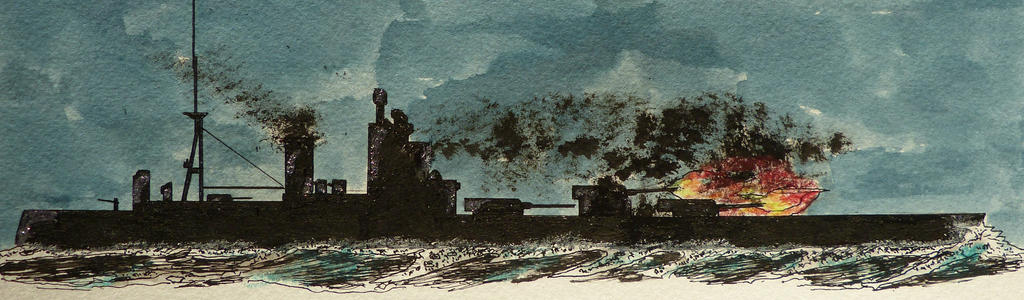
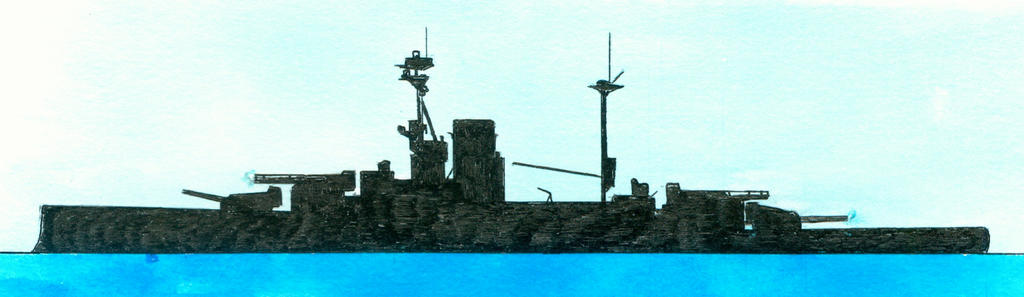
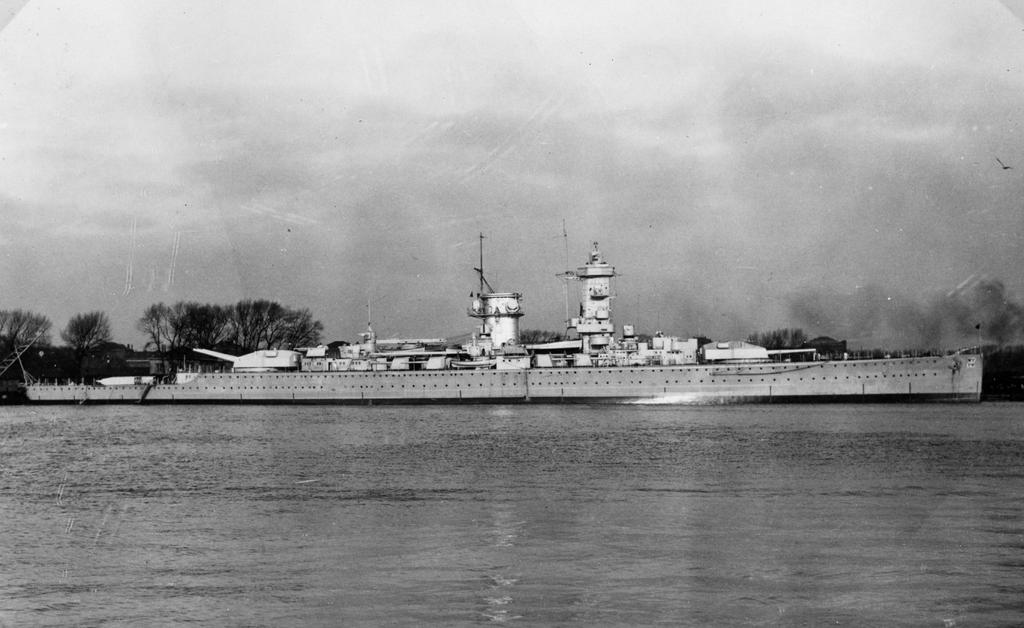
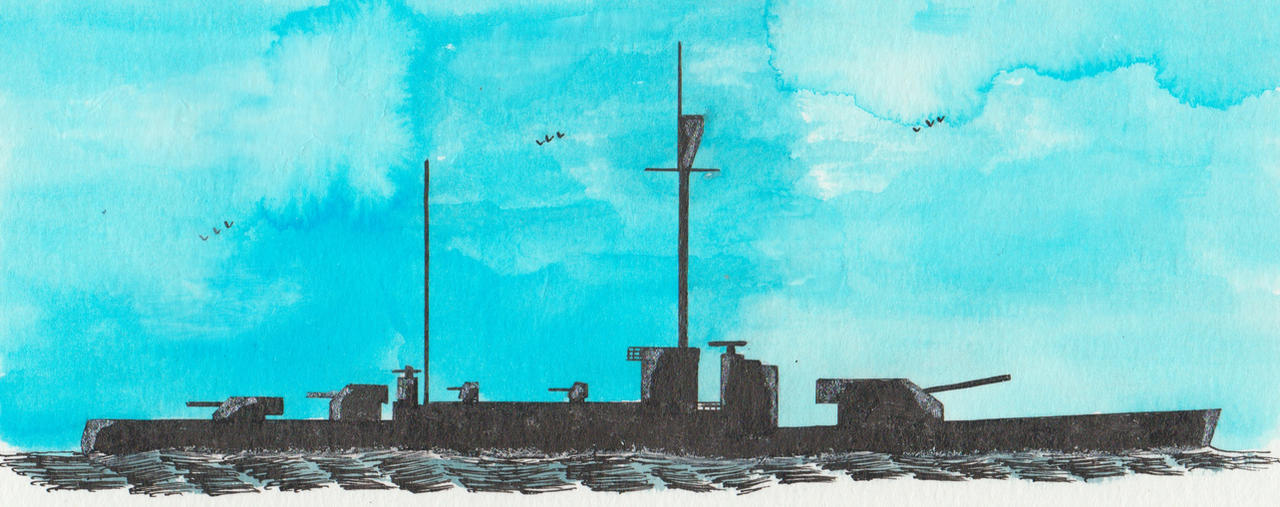
Deutschland-class consisted of the Deutschland (Panzerschiff A, replacement of the Preussen) renamed Lützow in January 1940), Admiral Graf Scheer Panzerschiff B replacement of the Lotharingen) and Admiral Graf Spee (Panzerschiff C, replacement of the Braunschweig, lost in 1939). Succeeded by Admiral Hiper-class and planned D-class cruiser. Original called Panzerschiffe (armored ships), reclassifed as heavy cruisers in February 1940. The press called her pocket battleships while she were more competent then the pre-dreadnought battleships, able to outrun every ship more heavier armed or to out gun every existing (heavy) cruiser due to her armament of 2x3-28cm/11” guns. Plans to convert the two existing units in 1943 into aircraft carriers was not executed. Dimensions 126 x 21 x 7.20 metres. Diesel propulsion, 2 shafts, 16,000 hp and speed 19 knots. Armour sides 30cm-deck 3cm-turrets 35cm. Armament 1x3-35cm quick firing guns, 2x2-15cm quik firing giuns, 4-8.8cm anti aircraft guns and 4 submerged 53cm torpedo tubes.

Sources

Gerhard Koop and Klaus-Peter Schmolke. Die Panzerschiffe der Deutschland-klasse.

Mike J. Whitley. Deutsche Kreuzer im Zweiten Weltkrieg.

Gert Sandhofer. Das Panzerschiff “A” und die vorentwürfe von 1920 bis 1928.

Jane’s Fighting Ships several editions.

Flottes de combat several editions.

Bundesarchiv several files. German pre design for the Deutschland-class pocket battleships design 

Monday, 16 March 2026

Positions of German warships according to a report of the American Naval Attaché at Berlin, Germany Nr. R562 dated 15 September 1939

Scharnhorst. ©Warshipsresearch.blogspot.com
Gneisenau.  ©Warshipsresearch.blogspot.com

Graf Spee.  ©Warshipsresearch.blogspot.com

Diary note dated Wednesday 6 September 1939. An item reported positions of German warships within the immediate past. Off Sassnitz either the battleship Scharnhorst or Gneisenau, at Wilhelmshaven the cruisers Emden and Scheer or Graf Spee, at Gdynia, Poland the U-14 and at Warnemunde the Luchs and Delfin. Of the latter two ships was the day before reported by US Lieutenant Commander Durgin.

Source

National Archives. FDR Presidential Library&Museum Roosevelt PSFC000175. War diary Naval Attaché Berlin, volume 1 (1 September 1939-26 May 1940)

Friday, 13 March 2026

German pocket battleship active in defending Wilhelmshaven during British air attack according to a report of the American Naval Attaché at Berlin, Germany Nr. R562 dated 15 September 1939

Admiral Graf Spee. ©Warshipsresearch.blogspot.com

Admiral Scheer. Source Werft-Reederei-Hafen 15 April 1933

Diary note dated Tuesday 5 September 1939. An item reported that the German press wrote about the unsuccessful British air attack the day before on the German cities Wilhelmshaven (Jade), Bremerhaven (Weser) and Cuxhaven (Elbe). Just one British aircraft reached her destination to be shot down and falling in the harbour of Wilhelmshaven. The commander of the Ostfriesland coast stated that 10 aircraft were schot down of which 4 by a warship. The Propaganda Department called her Graf Spee and Scheer.

Source

National Archives. FDR Presidential Library&Museum Roosevelt PSFC000175. War diary Naval Attaché Berlin, volume 1 (1 September 1939-26 May 1940)

Monday, 9 March 2026

British bombers attacked the German cities/harbors Wilhelmshaven, Cuxhaven and Brunsbuttelkoog according to a report of the American Naval Attaché at Berlin, Germany Nr. R562 dated 15 September 1939

Admiral Graf Spee. ©Warshipsresearch.blogspot.com

Diary note dated Monday 4 September 1939. An item reported that around British bombers attacked around 18.00 the German cities/harbors Wilhelmshvaen, Cuxhaven and Brunsbuttelkoog claiming to have damaged two warships. Reports dealing with the numbers and losses of the aircraft varies. German officials first claimed that the German pocket battleship Graf Spee fended off. Later was her name scrapped. First was every damaged denied, later was admitted that wreckage of a shot British plane fell on the forecastle of the German light cruiser Emden although with minor damage.

Source

National Archives. FDR Presidential Library&Museum Roosevelt PSFC000175. War diary Naval Attaché Berlin, volume 1 (1 September 1939-26 May 1940)

Monday, 2 March 2026

German pre design for the Deutschland-class pocket battleships design I/10 dated 1923

Design I/10. ©Warshipsresearch.blogspot.com

Admiral Graf Spee. ©Warshipsresearch.blogspot.com

Admiral Hipper-class. ©Warshipsresearch.blogspot.com

Planned D-class. ©Warshipsresearch.blogspot.com

Deutschland-class consisted of the Deutschland (Panzerschiff A, replacement of the Preussen) renamed Lützow in January 1940), Admiral Graf Scheer Panzerschiff B replacement of the Lotharingen) and Admiral Graf Spee (Panzerschiff C, replacement of the Braunschweig, lost in 1939). Succeeded by Admiral Hiper-class and planned D-class cruiser. Original called Panzerschiffe (armored ships), reclassifed as heavy cruisers in February 1940. The press called her pocket battleships while she were more competent then the pre-dreadnought battleships, able to outrun every ship more heavier armed or to out gun every existing (heavy) cruiser due to her armament of 2x3-28cm/11” guns. Plans to convert the two existing units in 1943 into aircraft carriers was not executed. Displacement 10,000 tons and as dimensions 176,0 x 18,8 x 6,5 metres. Turbine propulsion, 46 single ended and 4 double ended oil fuelled boilers, 2 shafts, 80,000 hp and speed of 22 knots. Belt 8cm, gun hoods maximum 10 cm and deck 3 cm. Armament of 4x2-21cm quikck firing guns, 4x1-8,8cm anti aircraft guns and 8-50cm submerged torpedo tubes.

Sources

Gerhard Koop and Klaus-Peter Schmolke. Die Panzerschiffe der Deutschland-klasse.

Mike J. Whitley. Deutsche Kreuzer im Zweiten Weltkrieg.

Gert Sandhofer. Das Panzerschiff “A” und die vorentwürfe von 1920 bis 1928.

Jane’s Fighting Ships several editions.

Flottes de combat several editions.

Bundesarchiv several files. German pre design for the Deutschland-class pocket battleships design 

Thursday, 26 February 2026

British cargo ship ss Doric Star lost in December 1939


German Admiral Graf Spee original appearance. ©Warshipsresearch.blogspot.com

German Admiral Graf Spee disguised appearance. ©Warshipsresearch.blogspot.com

An item reported that the 10,086 tons cargo ship ss Doric Star (1) loaded with general and refrigerated cargo departed Capetown, South Africa on 28 November bound for Freetown, Sierra Leone was reported as being by artillery fire from a battleship 600 miles east south east of St. Helena in the afternoon of 2 December and presumed to be lost.(1)

Notes

1. Launched by Lithgows, Port Glasgow, Scotland with yard number 731 on 24 February 1921, completed in 1922, taken into service as Doricstar in 1922, renamed Doric Star in 1929 and sunk on 2 December 1939 after leaving Auckland, New Zealand in November 1939.

2. She was destroyed by the German pocket battleship Admiral Graf Spee and not by her sister ship Admiral Scheer. Part of Of the Deutschland-class panzerschiffe, nicknamed pocket battleships by the Allied forces, later classified as heavy cruisers preceded by the Admiral Hipper-class. Main armament 2x3-28cm/11” guns, on fore and aft ship one turret. Building ordered as the Ersatz Braunschweig. Laid down on the Reichmarinewerft, Wilhelmshaven, Germany with yard number 125 on 1 October 1932, launched on 30 June 1934, commissioned on 6 January 1936, successful in destroying 50.089 gross tonnage of merchant ships, participated in the Battle of the Rio de La Plata on 13 December 1939 and finally scuttled to prevent capture on 17 December1939. Her captain was mislead believing that a large Allied naval force was approaching which was not true. Despite being damaged in the battle was she still superior to the Allied ships waiting outside Montevideo, Uruguay who were far more damaged. She was however lacking enough ammunition and had severe problems while the oil purification and desalination plants destroyed.

Sources

The National Archives, Kew Gardens, England CAB-66-4-1 Weekly Résumé (No. 14) of the naval, military and air situation from 12 noon 30 November to 12 noon 7 December 1939.

Lloyd’s Register 1939-1940. 

Friday, 20 February 2026

German pre-design for the Deutschland-class pocket battleships II/10 dated 1923

Design II/10. ©Warshipsresearch.blogspot.com


German Admiral Graf Spee original appearance. ©Warshipsresearch.blogspot.com

German Admiral Graf Spee disguised appearance. ©Warshipsresearch.blogspot.com

Design D-class heavy cruiser. ©Warshipsresearch.blogspot.com

Admiral Hipper-class. ©Warshipsresearch.blogspot.com

Deutschland-class consisted of the Deutschland (Panzerschiff A, replacement of the Preussen) renamed Lützow in January 1940), Admiral Graf Scheer Panzerschiff B replacement of the Lotharingen) and Admiral Graf Spee (Panzerschiff C, replacement of the Braunschweig, lost in 1939). Succeeded by Admiral Hiper-class and planned D-class cruiser. Original called Panzerschiffe (armored ships), reclassifed as heavy cruisers in February 1940. The press called her pocket battleships while she were more competent then the pre-dreadnought battleships, able to outrun every ship more heavier armed or to out gun every existing (heavy) cruiser due to her armament of 2x3-28cm/11” guns. Plans to convert the two existing units in 1943 into aircraft carriers was not executed. Displacement 10,000 tons and as dimensions 124,0 x 21,4 x 6,8 metres. Turbine propulsion with coal and oil fuelled boiler, 2 shafts and 2x25,000 hp allwoing a speed of 22 knots. Belt, conning tower and gun hoods maximum 20cm and 3cm deck. Armament 2x2-38cm quick firing guns, 4-15cm guns, 2x1-8,8cm anti aircraft guns and 2 submerged 50cm torpedo tubes.

Sources

Gerhard Koop and Klaus-Peter Schmolke. Die Panzerschiffe der Deutschland-klasse.

Mike J. Whitley. Deutsche Kreuzer im Zweiten Weltkrieg.

Gert Sandhofer. Das Panzerschiff “A” und die vorentwürfe von 1920 bis 1928.

Jane’s Fighting Ships several editions.

Flottes de combat several editions.

Bundesarchiv several files. German pre design for the Deutschland-class pocket battleships design 

Monday, 16 February 2026

British cargo ship Trevanion considered to be lost in December 1939


German Admiral Graf Spee original appearance. ©Warshipsresearch.blogspot.com

German Admiral Graf Spee disguised appearance. ©Warshipsresearch.blogspot.com

An item reported that the merchant ship Trevanion (1) considered to be lost in December 1939 tonnage 5,299 tons and loaded with 8,697 tons zinc concentrates as overdue in the Résumés dated 3 and 10 November 1939 was considered to be lost. She disappeared in the South Atlantic probably as victim of the German pocket battleship Admiral Scheer.(2)

Notes

1. Destroyed by the Admiral Graf Spee on 22 October 1939. Call sign GCGT. Gross register tonnage 5,299 tons, under deck 4,654 tons, net register tonnage 3,120 tons. Built by Lithgow Ltd., Port Glasgow, Scotlabnd in November 1937, owner Hain S.S. Co. Ltd., homeport London, England and as dimensions 432.3 x 56.2 x 24.8 feet.

2. Part of Of the Deutschland-class panzerschiffe, nicknamed pocket battleships by the Allied forces, later classified as heavy cruisers preceded by the Admiral Hipper-class. Main armament 2x3-28cm/11” guns, on fore and aft ship one turret. It was her sister ship Admiral Graf Spee which was responsible for the disappearance. Building ordered as the Ersatz Braunschweig. Laid down on the Reichmarinewerft, Wilhelmshaven, Germany with yard number 125 on 1 October 1932, launched on 30 June 1934, commissioned on 6 January 1936, successful in destroying 50.089 gross tonnage of merchant ships, participated in the Battle of the Rio de La Plata on 13 December 1939 and finally scuttled to prevent capture on 17 December1939. Her captain was mislead believing that a large Allied naval force was approaching which was not true. Despite being damaged in the battle was she still superior to the Allied ships waiting outside Montevideo, Uruguay who were far more damaged. She was however lacking enough ammunition and had severe problems while the oil purification and desalination plants destroyed.

Sources

The National Archives, Kew Gardens, England CAB-66-4-1 Weekly Résumé (No. 14) of the naval, military and air situation from 12 noon 30 November to 12 noon 7 December 1939.

Lloyd’s Register 1939-1940. 

Sunday, 15 February 2026

Unknown ship attacked by German pocket battleship Admiral Graf Spee in November 1939


German Admiral Graf Spee original appearance. ©Warshipsresearch.blogspot.com

German Admiral Graf Spee disguised appearance. ©Warshipsresearch.blogspot.com

An item reported that an unknown ship (possible the British oil refinery 13,640 tons ss Tafelberg) which left Aruba, Dutch West Indies bound for Capetown, South Africa on 16 November 1939 reported on 3 December 5 A.M. that she was gunned by the Admiral Scheer and (1) nothing was heard of her since. Her signal came from a postion around 170 miles south west of where the ss Doric Star was gunned.

Notes

1. She was attacked by the German pocket battleship Admiral Graf Spee and not by her sister ship Admiral Scheer. Part of Of the Deutschland-class panzerschiffe, nicknamed pocket battleships by the Allied forces, later classified as heavy cruisers preceded by the Admiral Hipper-class. Main armament 2x3-28cm/11” guns, on fore and aft ship one turret. Building ordered as the Ersatz Braunschweig. Laid down on the Reichmarinewerft, Wilhelmshaven, Germany with yard number 125 on 1 October 1932, launched on 30 June 1934, commissioned on 6 January 1936, successful in destroying 50.089 gross tonnage of merchant ships, participated in the Battle of the Rio de La Plata on 13 December 1939 and finally scuttled to prevent capture on 17 December1939. Her captain was mislead believing that a large Allied naval force was approaching which was not true. Despite being damaged in the battle was she still superior to the Allied ships waiting outside Montevideo, Uruguay who were far more damaged. She was however lacking enough ammunition and had severe problems while the oil purification and desalination plants destroyed.

Sources

The National Archives, Kew Gardens, England CAB-66-4-1 Weekly Résumé (No. 14) of the naval, military and air situation from 12 noon 30 November to 12 noon 7 December 1939.

Lloyd’s Register 1939-1940. 

Monday, 2 February 2026

British cargo ship Ashlea considered to be lost in December 1939

German Admiral Graf Spee original appearance. ©Warshipsresearch.blogspot.com

German Admiral Graf Spee disguised appearance. ©Warshipsresearch.blogspot.com

An item reported that the merchant ship Ashlea considered to be lost in December 1939 tonnage 4,222 tons and loaded with 7,115 tons sugar as overdue in the Résumés dated 3 and 10 November 1939 was considered to be lost. She disappeared in the South Atlantic probably as victim of the German pocket battleship Admiral Scheer.(1)

Notes

1. Sunk on 7 October 1939 by the Admiral Graf Spee. Calls ign GSWD. Gross register tonnage 4,222 tons, under deck 3,945 tons, net register tonnage 2,565 tons. Built by Sir Priestman&Co., Sunderland, England in February 1929, owner Cliffside Shipping Co. Ld., manager J. Morrison&Son, homeport Newcastle and as dimensions 367.4 x 51.5 x 25.1 feet.

2. Part of Of the Deutschland-class panzerschiffe, nicknamed pocket battleships by the Allied forces, later classified as heavy cruisers preceded by the Admiral Hipper-class. Main armament 2x3-28cm/11” guns, on fore and aft ship one turret. It was her sister ship Admiral Graf Spee which was responsible for the disappearance. Building ordered as the Ersatz Braunschweig. Laid down on the Reichmarinewerft, Wilhelmshaven, Germany with yard number 125 on 1 October 1932, launched on 30 June 1934, commissioned on 6 January 1936, successful in destroying 50.089 gross tonnage of merchant ships, participated in the Battle of the Rio de La Plata on 13 December 1939 and finally scuttled to prevent capture on 17 December1939. Her captain was mislead believing that a large Allied naval force was approaching which was not true. Despite being damaged in the battle was she still superior to the Allied ships waiting outside Montevideo, Uruguay who were far more damaged. She was however lacking enough ammunition and had severe problems while the oil purification and desalination plants destroyed.

Sources

The National Archives, Kew Gardens, England CAB-66-4-1 Weekly Résumé (No. 14) of the naval, military and air situation from 12 noon 30 November to 12 noon 7 December 1939.

Lloyd’s Register 1939-1940.