Translate

Showing posts with label Torpedo boats. Show all posts

Saturday, 24 October 2026

The German spar torpedo boats according to the Australian newspaper The Sydney Mail and New South Whales dated Saturday 6 January 1872

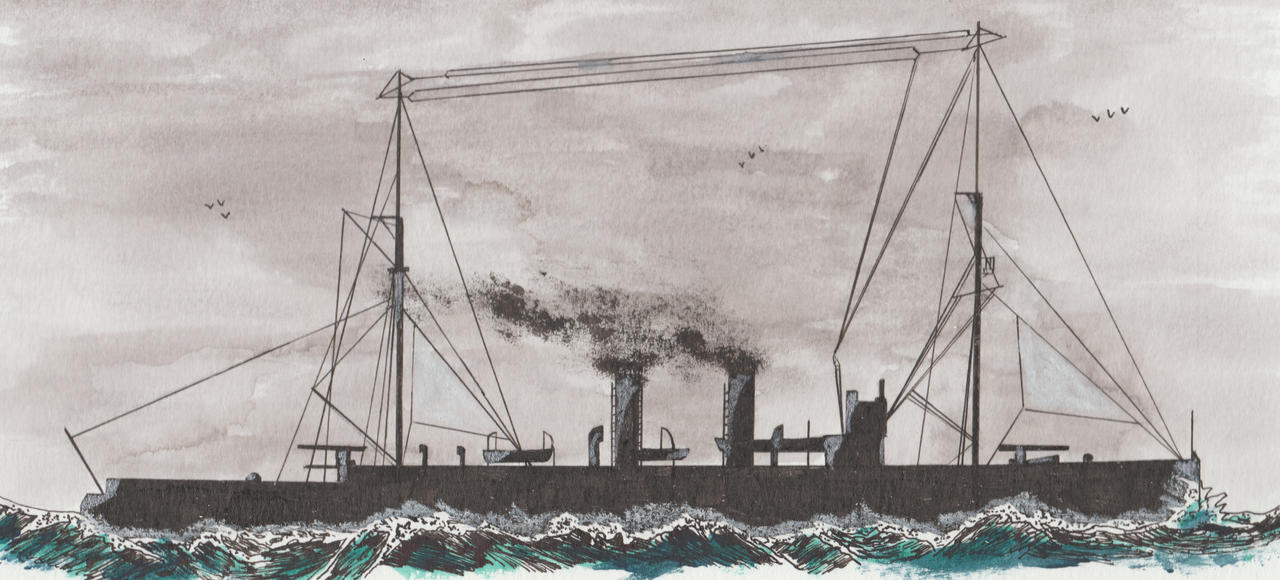
An item referred to the German Bromberger Zeitung which published a letter from Danzig supplying some details about 3 boats for the German navy under the title German Naval Invention. “Three boats are just now in course of construction in Devrient’s dockyard, the destination of which is to place torpedoes under, and thus to destroy, an enemy's ships. These boats are built almost entirely of iron, and, being about 60 feet long and only six or seven broad, they are nearly the form of a fish. The deck is not flat, but round, so as to be little exposed to danger from an enemy's shot. While employed in active operations no one will be visible on board. Contrary to the usual system, these boats will be steered from the bows  and on the deck, above the rudder, there is a slight elevation to allow the steersman to stand on his feet, and a small opening about an inch wide to serve him-as a look-out. As they are intended to operate close to an enemy's vessels, the armour will be as thick as is consistent with high speed. The most curious part of the invention, perhaps, is that the tiny screw steamers, or barcassen (long-boats) as they are called, use petroleum as fuel, which is contained in a number of iron receptacles in the stern, of sufficient thickness to be impervious to projectiles. The chimney is so small that it can scarcely in any case be hit. A narrow gallery, about a foot broad, and enclosed by an iron chain, runs round the boat. The machines have all been furnished by Stockel and Wagenknecht, so that the boats have been produced in Danzig from stem to stern. The hold for the torpedoes is in the middle of the boat, as well as the quarters of the crew. One of the barcassen has already been launched, and is only waiting for her engine. The two others are still on the stocks”.(1)

Note

1. German warships 1815-1945. Volume I. Erich Gröner, revised by D. Jung and M. Maass. The invention consisted of spar torpedo boats Nos. I-III built by Devrient, Danzig between 1871-1872 with as dimensions 20.3 x 3.30 x 1.9 metres. 

Tuesday, 20 October 2026

Spanish torpedo boat T-22 1920-1939

©Warshipsresearch.blogspot.com

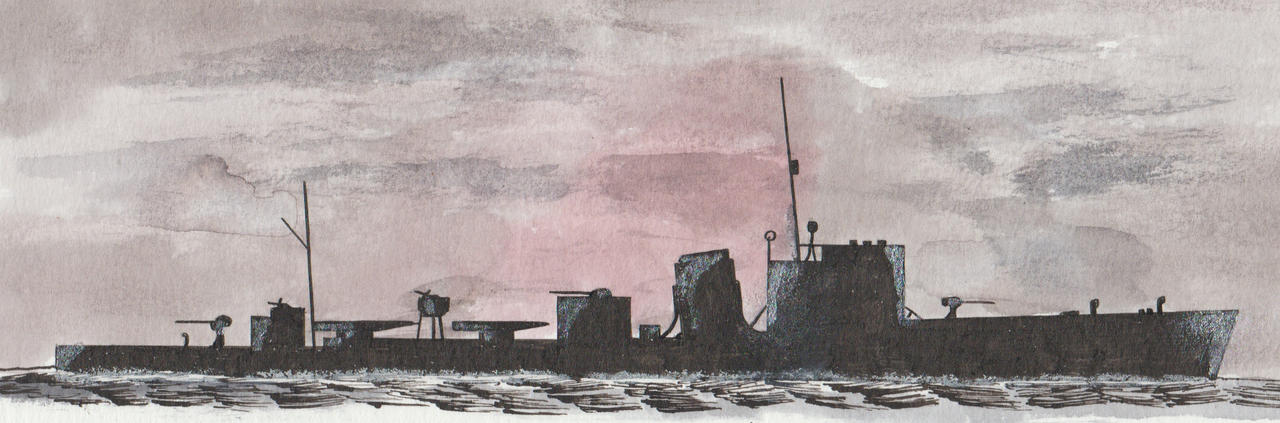
International call sign GRSD. Part of T-class preceded by Ariete-class succeeded by German S-boats. Between 1912-1922 were totally 22 of the planned 24 boats built by Sociedad Española de Construcción Naval, Cartagena, Spain based on the French Bourrasque-torpedo boats class design from Chantiers et Ateliers A. Normand, Le Havre, France. Launched in 1920 and scuttled in 1939. Dimensions 50 (maximum) x 5,00 (maximum) x 3.20 x 1.47 metres. Maximum displacement 180 ton. Number of screws 3. Maximum speed 26,00 knots. Coal bunker capacity 1,000 ton. Crew numbered 31 men. Armament 3-4.7cm Vickers guns, 1x45cm and 1x2-45cm torpedo tubes. 

Navypedia claims developed with support of the British firm Vickers and based on the French Cyclone-class of Norman. Building authorized under the law dated 7 January 1908. Harald Fock. Schwarze Gesellen. Torpedoboote bis 1914 also mentioned the Cyclone-class as basic design.

Sources

T-1 class

Lista official de los buques de Guerra y mercantes de España 1925.

Saturday, 17 October 2026

Spanish torpedo boat T-3 1912-1936

©Warshipsresearch.blogspot.com

International call sign GRSD. Part of T-class preceded by Ariete-class succeeded by German S-boats. Between 1912-1922 were totally 22 of the planned 24 boats built by Sociedad Española de Construcción Naval, Cartagena, Spain based on the French Bourrasque-torpedo boats class design from Chantiers et Ateliers A. Normand, Le Havre, France. Launched in 1912 and lost in 1936. Dimensions 50 (maximum) x 5,00 (maximum) x 3.20 x 1.47 metres. Maximum displacement 180 ton. Number of screws 3. Maximum speed 26,00 knots. Coal bunker capacity 1,000 ton. Crew numbered 31 men. Armament 3-4.7cm Vickers guns, 1x45cm and 1x2-45cm torpedo tubes. 

Navypedia claims developed with support of the British firm Vickers and based on the French Cyclone-class of Norman. Building authorized under the law dated 7 January 1908. Harald Fock. Schwarze Gesellen. Torpedoboote bis 1914 also mentioned the Cyclone-class as basic design.

Sources

T-1 class

Lista official de los buques de Guerra y mercantes de España 1925.

Friday, 16 October 2026

Italian navy intending to replace the funnels on board of ships by electric fans According to the Dutch newspaper Limburger koerier dated 19 February 1910

An item dated London, England 18 February referred to the Daily Telegraph which reported that the Italian navy had a solution to get rid off the funnels. Electric ventilators fans were to be used instead. The secret invention had already been tested on board of a torpedo boat. Advantages were that an easy target for enemy gunfire was taken away and with storm or rain the fires in the boilers did not have to be partially dampened, which would have resulted in lower speeds.

Woodite or elastic armor according to the Dutch newspaper Algemeen Handelsblad dated 23 October 1886

An item reported that a certain Mrs. Wood discovered a composition suitable for protecting torpedo boats against projectiles. Her composition was better than caoutchouc [India rubber] resembled vulcanized caoutchouc, was very elastic and bonds  with the surfaces to be protected. The naval authorities were really pleased with this invention called woodite.(1)

Note

1. In 1886 discovered by the British Mrs. Anie Matilda Wood for covering the unarmored parts of warships and claimed to be absolutely uninflammable. According to an announcement in the Engineering dated 11 January 1889 was the name woodite given by the well known Sir E.J. Reed who also recommended it. In The Marine Engineer dated 1 July 1888 dealing with the protection qualities”Last, Mrs. Wood think that an ironclad should not sink even when riddled with shot between wind and water. Numerous target experiments with steel shot and shell point in a qualified sense to that conclusion: the qualification being, that as a land target may be battered to destruction, so à fortiori may a ship.The reasonable contention of Mrs. Wood, however, is that as one form of Woodite will close upon a shot hole as water closes upon a stone thrown into it, the proceeding would be a common-sense one tot substitute Woodlite blocks for armour plates upon the sides of our armor clads.”The New Zealand newspapers Timaru Herald dated 17 January 1887 and Otago Daily Times dated 12 March 1884 described some of the experiments. 

Friday, 9 October 2026

Spanish torpedo boat T-4 1912-1838

©Warshipsresearch.blogspot.com

International call sign GRSD. Part of T-class preceded by Ariete-class succeeded by German S-boats. Between 1912-1922 were totally 22 of the planned 24 boats built by Sociedad Española de Construcción Naval, Cartagena, Spain based on the French Bourrasque-torpedo boats class design from Chantiers et Ateliers A. Normand, Le Havre, France.  Launched in 1912 and sunk in April 1939.Dimensions 50 (maximum) x 5,00 (maximum) x 3.20 x 1.47 metres. Maximum displacement 180 ton. Number of screws 3. Maximum speed 26,00 knots. Coal bunker capacity 1,000 ton. Crew numbered 31 men. Armament 3-4.7cm Vickers guns, 1x45cm and 1x2-45cm torpedo tubes. 

Navypedia claims developed with support of the British firm Vickers and based on the French Cyclone-class of Norman. Building authorized under the law dated 7 January 1908. Harald Fock. Schwarze Gesellen. Torpedoboote bis 1914 also mentioned the Cyclone-class as basic design.

Sources

T-1 class

Lista official de los buques de Guerra y mercantes de España 1925. 

Tuesday, 6 October 2026

Ships arrived at Gibraltar coming from the east according to the Kriegsnachrichten of the Chef des Admiralstabes der Marine dated Berlin 23 August 1917

An item reported between 18-20 August the arrival at Gibraltar coming from the east 1 French passenger steamship, 2 British steamships, 1 Japanese steamships and 1 British torpedo boat.

Source

Bundesarchiv RM-40-622

Spanish torpedo boat T-14 1915-1949

©Warshipsresearch.blogspot.com

Launched in 1915. International call sign GRSD. Part of T-class preceded by Ariete-class succeeded by German S-boats. Between 1912-1922 were totally 22 of the planned 24 boats built by Sociedad Española de Construcción Naval, Cartagena, Spain based on the French Bourrasque-torpedo boats class design from Chantiers et Ateliers A. Normand, Le Havre, France.  Dimensions 50 (maximum) x 5,00 (maximum) x 3.20 x 1.47 metres. Maximum displacement 180 ton. Number of screws 3. Maximum speed 26,00 knots. Coal bunker capacity 1,000 ton. Crew numbered 31 men. Armament 3-4.7cm Vickers guns, 1x45cm and 1x2-45cm torpedo tubes.

Navypedia claims developed with support of the British firm Vickers and based on the French Cyclone-class of Norman. Building authorized under the law dated 7 January 1908. Harald Fock. Schwarze Gesellen. Torpedoboote bis 1914 also mentioned the Cyclone-class as basic design.

Sources

T-1 class

Lista official de los buques de Guerra y mercantes de España 1925.

Friday, 2 October 2026

Spanish torpedo boat T-13 1914-1932

©Warshipsresearch.blogspot.com

Launched in 1914 and broken up in 1932 .International call sign GRSC. Part of T-class preceded by Ariete-class succeeded by German S-boats. Between 1912-1922 were totally 22 of the planned 24 boats built by Sociedad Española de Construcción Naval, Cartagena, Spain based on the French Bourrasque-torpedo boats class design from Chantiers et Ateliers A. Normand, Le Havre, France.  Dimensions 50 (maximum) x 5,00 (maximum) x 3.20 x 1.47 metres. Maximum displacement 180 ton. Number of screws 3. Maximum speed 26,00 knots. Coal bunker capacity 1,000 ton. Crew numbered 31 men. Armament 3-4.7cm Vickers guns, 1x45cm and 1x2-45cm torpedo tubes.

Navypedia claims developed with support of the British firm Vickers and based on the French Cyclone-class of Norman. Building authorized under the law dated 7 January 1908. Harald Fock. Schwarze Gesellen. Torpedoboote bis 1914 also mentioned the Cyclone-class as basic design.

Sources

T-1 class

Lista official de los buques de Guerra y mercantes de España 1925.

Thursday, 24 September 2026

French warships commissioned under British White Ensign according to the War Cabinet Weekly Résumé No. 45of the Naval, Military and Air Situation 4-12 July 1940

An item reported that 4 French destroyers, 5 torpedo boats and all submarine chasers present in British harbour were to be commissioned under the White Ensign.

Source

National Archive UK. CAB-66-9-42. 

Wednesday, 16 September 2026

British minesweeping sloop HMS Arabis 1915-1916

©Warshipsresearch.blogspot.com

Built under the Emergency War Programme of the First World War. At the end of 1914 was the design completed and in July 1915 were 36 ships in 3 batches ordered for the British Royal Navy. British shipyards built an additional 8 vessels for the French Navy. Part of Arabis-class preceded by Azalea- and Acacia classes and preceded by Aubrietia-class. The Arabis-class was just like 4 other subclasses part of the so-called Flower-class, the later also known as Cabbage-class or the Herbaceous Borders. Launched by D.&W. Henderson and Company, Partick, Scotland on 6 November 1915 and sunk in a fight with German torpedo boats off the Dogger Bank on 10 February 1916. 

Friday, 11 September 2026

Allied naval forces searching for enemy submarines in Strait of Messina according to the Kriegsnachrichten of the Chef des Admiralstabes der Marine dated Berlin 9 August 1917

An item referred to an agent reporting that on 28 July both sides of Strait of Messina during about a hour were illuminated with a large number of search lights. Motor boats and torpedo boats were search for an enemy submarine.

Source

Bundesarchiv RM-40-622

Thursday, 10 September 2026

Japanese destroyer Teruzuki (Ship No. 105) 1940-1943

Akizuki subclass©Warshipsresearch.blogspot.com

Russian Vol'ny former Japanese Matsu-class Shii©Warshipsresearch.blogspot.com

Part of Akizuki-class or B-class destroyer consisting of Akizuki (Project 51), Fuyutsuki (Project 51) and Michitsuki (Project 53) subclasses preceded by Yugumo-class succeeded by Matsu-class. Part of Akuziki-subclass. Built under the Maru 4 Programme. Laid down by Mitsubishi, Nagasaki, Japan on 13 November 1940, launched on 21 November 1941, completed on 31 August 1942, heavily damaged in a fight with the American patrol torpedo boats USS PT-37 and PT-40 off Savo Island, Solomon Islands on 11 December 1942, scuttled netx day and stricken on 20 January 1943.

Monday, 7 September 2026

British ironclad HMS Edinburgh preparing defence against attacking torpedo boat in 1887

Scientific American Supplement Volume XXV 14 April 1888

The illustration showed the preparations on board of the HMS Edinburgh to defend herself with machine guns and Martin-Henry rifles against an attacking torpedo boat.The Edinburgh was described as “the most powerful vessel now afloat of the British Navy” and in November 1887 commissioned for service in the Mediterranean under the command of captain Henry St Leger Bury Palliser (1839-1907).

Part of Colossus-class ironclads preceded by Ajax-class succeeded by Admiral-class. Ex-Majestic but renamed Edinburg on 16 March 1882. Laid down by Pembroke Dockyard, England on 20 March 1879, launched on 18 March 1882, completed on 8 July 1887, coast guard ship since 1894, converted into a target ship in 1908 and sold to be broken up by Thos W. Ward in 1910.

Sunday, 6 September 2026

Spanish torpedo boat T-6 1913-1934

©Warshipsresearch.blogspot.com

Part of T-class preceded by Ariete-class succeeded by German S-boats. Between 1912-1922 were totally 22 of the planned 24 boats built by Sociedad Española de Construcción Naval, Cartagena, Spain based on the French Bourrasque-torpedo boats class design from Chantiers et Ateliers A. Normand, Le Havre, France.  Launched in 1913 and broken up in 1934. International call sign GKBR. Dimensions 50 (maximum) x 5,00 (maximum) x 3.20 x 1.95 metres. Maximum displacement 196,82 ton. Number of screws 3. Maximum speed 27,00 knots. Coal bunker capacity1,000 ton. Crew numbered 31 men. Armament 3-4.7cm Vickers guns, 1x45cm and 1x2-45cm torpedo tubes.

Navypedia claims developed with support of the British firm Vickers and based on the French Cyclone-class of Norman. Building authorized under the law dated 7 January 1908. Harald Fock. Schwarze Gesellen. Torpedoboote bis 1914 also mentioned the Cyclone-class as basic design.

Sources

T-1 class

Lista official de los buques de Guerra y mercantes de España 1925. 

Thursday, 3 September 2026

Shipping traffic heading to the west of Gibraltar according to the Kriegsnachrichten of the Chef des Admiralstabes der Marine dated Berlin 21 August 1917

An item reported that at between 14-18 August the shipping traffic from Gibraltar to the west consisted 10 British steamships, 4 Norwegian steamships, 1 British steam transport, 2 Italian passenger ships, 3 armed steamships, 1 Portuguese steamship, 1 Brazilian steamship.

As part of a convoy: 1 British guard ship, 6 British steamships, 1 Greek steamship, 1 Norwegian steamship.

As part of a convoy: Russian torpedo boat Iskussny with 8 steamships.

-1 French steamship, 1 Italian steamship, 1 Italian sailing vessel.

Source

Bundesarchiv RM-40-622

Friday, 28 August 2026

Russian torpedo boat used against the Turks on the Danube in 1877


Outside and inside. Illustrated London News dated 16 June 1877

This was the so-called Russo-Turkish War (24 April 1877-3 March 1878 between the Ottoman Empire and a coalition led by the Russian Empire consisting further of Romania, Serbia and Montenegro. The latter three principalities claimed after the defeat of the Ottoman Empire their formal independence and further more became Bulgaria an autonomous state. 

Friday, 14 August 2026

Japanese torpedo boat Kiji 1935-1946 and Russian Vnimatel’nyy 1947-1957

Russian Vnimatel’nyy former Japanese Otori-class Kiji©Warshipsresearch.blogspot.com

Russian Vol'ny former Japanese Matsu-class Shii©Warshipsresearch.blogspot.com

Part of Otori-class preceded by Chidori-class succeeded by Matsu-class destroyers. Ordered under the 1934 2nd Naval Armaments Supplements Programme of which 8 of the planned 16 were cancelled. Laid down by Mitsui Engineering&Shipbuilding, Tamano or Tama Zosensho KK, Okayama, Japan on 24 October 1935, launched on 26 January 1937, completed on 31 July 1937, surrendered at Surabaya, Dutch East Indies in August 1945, used for repatriation purposes, handed over to the Soviet Union on3 October 1947 and decommissioned on 31 October 1957.

Sources

Breyer, S. and N. Polmar. Guide to the Soviet Navy, 2nd edition.

Fukui, S. Japanese naval vesse;s at the end of World War II.

Jentschura, H., D. Jung and P. Mickel. Warships of the Imperial Japanese Navy 1869-1945.

Huan, Cl. La Flotte rouge.

Budzbon, P., J. Radziemski, and M. Twardowski. Warships of the Soviet Fleets 1939-1945, volume I.

Kouznetsov, N. La Marine sovietique en guerre 1941-1945.

Meister, J. Soviet Warships of the Second World War.

Pavlov, A.S. Warships of the USSR and Russia 1945-1995.

Rohwer, J. and M.S. Monakov. Stalin’s Ocean-going Fleet. Soviet naval strategy and shipbuilding programmes 1935-1953.

Schulz-Troge, U. Die sowjetische Kriegsmarine.

Watts, A.J. and B.G. Gordon. The Imperial Japanese Navy.

Far Eastern Sighting Guide (ONI-F-31-FE).

Jane’s Fighting Ships several editions.

https://warshipsresearch.blogspot.com/ d.d. 1-4-2026 15:58

Otori-class  d.d. 1-4-2026 15:58

Thursday, 13 August 2026

Thais torpedo boat HTMS Rayong 1936-on or after 1973

©Warshipsresearch.blogspot.com

Pennant 23. Part of Trad-class preceded by Number 1-class succeeded by Kantang-class. Italians design, in fact a smaller Italian Spica-class. Laid down by Cantieri Riuniti dell’Adriatico, Monfalcone, Italy on 6 June 1936, launched on 11 January 1937, commissioned in March 1973, broken up. 

Wednesday, 12 August 2026

The composition of Wrangel’s Fleet lying at Bizerte, French Tunisia in 1925


Imperator Aleksandr III©Warshipsresearch.blogspot.com

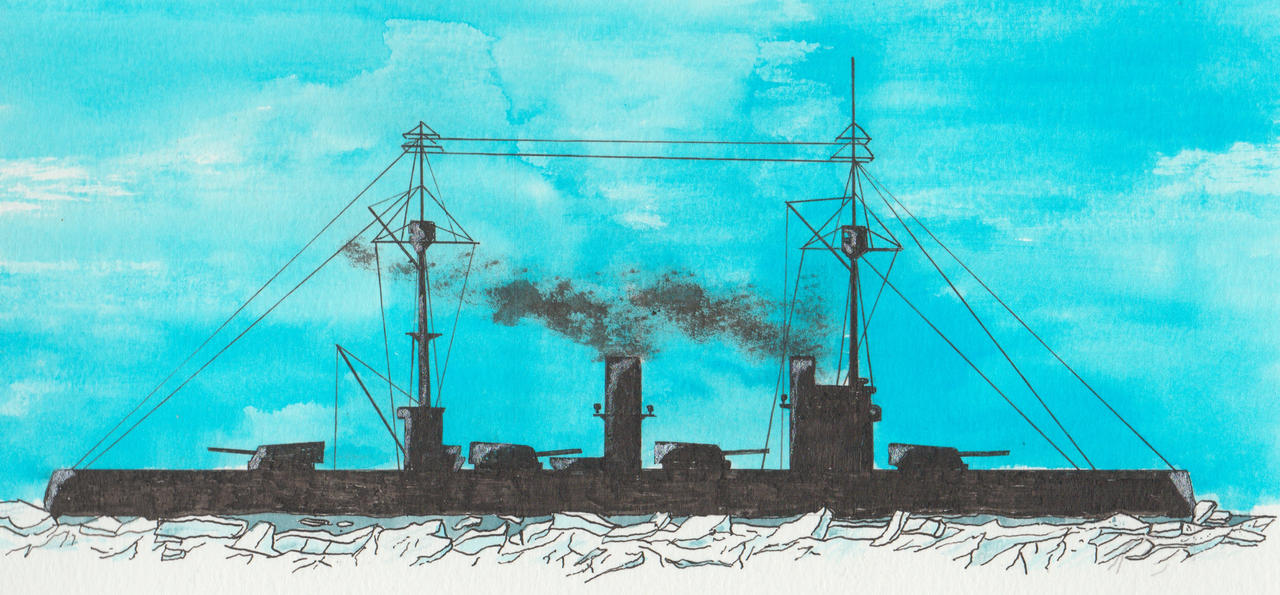
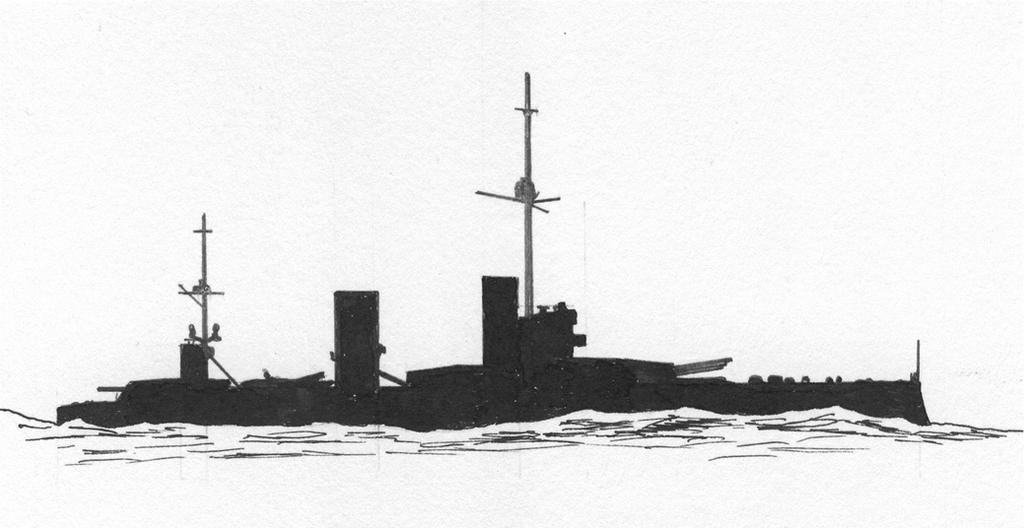
A US Navy report dated Constantinople, Turkey 31 January 1925 No. 4221 while referring to a report dated 9 January No. 4174 described the Russian ships (1) lying at Bizerte, French Tunisia and which the Soviet government wanted to take over from France and presumably would be moved to the Black Sea consisted of:

-battle cruiser General Alexeiff (2), 22,800 tons and built in 1914

-armed cruiser Georgii Pobiednosets [Ekaterina II-class battleship], 10,200 tons and built in 1892

-light cruisers General Korniloff and Alinaz of 6,600 and 3,300 tons and built in 1902 and 1900 respectively

-7 destroyers of between 810-1,300 tons and built between 1907-1915.

-3 torpedo boats of each 350 tons and built in 1905

-4 submarines of between 467-756 tons and built between 1913-1918

-3 gunboats of between 1,100-1,300 tons and built between 1892 and 1916

Notes

1. Wrangel’s Fleet. Pyotr Nikolayevich Wrangler (15/27 August 1878 Novalexandrovsk, Russian Empire-25 April 1928, Brussels, Belgium), commander-in-chief of the Armed Forces of South Russia 1920-1921

2. Imperator Aleksandr III 1912-1917-Volia 1917-1919, General Alekseyev 1919-1936. Her keel was laid down at the Russud Shipyard at Nikolayev was ordered on 30 April 1911, the contract for building her dates from 13 April 1912!launched on 15 April 1914, commissioned on 17 July 1917 in the Imperial Russian navy, renamed on 29 April Volia and not Wolga/Volga as sometimes is suggested, in November that year was she commissioned in the Soviet Navy, on 19 June 1918 refused her crew to scuttle her and she went to Sevastopol where her armament was removed and the crew landed except for guards. On 1 October was she fallen into German hands and on the 15th made she a short voyage under German flagged. On 24 November handed the German forces her over to British forces and in December she departed towards Izmit manned by sailors from the HMS Agamemnon which ‘accompanied’ her during this voyage. Returning in 1919 to Sevastopol was she on 1 November handed over to the White Russian forces which commissioned her as the General Alekseyev. As part of the so-called Wrangel’s fleet was she interned by the French cabinet in Bizerte.End 20’s was she sold to be broken which actually happened not earlier as in 1936. Her main guns were used by German and Finnish forces and some were after the Second World War used by Soviet forces.

Source

National Archive. Record Group 165: Records of the War Department General and Special Staffs Series: Security Classified Correspondence and Reports. File Unit. Russia: Navy - MID 2503-16 THRU 2503-265. Roll 1443.