Translate

Showing posts with label Dreadnoughts. Show all posts

Thursday, 22 October 2026

French Minister for Marine ordered building of 4-18,350 ton battleships according to the Australian newspaper The Sydney Morning Herald dated Tuesday 1 January 1907

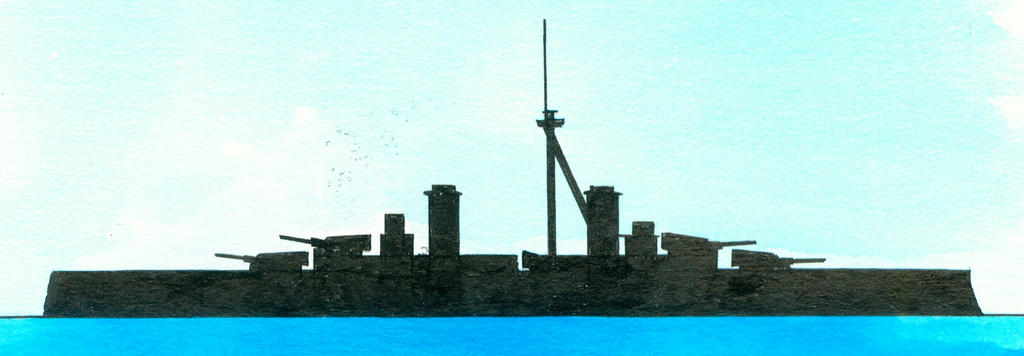
 République-class. ©Warshipsresearch.blogspot.com

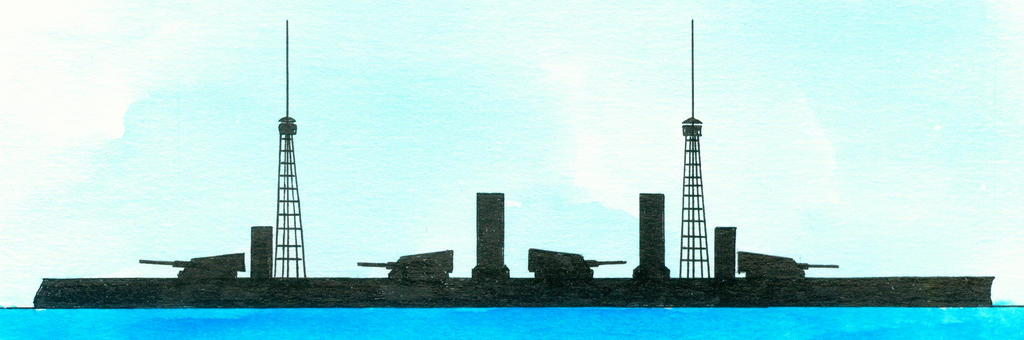
Liberté-class. ©Warshipsresearch.blogspot.com
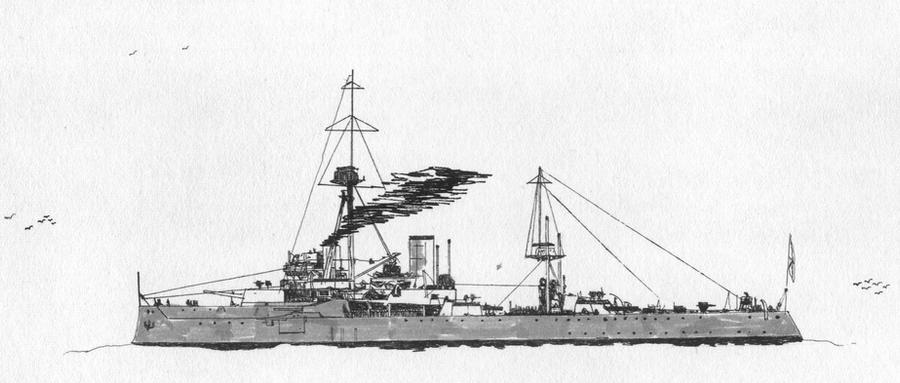
Danton-class. ©Warshipsresearch.blogspot.com

British HMS Dreadnought©Warshipsresearch.blogspot.com

An item reported that the French Minister for Marine (1) ordered the building of 4-18,350 ton battleships costs 50,000,000 francs for each battleships and an armament of 12-30.48cm/12” guns. Planned was the building in a later stadium of an additional two battleships.(2) Originally the armament was to consist of 4-12” and 12-9.45” which the French believed was not inferior to the 12-12” guns of the British battleship HMS Dreadnought, but after a reconsideration was chosen for an uniform main armament. The speed was 19 knots, 3 knots less as the turbine driven HMS Dreadnought, but France found turbine propulsion too expensive. Still were the costs of the French battleship 2,000,000 higher compared with the 1,750,000 pound sterling of the Dreadnought.

Notes

1. Gaston Thomson (29 January 1848 Oran, Algeria-14 May 1932 Bône/Annaba, Algeria), Minister of Marine between 24 January 1905-22 October 1908.

2. Under the Fleet Law of 1900 were six pre-dreadnought battleships built. namely the 14,870 ton République-class (République and Patrie) and the Liberté class (Liberté, Justice, Vérité, and Démocratie). Preceded by Suffren and succeeded by the Danton-class semi-dreadnought-battleships. 

Wednesday, 21 October 2026

Italian naval engineer Cuniberti designing submarine dreadnought around 1913

An item reported the death of the Italian general Cunberti (1), which famous naval architect deserves all credits for initiating the dreadnought idea. At the time of his depth he seemed to be working on the design of a submarine dreadnought in which the big guns were replaced by torpedo tubes.

Note

1. The naval engineer Vittorio Emanuele Cuniberti (1854 Turin, Italy-20 December 1913 Rome, Italy), known for his 1903 vision of the all big gun battleship, first realized as the British HMS Dreadnought. Probably is this design the same he made for a torpedo battleship,

Source

Journal of the United States Artillery. Volume 41, 194. 

Friday, 16 October 2026

Dreadnoughts to be built in England not for Japan but for Brazil according to the Australian newspaper The Riverine Herald dated Monday 6 July 1908

Minas Geraes-class©Warshipsresearch.blogspot.com

An item referred to the American newspaper New York Herald reporting that Japan secretly ordered the building of 30 warships in England including three dreadnoughts but which were in fact for Japan. Brazilian authorities denied this however, they called it a sheer invention.

Note

1. British shipyards built several battleships for the Imperial Japanese navy. On the date of the news item 6 July 1908 were none under construction. The Katori was to the last one to be built by a British shipyard, namely by Vickers, Barrow-in-Furness, she was completed on 20 May 1906. Her sister ship Kashima built by Armstrong, Elswick, was completed 3 days later. But Brazil did ordered battleships in England at that time. Vickers and Armstrong Whitworth were building the Minas Geraes (laid down 17 April 1907) and Sao Paulo (laid down on 30 April 1907) with a third one the Rio de Janeiro laid down by Armstrong on 16 March 1910. In 1908 there were also rumors spread by newspapers that the USA or Germany were the potential buyers.  

Tuesday, 14 January 2025

Battleship of the future-design by Italian naval engineer Vittorio Emilio Cuniberti in 1912

1903 design. ©Warshipsresearch.blogspot.com

HMS Dreadnought. ©Warshipsresearch.blogspot.com
1912 design. ©Warshipsresearch.blogspot.com

Displacement 29,700 tons, main armament 10-35.6cm guns (2x2&2x3 fore and aft) and on the main deck 14-15xm guns. The vital parts are protected by 40.6cm armour. Cruising speed 25 knots.

Note

1. Vittorio Emilio Cuniberti (7 June 1854 Turin, Italy-19 December 1913 Rome, Italy) published in the 1903 edition of Jane’s Fighting Ships a design of all big-gunned battleship which can be considered as a predecessor of the British HMS Dreadnought.

Monday, 31 July 2023

Building of Austrian dreadnought SMS Szent István seriously delayed according to the Dutch magazine Marineblad dated 1913-1914 no. 8

An item reported a serious delay in the building of the fourth ship of the first Austrian dreadnought series namely the Szent István. She was built at the Danubius shipyard at Fiume [nowadays Rijecka, Croatia], which yard had built until then just small cruisers and torpedo boats.(1)

Note

1. Part of Tegethoff-class preceded by Radetzky-class succeeded by Ersatz Monarch-class, laid down on 29 January 1912, launched on 17 January 1914, commissioned on 13 December 1915, torpedoed by the Italian MAS-15 and off Premuda capsized and sunk on 10 June 1918.

Tuesday, 5 April 2022

German Krupp dreadnought-design for Argentina in 1908

Despite modifications in 1909 was the design of 1908 disapproved and an American design accepted. Armament consisted of 6x2-30,5cm cal 45 guns (2 amidships, 2 fore of which one superfiring and 2 aft of which one one superfiring, 16-15cm cal 45 guns, 8-5,7cm cal 50 guns, 4-8mm machine guns and 4-57cm guns. The armour consisted of a 2,5cm thick main deck and a main belt with a thickness of 23cm. Displacement tons and as dimensions 163,4 x 26,1 x 7,8 metres. With a horsepower of 28.500 hp and a speed of 21,5 knots.

Saturday, 30 October 2021

The Russian Baltic Fleet according to the Secret Admiralty Weekly Intelligence Summary Nr. 35 for the week ending 3 September 1921

Andrei Pervozvanny-class

An item reported that the Soviet Baltic Fleet was divided in 3 groups depending on their fighting value,, namely the Active Fleet, ships out of commission and ships part of the reserve. On the ships which were decommissioned was no work carried out to increase their fighting value. On board was just a small crew to perform guard tasks. Dreadnoughts each 9 officers, 106 men and 1 surgeon for 2 ships, armour clads each 6 officers, 68 men and 1 surgeon for ships, cruisers each 4 officers, 46 men and 1 surgeon for 4 ships, Novik type destroyers each 2 ships 5 officers 13 men, 1 surgeon for 7 ships, torpedo boats 2nd class each 7 ships 3 officers 17 men and 1 surgeon for 8 ships and torpedo boats each 10 ships 3 officers and 17 men but no surgeon. The condition of this ships was such worse that it needed at least 2-3 years to improve their fighting value which regarded the condition of the Soviet works and factories was hardly to be realized. Part of the reserve were ships undergoing repairs and which had larger crews, for example the Andrei Pervozvanni with 200 instead of 68 men. Her crew numbered in actual service 890 men. The ships part of the active fleet were in good condition with complete crews although not necessary in complete action condition. Crews were insufficient trained due to lacking officers and specialists and further more there was not enough fuel and various materials for the machinery lacking.

Source

The National Archives CAB-24-127-89. Secret Admiralty Weekly Intelligence Summary Nr. 35 for the week ending 3 September 1921.

Wednesday, 20 October 2021

Brazil and Argentina ordered battleships by British shipyards according to the magazine Mitteilungen aus dem Gebiete des Seewesens dated 1907 No.7


Rivadavia-class


Minaes Geraes-class

An item reported that often was believed that the four 18.000 tons battleships ordered by British shipyards for Argentina (1) and Brazil (2) probably were not delivered but purchased by England. Despite this was a acceptable possibility it still was not actual.(1)

Note
1. The Rivadavia-class consisting of the Rivadavia (launched on 25 May 1910) and Moreno (launched on 9 July 1910) with a displacement of 27.900 (standard)-30.600 (full load) tons were however not built in England but by Fore River Shipbuilding Company, Quincy. Massachusetts respectively New York Shipbuilding, Camden, New Jersey, USA.
2. The Minaes Geraes-class consisting of the Minas Geraes (laid down by Armstrong Whitworth, United Kingdom on 17 April 1907) and the Sao Paulo (laid down by Vickers, Barrow-in-Furness, United Kingdom on 30 April 1907) with a displacement of 19.105 (standard)-21.370 (full load) tons. 

Monday, 18 October 2021

Chile increasing her naval strength according to the Dutch magazine Marineblad 1912-1913 no. 10

Almirante Latorre

HMS Eagle


An item reported that the superdreadnoughts built for Chilean account at the shipyard of Armstrong were named Almirante Latorre (1) and Almirante Cochrane (2) and were end 1914 or begin 1915 completed. With a displacement of 28.000 tons and a speed of 22 miles. The armament consisted of 10-35,6cm guns, 22-12cm guns and 4-53cm torpedo tubes. At the shipyard of White&Co. at Cowes was the building of six destroyers of 1.500 ton, speed 31 miles and an armament of 6-10,2cm guns and 3 torpedo tubes. In 1912 were the launched Tomé and Talcahuano sold to Romania. The two submarines Antafagasta and Iquique were being built by the shipyard of the Electric Boat Company in New York. In 1912 numbered the personnel strength 6.080 men.

Notes
1. Purchased by the British government on 9 September 1914, commissioned on 15 October a year later as the HMS Canada, in April 1920 sold back to Chile. Finally broken up in 1959.
2. Purchased by the British government on 28 February 1914, commissioned on 20 February as the carrier HMS Eagle and finally torpedoed by the German submarine U-73 on 11 August 1942 causing her sinking.

Friday, 20 August 2021

None South African financed dreadnought for England according to the Dutch newspaper Het nieuws van den dag voor Nederlandsch-Indië dated 3 April 1909

An item dated Pretoria 2 April 1909 referred the procurator-General general De Villiers (1) in the parliament of Transvaal to the proposal that South Africa would give England a dreadnought. He thought the best gift to England an united colony was and which made clear that in case of an European war England supported with all efforts.

Note
1. Daniel Johannes de Villiers (3 November 1883 Flicksburg, Orange Freestate-1 June 1933 The Hague, Netherlands). Attorney and auctioneer. In 1929 appointed as the first representative for South Africa in the Netherlands.

The Russian Baltic fleet according to the Dutch newspaper Het Vaderland: staat- en letterkundig nieuwsblad evening edition dated 26 February 1923

According to newspapers from Riga was the Russian Baltic fleet to consist that year of 2 dreadnoughts, 8 destroyers, 9 submarines, 10-15 torpedo boats and 20-30 mine hunters and guard ships. At the latest Russian fleet week was decided to an important increase of the fleet. Russia wanted a Baltic fleet strong enough to prevent that the other Baltic states could isolate and suppress Russia.

Building of Italian super dreadnoughts planned according to the Dutch newspaper Het nieuws van den dag voor Nederlands-Indië daily edition dated 24 July 1913


The Italian Navy Commission consisting of admirals proposed according to the correspondent at Rome of the newspaper The Times to built four battleships with a size between a standard and a super dreadnought. The first intention was to built ships of 37,000 tons armed with 12 heavy guns with building costs for each ship around 60.000.000 (Dutch guilders?) The minister van finance however seemed to refused this but would agree with 30,000 ton ships armed with 8-38,1cm, 20-15,2cm and 20-7,6cm guns, an armour of maximum 32cm and building costs of something as 40.000.000. Although the minister of navy sail that these four ships would be completed within 3 years believed he correspondent regarded his experience with the Italian shipbuilding otherwise.(1)


Note
1. The Francesco Caracciollo-class, designed by rear admiral Edgardo Ferrati consisting of the Francesco Caracciolo, Cristoforo Colombo, Marcantonio and Francesco Morini had as armament 8-38,cm/15” guns and a displacement of 34.546 tons. Not one is ever completed.
 

The Austrian naval shipbuilding program according to the Dutch newspaper Het nieuws van den dag voor Nederlandsch-Indië dated 27 December 1910

Tegethoff-class

In a tiding dated Vienna 26 December 1910 was the naval shipbuilding program discussed which was to be discussed on 28 December by the Austrian-Hungarian representatives. The two dreadnoughts (1) which were now build at Trieste were to be completed in autumn 1913. Two sister ships were to be completed in 1914 while 3 fast cruisers, 12 torpedo boats and 4 submarines were to be completed in 1915. Total costs were 350.000.000 crones. Another Dutch newspaper De Sumatra Post dated 28 December 1910 confirmed this news item and mentioned as costs 12.000.000 pound.

Note
1. The SMS Viribus and Tegethoff of the Tegethoff-class with a displacement if 20.008 tons and a man armament of 4x3-30.8cm/12" were both laid down by Stabilimento Triestino, Trieste [nowadays Italy], in 1910, preceded by Radetzky-classs, to be succeeded by the never realized Ersatz Monarch-class.

Large American 28,000 tons dreadnoughts not big enough for the American Secretary of Navy Meyer according to the Dutch newspaper Algemeen Handelsblad evening edition dated 1 March 1910

British HMS Dreadnought


USS Texas

USN New York-class

The American Secretary of Navy Meyer wasn’t satisfied with the 28,000 tons battleships (2) for which he requested in his naval shipbuilding program for 1910.(1) To the London newspapers was said that he wanted to ask next year two dreadnoughts each of 32,000 ton. To get an impression of their size as the journalist wrote the British HMS Dreadnought measured just 18,000 ton and her sister ships Bellerophon, Superb and Temeraire no more as 18,600 ton. These American dreadnoughts were to be armed with 14” guns shooting projectiles with a weight of 1,650 English pounds. Broadside could be delivered by 10-12 guns and bow and aft fire by 8 guns. Building costs of such a ship including the armament was 18.000.000 dollars. The British dreadnoughts were armed with 12” guns shoot projectiles with a weight of 1,250 pound and had a broadside with 8 guns shooting totally 10,000 pound against the 13,200 pound bow- and aft of the projected American dreadnought. These large dreadnoughts were well received by the common public but experts wondered of such large warships didn’t begun to loose fighting value. The 12” guns had a higher rate of fire as the 14” guns so they feared to be outgunned. Meyer thought that fighting value was defined by size and not in rate of fire. According to the newspaper Manchester Guardian the members of the naval commission in the House of Representatives shared this opinion.

Notes
1. This must be George von Lengerke Meyer (24 June 1858-9 March 1918) Secretary of Navy in the period 6 March 1909-4 March 1913.
2. The USS New York and Texas of the New York-class had an displacement of 27.433 (standard design)-28.822 fully loaded design) tons and a main armament of 5x2-35.6cm/14" and were both laid in 1911, preceded by Wyoming-class and succeeded by Nevada-class. 

Wednesday, 18 August 2021

French naval manoeuvres according to the Dutch newspaper Nieuwe Tilburgsche Courant dated 13 May 1911


Computer line drawing by Alexander van Maanen. The Danton in war design

This Dutch newspaper published a item dealing with the French naval manoeuvres to be held in September that year under the command of admiral Jauréguiberry. A squadron of the dreadnoughts Danton (1), Condorcet, Diderot, Voltaire and Mireabeau commanded by vice admiral Boué de Lapeyrère was to attend these manoeuvres. These dreadnoughts were according to the original program not earlier as on 1 January 1912 to be completed but were all ready commissioned in July this year.

Except for this dreadnought squadron consisted the battle fleet during these manoeuvres of 12 battle ships, 6 protected cruisers and 28 destroyers with a total crew of 19,350 men including 750 officers. It would be the mightiest French fleet every at sea.

Notes
1. These ships were part of the pre dreadnoughts Danton-class with a displacement of 18,318 (standard)-19,763 (full load) tonnes and as dimensions 114,9 x 25,8 x 9,2 metres or 475 x 85 x 30 feet. The 4 Parsons turbines and 26 coal-fired boilers supplied 22,500 hp allowed a speed of 19,2 knots, a crew of maximum 923 men. The armament consisted of 2x2-30,5cm guns, 6x2-24cm guns, 16x1-7,5cm guns, 10x1-4,7cm guns and 2-45cm torpedo tubes and an armament consisting of a 27cm belt, a 4,8cm thick and a 4,5cm thick lower deck, main turrets protected by 30 cm and the secondary turrets by 20cm. The Danton was laid down 1906, the Condorcet 23 august 1907, the Diderot 20 October 1907, Mirabeau 4 May 1908, Vergniaud in July 1908 and the Voltaire on 20 July 1907. The Vergniaud was completed on 22 September 1911.
2. Augustin Manuel Hubert Gaston Boué de Lapeyrère (18 January 1852-17 February 1924), promoted vice admiral in 1908 and was between 24 July 1909 and 1 March 1911 minister of marine in the cabinet of Aristide Bride. He was than patron for large capital ship. Next he was appointed to commander-in-chief of the Mediterranean naval forces.

Brazil increasing her fleet according to the magazine Mitteilungen aus dem Gebiete des Seewesens dated 1904 no. 9


An item reported that 4 river gunboats were by Yarrow, Poplar, England under construction for Brazilian account. Dimensions 36,55 x 3,65 x 0,65 (with 25 tons load) metres. Furthermore were 3 smaller gunboats to be used on the Amazonas with the dimensions 22,82 x ? x 0,32 metres under construction. To the congress was a new naval program sent which included the building of 3 battleships (1), 3 armoured cruisers and 22 ships of different type of which the major part was to be built in the United Kingdom.

Note
1. The idea of 3 battleships was left when the British HMS Dreadnought entered the scene making all battleships outdated. Instead Brazil ordered the dreadnoughts of the Minas Geraes-class namely the Minas Geraes built by Armstrong Whitworth, England and the São Paulo by Vickers, Barrow-in-Furness, England.. 

Friday, 13 August 2021

Russia building dreadnoughts using British supervised designs according to the Dutch newspaper Het nieuws van den dag voor Nederlandsch-Indië dated 19 June 1909

 Gangut-class

Poltava

An item reported that that although the designs for the four dreadnoughts were to be made under British supervision all building parts were to be manufactured in Russia.(1)

Note
1. The Gangut-class consisting of the Gangut, Petropavlovsk, Sevastopol and Poltava, preceded by the Andrei Pervozvanny-class and succeeded by the Imperatritsa Maryia-class, all four laid down in 1909 and launched in 1911 and the last two stricken in 1956. Originally with a displacement of 24.792 tons and a main armament of 4x3-22,5cm/8.9”guns.
   

The Canadian naval shipbuilding program according to the Dutch newspaper Algemeen Handelsblad evening edition dated 9 October 1909

In the first meeting of the parliament was the bill to be discussed dealing with the building of 12 cruisers and destroyers needed for the Canadian navy. The parliament was asked to approve a budget of 4.000.000 pound sterling to divided over several years to make a annual budget of around 600.000 pound sterling available. Nine of the 12 ships were to service in the Atlantic and 3 in the Pacific. The Canadian cabinet was negotiating with the British admiralty to send a British time as soon as possible to the Canadian waters for serve as a training ship for midshipmen and sailors for the Canadian navy. There was one major problem dealing with organizing the Canadian navy. The British admiralty preferred to build large docks located at the Canadian coast in stead of establishing a local navy. The all ready existing dry docks were not capable to dock the British dreadnoughts and the making of a new dry dock was for Canada quite expensive. A second problem was where the Canadian warships were to be build in Canada of elsewhere. It was feared that if Canadian yards built these ships they became to expensive but the Canadian economy would profit form the building and the Canadian citizens would more support the shipbuilding program.

Thursday, 12 August 2021

The Chinese naval program according to the Dutch newspaper Sumatra Post dated 28 October 1910

This newspaper paid in an item attention to the development of the Chinese armed forces in the latest years. According to correspondence from Peking ordered prince Tsaisoen and admiral Sah during their latest journey abroad leading a naval commission 3 gunboats in the USA, 2 in Japan, 2 small cruisers in the United Kingdom and finally in Germany 1 small cruiser and 2 gunboats. That didn’t mean that the Chinese navy became a major naval power but she was following the European countries with their modern navies. However China didn’t follow the dreadnought arms race which was going on West Europe. Her navy consisted on that moment of small cruisers, gunboats and river vessels.(1)

Note
1. In this item was nothing said about the fact that in the 90’s of the 19th century China did posses a considerable naval force including ironclads build abroad but which was mostly destroyed during the war with Japan. (1 August 1894-17 April 1895) with a disastrous defeat during the battle off the mouth of the Yalu River on 17 September 1894.

Monday, 9 August 2021

England and the German naval shipbuilding programme according to the Dutch newspaper Het nieuws van den dag: kleine courant dated 27 March 1909

According to a tiding dated London 25 March said Prime Minister Asquith in the parliament that he received the confidential statement on 10 March from Germany that this country did not intended to speed up the fleet programme and so the Germany navy wouldn’t have 13 so-called dreadnoughts before the end of 1912. When the intelligence acquired of the British Admiralty were compared with this statement was it clear that the statement was not dealing with cruisers and battleships. However the speech of minister Tirpitz (2) on 16 March made clear that the statement was also applying to the cruisers. The fact that the contracts for two ships for the budget year 1909/1910 in an earlier stadium were promised to some firms didn’t effect the value of the earlier statement dealing with the new building. Asquith wanted to wait first for the discussion caused by the vote of censure by the opposition on 29 March before saying more about this issue.

Notes
1. Herbert Henry Asquith, 1st Earl of Oxford and Asquith (12 September 1852-15 February 1928), Prime Minister in 1908-1916. Liberal politician.
2. Alfred von Tirpitz (19 March 1849 (Kustrin-6 March 1930 Ebenhausen), grand admiral and between 6 June 1897 (active) and 5 March 1916 secretary of state and in fact the founder of the German Imperial Navy.