
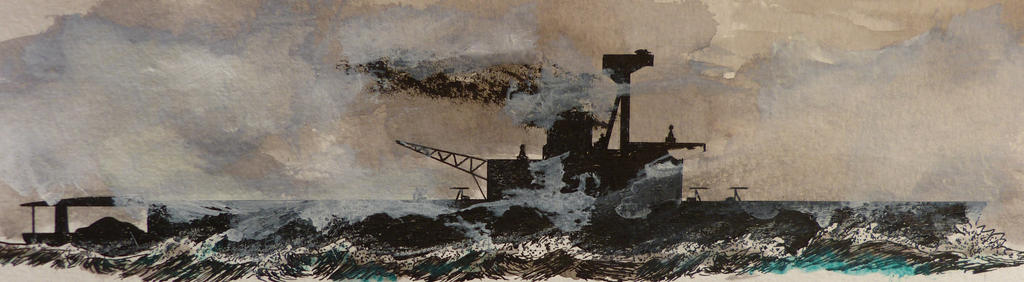
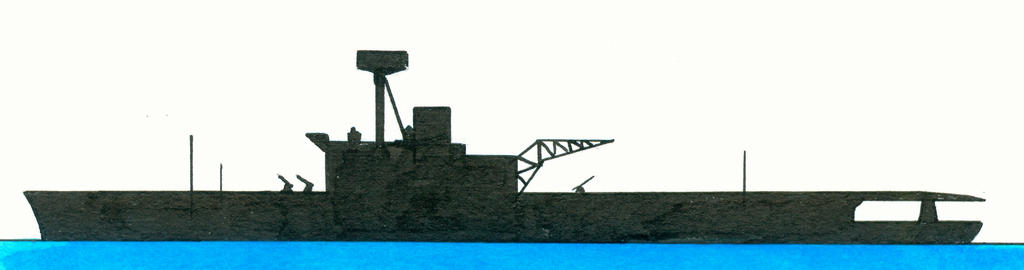
An item reported that the British aircraft carrier HMS Hermes (1) escorted by 1 destroyer [HMAS Vampire] (2), 1 corvette [HMS Hollyhock] (3) and 8 fleet auxiliaries left Trincomalee, Ceylon in the night of 3 April to avoid an expected Japanese air attack. Sadly enough was she seen by Japanese aircraft and attacked of the east coast of Ceylon in the morning of 9 April. Only 6 auxiliaries survived the air attack and seek refugee in Trincomalee, the rest was sunk just like 4 merchant ships in the general vicinity of the island.
Notes
1. Pennant number 95. Ordered in April 1917, laid down by Armstrong Whitworth on 15 January 1918, launched on 11 September 1919, commissioned on 18 Feburary 1924, training ship since 16 July 1938, aircraft carrier since 24 August 1939 and sunk by Japanese aircraft on 9 April 1942.
2. Admiralty V-class flotilla leader. Preceded by S and Parker classes succeeded bt Ambuscade and Amazon. Pennant numbers D68/168. Ordered under 1916-1917 construction programin 1916, laid down by J. Samuel White&Co., Wight Ltd. As HMS Wallace on 10 October 1916, launched on 21 May 1917, renamed HMS Vampire in July 1917, commissioned on 22 September 1917, decommissioned on 11 November 1933, handed over to Australia, decommissioned between 31 January 1934-11 May 1938 and sunk on 9 April 1942.
3. K64. Flower-class corvette succeeded by Castle-class, laid down by John Crown&Sons Ltd., River Wear, Sunderland on 27 November 1939, launched on 19 August 1940, commissioned on 19 November 1940 and sunk on 9 April 1942.
Source
Map Room Papers (Roosevelt Administration), 1942 - 1945. U.S. Joint Intelligence Committee. Daily summary No. 122 dated 11 April 1942.


No comments:
Post a Comment