
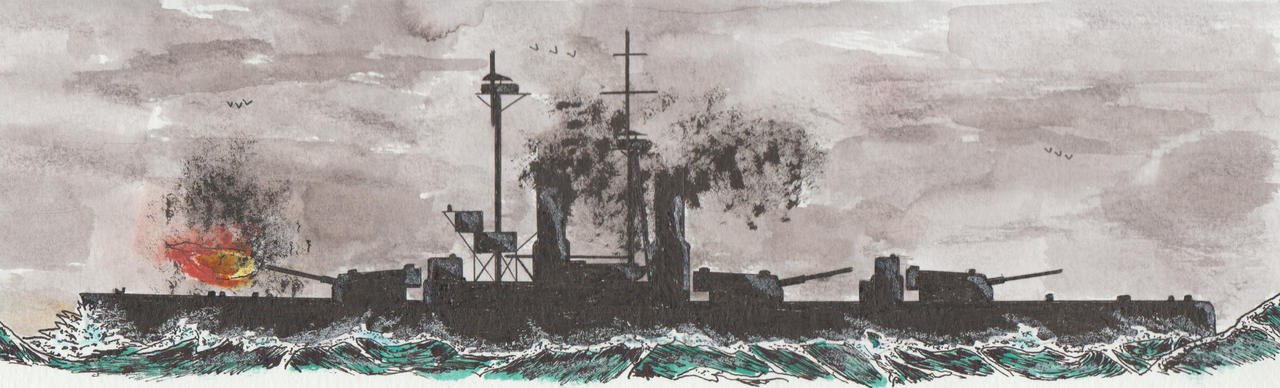
Design battle cruiser 1912. ©Warshipsresearch.blogspot.com
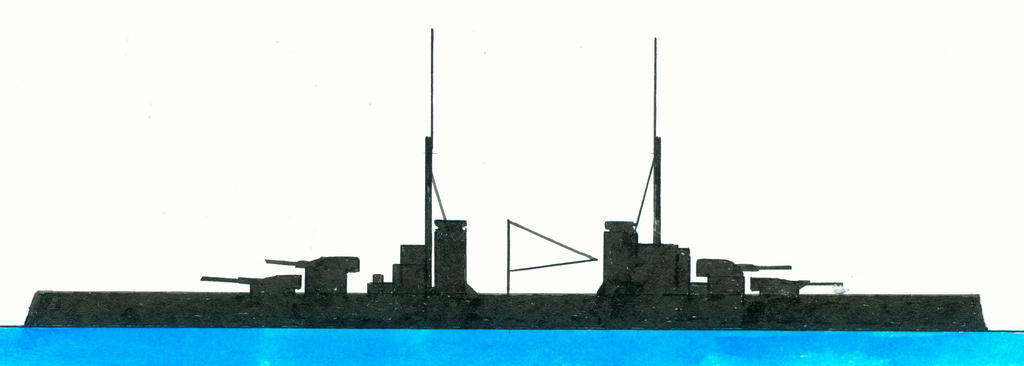
Design Salamis. ©Warshipsresearch.blogspot.com
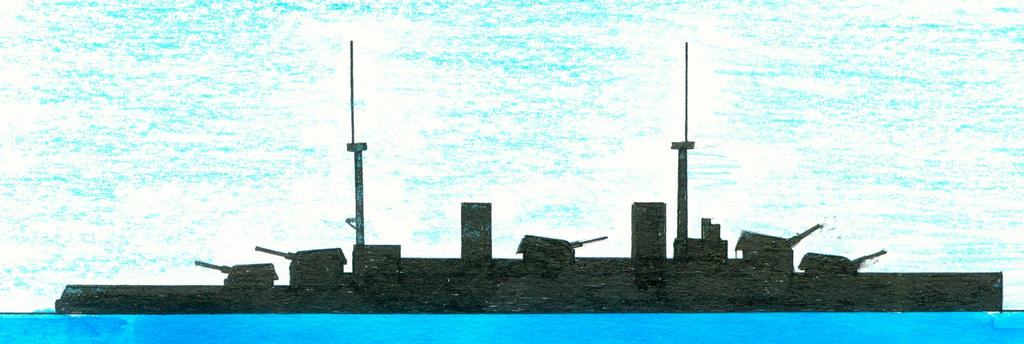
French Bretagne-class battleship proposed name Vasilefs Konstantinos.
©Warshipsresearch.blogspot.com
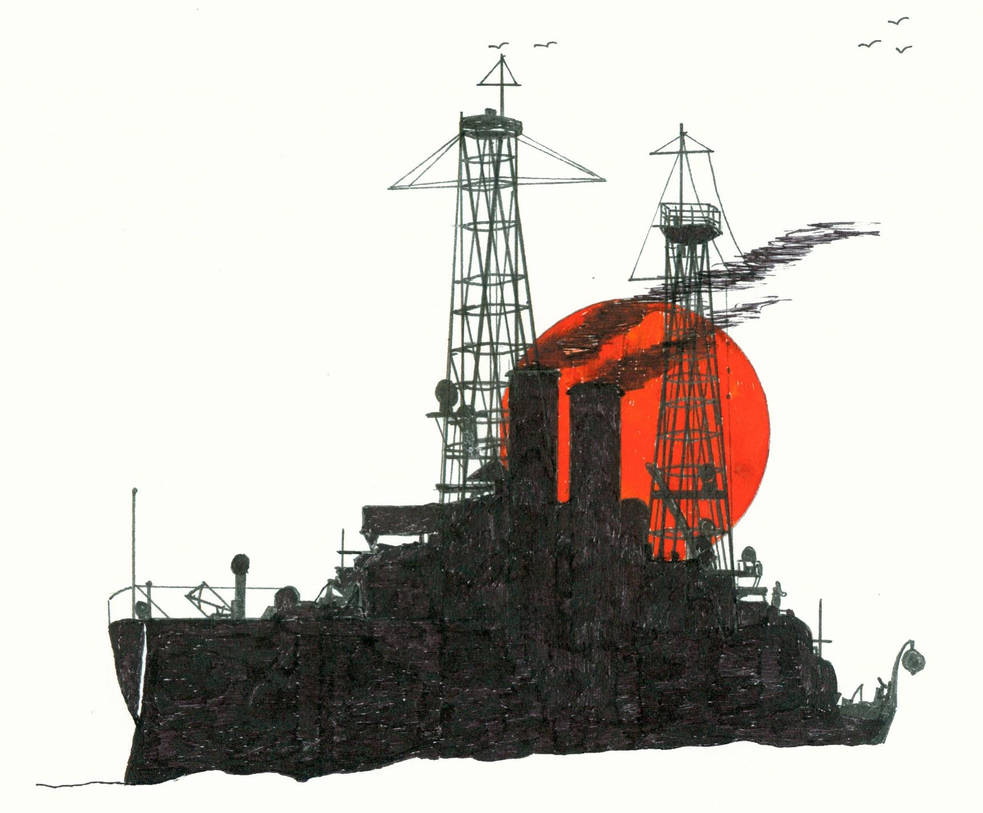
Greek battleship Killis. ©Warshipsresearch.blogspot.com
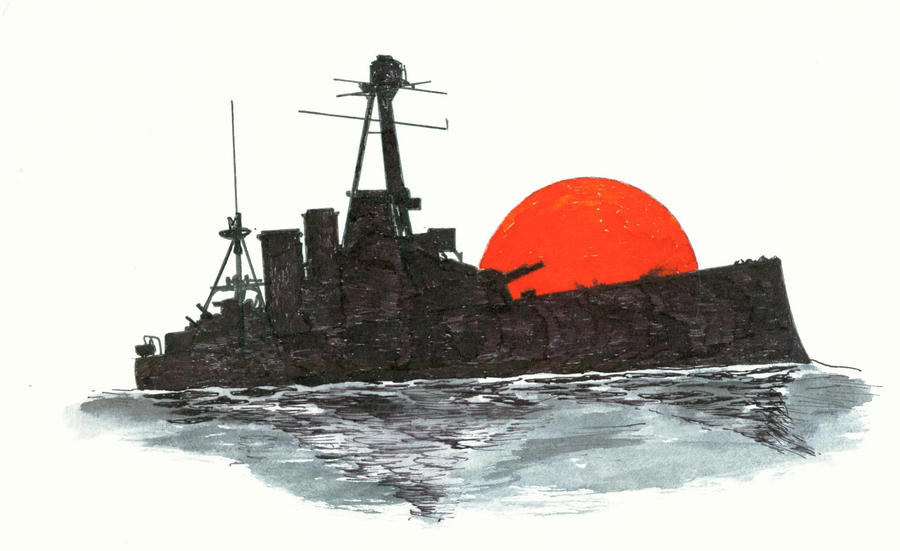
Greek armoured cruiser Georgios Averoff. ©Warshipsresearch.blogspot.com
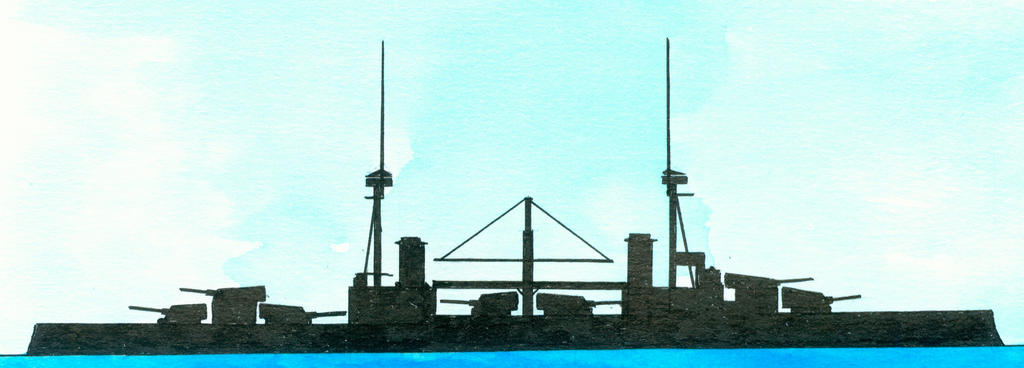
Brazilian battleship Rio de Janeiro. ©Warshipsresearch.blogspot.com
The major opponent of Greece in the Mediterranean was the Ottoman Empire which aa regularly arms race as result. May 1911 arrived a British naval mission to advice the Greek governemt in naval affairs. In 1914 was rear admiral Tufnell replaced by Mark E.F. Kerr. On 19 March stated the Greek Minister of Marine that a new naval programme was approved including the building of another two Salamis-class battle cruisers to form a strong division with the armoured cruiser Georgios Averoff and the Salamis.(1) In January was stated that despite Turkey purchased the battleship built for Brazil, Greece remained the mistress of the AEgean.(2)
Early 1912 Greek naval officers discussed the conditions for a battle cruiser limited ot 13,000 tons displacement which was the maximum to be docked at the main floating dock at Piraeus. March 1923 was the naval programme approved and Greece asked for tenders to built a 21.5 knots battle cruiser with armament of 6-35.56cm/14” and 8-15,24cm/6” guns. Totally 23 shipyards responded.
Armstrong offered the design No. 741 with the wanted speed, a larger displacement of 14,950 tons and as dimensions 486 (between perpendiculars)-486 (over all) x 77.5 x 26.5 feet and a freeboard of 16 (stern)-20 (bow) feet. The proposed armament was 3x2-35.56cm/-14” and 8x1-15,24cm/6” guns. This flush decked design was never accepted instead was chosen to built the battle cruiser Salamis (sometimes called Vasilefs Georgias) by the German shipyard Vulkan, Stettin. Due to the outbreak of the First World War the Salamis was never completed and after the war refused Greece to accept her. According to the Naval Annual 1913 she had a displacement of 19,000 tons and an armament of 4x2-35.56cm/-14”, 12-15,24cm/6” guns and 12-12pdr guns.
Notes
1. From AC de St. Nazaire Penhoet, France was in 1914 a Bretagne-class battleship ordered of 25,000 tons displacement and a main armament of 10-34cm/3.4” guns. She was laid down on 12 June 1914, work stopped in August due to the outbreak of the First World War, just like the Salamis Greece refused the delivery and the unfinished ship was broken up in 1925. To be named Vasilefs Konstantinos. Instead bought Greece on 8 July 1914 from the USA the Mississippi-class battleships USS Mississippi ( renamed Kilkis) and Idaho (renamed Lemnos), built between 1904-1908 with a displacement of 13,209 tons and a main armament of 2x2-30.cm/12” guns.
2. The Ottoman Empire bought in December 1913 the Rio de Janeiro laid down on 14 September 1911 to be renamed Sultan Osman-ı Evvel but due to the outbreak of the war taken over by the British governement and became HMS Agincourt. Displacement 28,300 (load)-31,360 (deep load) tons and as main armament 7x2-30.5cm/12” guns.
Sources
Peter Brook. Warships for export. Armstrong warships 1867-1927.
Peter Brook, “Armstrongs’ Unbuilt warships” in: Warship 1997-1998.
Zisis Fotakis. Greek naval strategy and policy, 1910-1919.
The Naval Annual 1913 and 1914.
The Balkan Wars 1912/1913. New views and interpretations.


No comments:
Post a Comment