


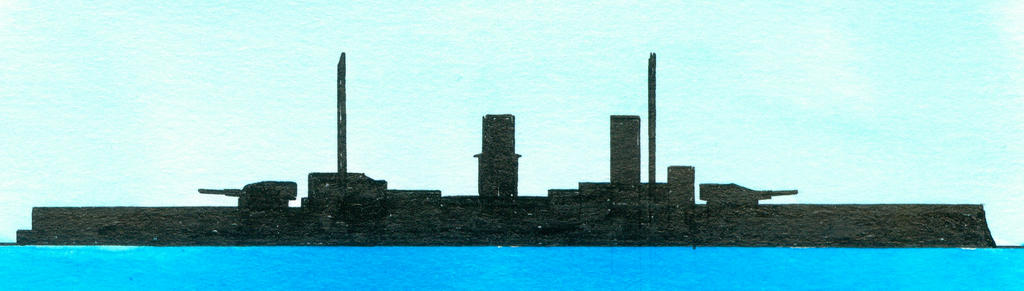
German Nassau-class battleshipsr©Warshipsresearch.blogspot.com
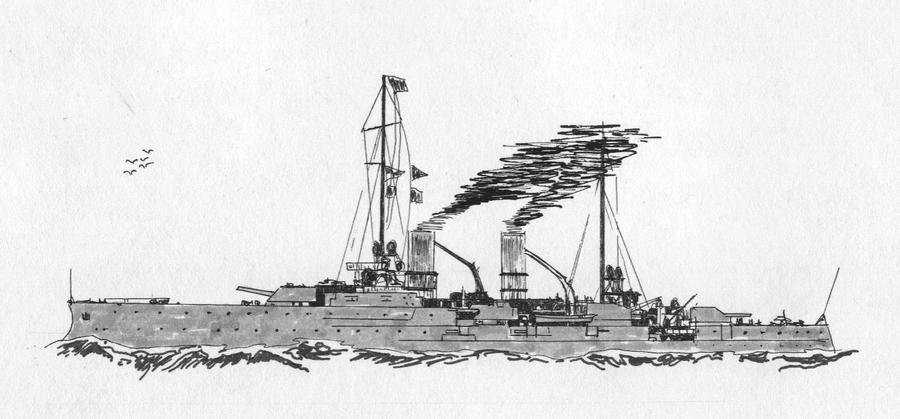
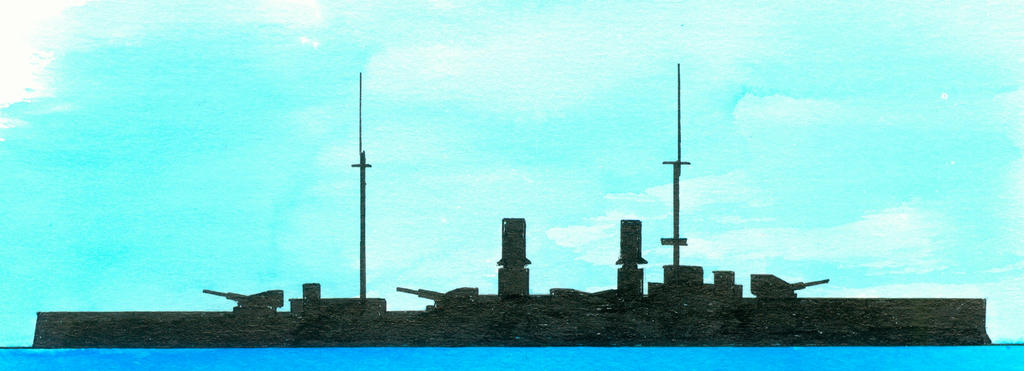
An item reported that when the French Naval Estimates were discussed in the Chambre des Désputés on 8 March, the Minister of Marine Thomson (1) stated that the cabinet proposed the building of 6-18,000 ton battleships with a speed of 18 knots. (2) Turbine propulsion was however not to be used. Compared with British battleships of similar class would the French battleships have quicker firing guns and a heavier broadside.(3)The newspaper The Australasian dated Saturday 10 March confirmed this item but added some more details. During the same debate proposed Lockroy (3) the building of fast cruisers and opposed against battleships. Bienaime (4) on the other side stated that if France spent each year 13,000,000 pound sterling, the French navy would become soon world’s strongest navy. The German Reichstag approved just the building of 2-18,000 ton battleships, 1-15,000 ton cruiser and 6 large powerful cruisers.(3) The Herald dated Tuesday May reported that Thomson tried to convince the cabinet to built even 20 battleships to keep abreast of Germany.
Notes
1. Gaston Thomson (29 January 1848 Oran, Algeria-14 May 1932 Bône/Annaba, Algeria), Minister of Marine between 24 January 1905-22 October 1908.
2. Under the Fleet Law of 1900 were six pre-dreadnought battleships built. namely the 14,870 ton République-class (République and Patrie) and the Liberté class (Liberté, Justice, Vérité, and Démocratie). Preceded by Suffren and succeeded by the Danton-class semi-dreadnought-battleships.
3. Édouard Lockroy (18 July 1838 Paris-22 November 1913), French politician. Criticized the policy of Camille Pelletan Minister of Marine June 1902-January 1905 in the cabinet of Émile Combes. As a persistent supporter of a strong naval policy Lockroy wrote several books like La Défense navale (1900), Les Marines française et allemande (1904) and Le Programme naval (1906).
4. Amédée Bienaimé (22 February 1843 Paris, France-16 March 1930 Paris, France), served in the French navy between 1859-1904, rank vice admiral since 1902 and for the next two years chief naval staff. Expert in heavy artillery and author of Étude sur l'artillerie navale, par M. A. Bienaimé, eerder gepubliceerd in de Revue maritime et coloniale. uitgegeven bij Berger-Levrault, 1878; De l'Emploi de l'acier dans la fabrication des canons de la marine, 1876, Lorient, impr. de F. Amelot and
Étude practique sur la perforation de murailles cuirassées, 1876, Paris, Berger-Levrault. Since 1905 politician after a conflict around 1904 with minister of marine Camille Pelletan.
3. Approval by Reichtag on 26 May 1906. The 15,000 tons cruiser is the armoured cruiser SMS Blücher with a displacement of 15,842 (normal)-17,500 (full load) tons and a main armament of 6x2-21cm/8.3” L/45 quick firing guns, preceded by the Scharnhorst-class, designed in 1906, ordered under the contract name “E” in 1906, laid down under the 1906 Fiscal year program by the Kaiserliche Werft, Kiel, Germany on 21 February 1907, launched on 11 April 1908, commissioned on 1 October 1909 and sunk by British warships in the Battle of Dogger Bank on 24 January 1915. The two 18,000 tons battleships were the first two Nassau-class preceded by Deutschland-class succeded by Helgoland-class with a displacement of 18,873 (normal)-21,000 (full load) tons, man armament of 6x2-28cm?11” L-45 guns and a speed of 19 (design)-20.2 (maxim) knots.


No comments:
Post a Comment