Translate

Thursday, 5 November 2026

A design from Sir William Congreve for a British armoured floating mortar battery in 1805


Royal Museums Greenwich ID SLR1812. Object 67771

Model mortar boat Project of 1805. Royal Museums Greenwich ID SLR2702. Object 68661

A note dealing with the use of armour plates for warships mentioned a proposal by Sir William Congreve made in 1805.(1) The Times dated 20 February 1850 described his design for an armoured floating mortar battery which should be shot-proof but never realized. Among his unpublished papers was another suggestion of attaching armour plates to the embrasures of casemates. The catalogue of the Museum of Artillery dating 1865 mentioned

-a model No. 24 (305-1038) of a shot-proof floating battery armed with 4 mortars. Fitted out with hollow iron masts making it possible to cover the whole rigging in a few minutes after she took her station.  Proposed to be used for attacking the French Boulogne flotilla in 1804 (for more details A concise...).

-a model No. 25 (306-1043) of a mortar boat, called the Project, armed with 2-25.4ccm/10” mortars with a rudder at each end to prevent tacking in bombardment, built at Woolwich, England in 1805 (for more details A concise...).

-a model No.26 (307-1039) of a shot-proof mortar boat with a rudder at each end to prevent tacking while bombarding.

The Royal Museums Greenwich owns a model of a shot proof mortar boat which was proposed by Congreve between 1805-1809 according to their website. Her central battery was covered by an angled roof. The hull was pierced with several small gunports for small arms or rockets. Double-ended with rudders at both ends which could be locked in line with the hull to prevent the earlier mentioned tacking. The scale of the model suggest as dimensions 120 x 30 feet.

Note

1. Sir William Congreve, 2nd. Baronet (20 May 1772-16 May 1828), army officer, politician, inventor and publisher.

Sources

The Encyclopaedia Britannica. 11th Edition. Volume II Andros to Austria. London, 1910, p. 578

Catalogue of the naval models in the South Kensington Museum, London, 1865.

J.H. Lefroy. Official catalogue of the Museum of Artillery in the Rotunda, Woolwich. London, 1864, p. 168.

William Congreve. A concise account of the origin and Progress of the Rocket System. Dublin, Ireland, 1817. 

French steam fishing vessel Les Baleines on 14 July 1940

In his letter dated Rochefort, France 14 July 1940 5/40 G the German Leiter der Küstenüberwachungstelle West-Frankreich (Head coastal surveillance station West-France supplied the German commanding admiral France more details about the French steam fishing vessels lying at La Rochelle and La Pallice as requested by telegram A III 1082 Secret. Owner Oskar Dahl&Co. Gross register tonnage 277,18 ton. Dimensions 38.64 x 7.20 x 3.58 metres. Load capacity 150 tons. Speed 10 nautical miles. Horsepower 511 hp.(1))

Note

1. Lloyd’s Register 1939-1940. Gross tonnage 253 tons, under deck 212 tons, net tonnage 89 tons and built by Smith’s Dock Co. Ltd., South Bank, Middlesbrough, England in 1913. Trawler.

Source

Bundesarchive RM 45-IV_848. 

French fishing vessels used as minehunters on 14 July 1940

In his letter dated Rochefort, France 14 July 1940 5/40 G the German Leiter der Küstenüberwachungstelle West-Frankreich (Head coastal surveillance station West-France supplied the German commanding admiral France more details about the French steam fishing vessels lying at La Rochelle and La Pallice as requested by telegram A III 1082 Secret. There were 6 wood-built fishing vessels crewed by French naval sailors and which used as minehunters. Their crews were still on board.

Source

Bundesarchive RM 45-IV_848. 

Cuban cargo ship Sandino 1977-1990 (Cajio 1990-1993, Soul 1993-1996, Gajio 1996-2001)

©Warshipsresearch.blogspot.com

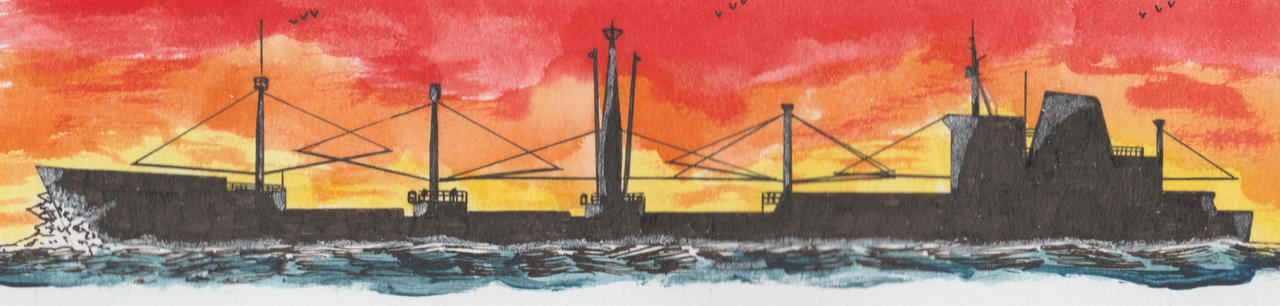
Similar Bolivar, Juarez, San Martin, José Marti, O’Higgins, and Sandino. Launched by by Helsingør Skibsvaerft&Maskinbyggeri, Helsingør, Denmark with yard number 414 for owner Empresa Maritimo Portuaria de Importación, Havana, Cuba on 29 September 1977, commissioned in February 1978, of Noveco Transporte Marítimo SA (Naviera Poseidón), Havana and renamed Cajio since 1 January 1990, same owner, renamed Soul, Belize since 1993, of Naviera Frigorífica Marítima, Havana and renamed Cajio since 1996 and broken up at Cuba on 23 June 2001. Gross tonnage 9,656 tons, deadweight 14,500 tons, horsepower 11,200 bhp and speed 17.5 knots. Dimensions 154,1 x 19,8 x 9,5 metres. 

British troop transports regularly leaving Italian harbours for Greece according to the Kriegsnachrichten of the Chef des Admiralstabes der Marine dated Berlin 28 August 1917

An item reported that according to an agent notification dated 3 August in the future every 14 days British replacement transports from Naples, Italy were sent. Another notification stated that part of those transports were coming from Brindisi. Italian troops were shipped to the Epirus, Greece.

Source

Bundesarchiv RM-40-622

British steamship Saxon collided with escort vessel according to the Kriegsnachrichten of the Chef des Admiralstabes der Marine dated Berlin 28 August 1917

An item reported that the British steamship Saxon of 12,385 tons collided the night of 24 August with an escort vessel and was at 13.00 o’clock on the position 39.17 North and 18.15 East between Cotrone and Corfu, Greece. The item published on 21 August dealing with transports going to or coming from Catrone was now confirmed.

Source

Bundesarchiv RM-40-622

Spanish torpedo boat T-17 1916-1952

©Warshipsresearch.blogspot.com

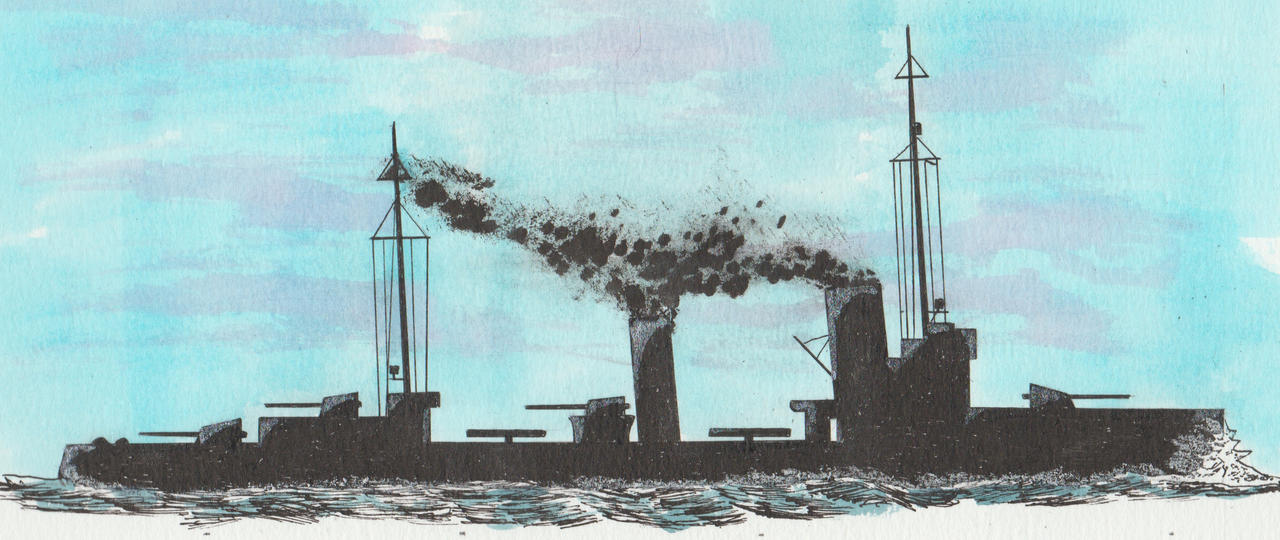
ILaunched in 1916. International call sign GRSJ. Part of T-class preceded by Ariete-class succeeded by German S-boats. Between 1912-1922 were totally 22 of the planned 24 boats built by Sociedad Española de Construcción Naval, Cartagena, Spain based on the French Bourrasque-torpedo boats class design from Chantiers et Ateliers A. Normand, Le Havre, France. Dimensions 50 (maximum) x 5,00 (maximum) x 3.20 x 1.47 metres. Maximum displacement 180 ton. Number of screws 3. Maximum speed 26,00 knots. Coal bunker capacity 1,000 ton. Crew numbered 31 men. Armament 3-4.7cm Vickers guns, 1x45cm and 1x2-45cm torpedo tubes. 

Navypedia claims developed with support of the British firm Vickers and based on the French Cyclone-class of Norman. Building authorized under the law dated 7 January 1908. Harald Fock. Schwarze Gesellen. Torpedoboote bis 1914 also mentioned the Cyclone-class as basic design.

Sources

T-1 classLista official de los buques de Guerra y mercantes de España 1925.s succeeded by German S-boats. Between 1912-1922 were totally 22 of the planned 24 boats built by Sociedad Española de Construcción Naval, Cartagena, Spain based on the French Bourrasque-torpedo boats class, design from Chantiers et Ateliers A. Normand, Le Havre, France? Launched in 1913 and broken up in 1932. International call sign GKRT. Dimensions 50 (maximum) x 5,00 (maximum) x 3.20 x 1.61 metres. Maximum displacement 180 ton. Number of screws 3. Maximum speed 26,40 knots. Coal bunker capacity1,000 ton. Crew numbered 31 men. Armament 3-4.7cm Vickers guns, 1x45cm and 1x2-45cm torpedo tubes.

Navypedia claims developed with support of the British firm Vickers and based on the French Cyclone-class of Norman. Building authorized under the law dated 7 January 1908. Harald Fock. Schwarze Gesellen. Torpedoboote bis 1914 also mentioned the Cyclone-class as basic design.

Sources

https://es.wikipedia.org/wiki/Clase_T-1

Lista official de los buques de Guerra y mercantes de España 1925.

British auxiliary cruiser patrolling off Tenedos, Aegean Sea according to a letter of the German naval attaché at Istanbul dated 27 January 1940

In his letter dated Istanbul, Turkey 27 January 1940 No. 690g. reported the German naval attaché to the Oberkommando der Wehrmacht Abteilung Ausland the neutral ships passing Istanbul coming out of the Black Sea and loaded with contraband for or chartered by the enemy. An item reported on 20 January that a British auxiliary cruiser near Tenedos asked three Italian steamships while using signal flags what their name and designation was and after being answered let them pass. The auxiliary cruiser seemed to be a circa 15,000 gross tons steamship of the Peninsular&Oriental Line (P&O) with one funnel. On the stern and bow was a gun mounted, further more several machine guns and flak. Complete darkgrey painted. Name of her was not visible.

Source

Bundesarchiv. German Marineattaché for Greece, Romania and Bulgaria 1939-1941. RM 12-II/459. 

Turkish cargo ship Altay bound for Egypt according to a letter of the German naval attaché at Istanbul dated 3 February 1940

In his letter dated Istanbul, Turkey 3 February 1940 No. 712 g. reported the German naval attaché to the Oberkommando der Wehrmacht Abteilung Ausland the neutral ships passing Istanbul coming out of the Black Sea and loaded with contraband for or chartered by the enemy. An item reported on 26 January the Turkish cargo ship Altay loaded with 300 wagons board underway from Galatz, Romania to Alexandria, Egypt. The owner was paid 17 Lsterling/wagon.

Source

Bundesarchiv. German Marineattaché for Greece, Romania and Bulgaria 1939-1941. RM 12-II/459.

Japanese auxiliary patrol boat No. 2222 cancelled 1945

©Warshipsresearch.blogspot.com

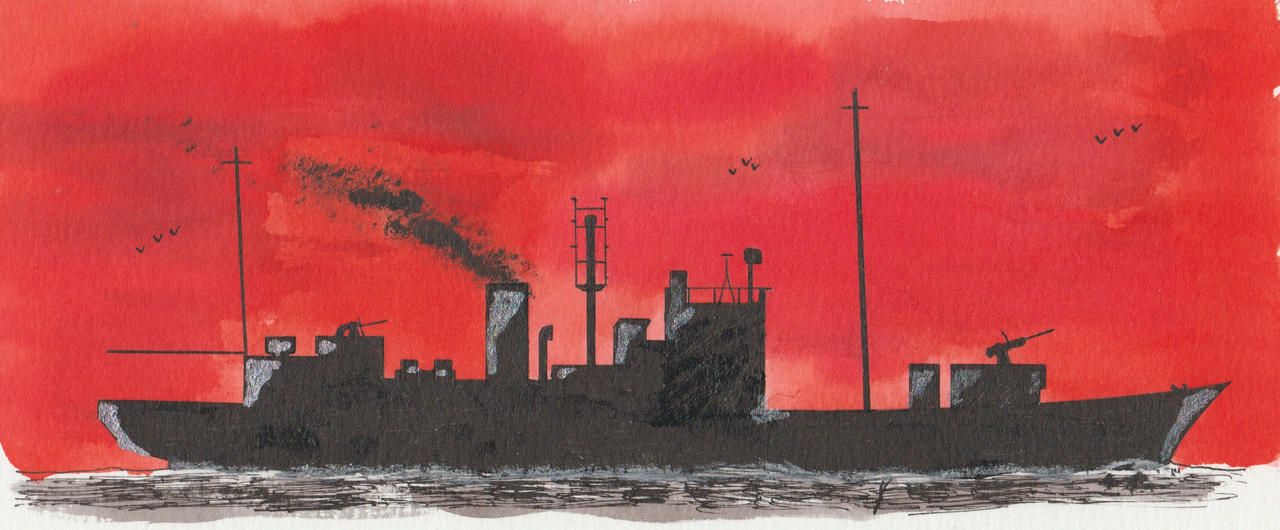
No. 1-class patrol boat/Type B ordered under the 1943-1944 Programme to be part of the coastal forces. Of the 280 ordered were just 56 laid down and even a less number finally completed when the Second World War ended. To serve as convoy escorts were the boats also fitted out with minesweeping gears. Based on a traditional wood built fishing boat. With a displacement of 238 tons and as dimensions 93.5 (between perpendiculars)-105. 3/4 (over all) x 20.2 x 7.75 feet. Geared diesel propulsion with 400bhp via one shaft and speed 9 knots. Crew numbered 26 men. Armament consisted of 2/4x1-2.5cm guns and 8-12 depth charges.

Scottish Greenland whaler Hope in 1807

Caught 9 whales resulting in 146 tons oil. Homeport Peterhead.

Source

Annals of Peterhead from the foundation to the present time. P. Buchan, Peterhead, 1819.

Scottish Greenland whaler Enterprise in 1806

Caught 0.5 whale resulting in 85 tons oil. Homeport Peterhead.

Source

Annals of Peterhead from the foundation to the present time. P. Buchan, Peterhead, 1819. 

Scottish Greenland whaler Enterprise in 1805

Caught 17 whales resulting in 129 tons oil. Homeport Peterhead.

Source

Annals of Peterhead from the foundation to the present time. P. Buchan, Peterhead, 1819. 

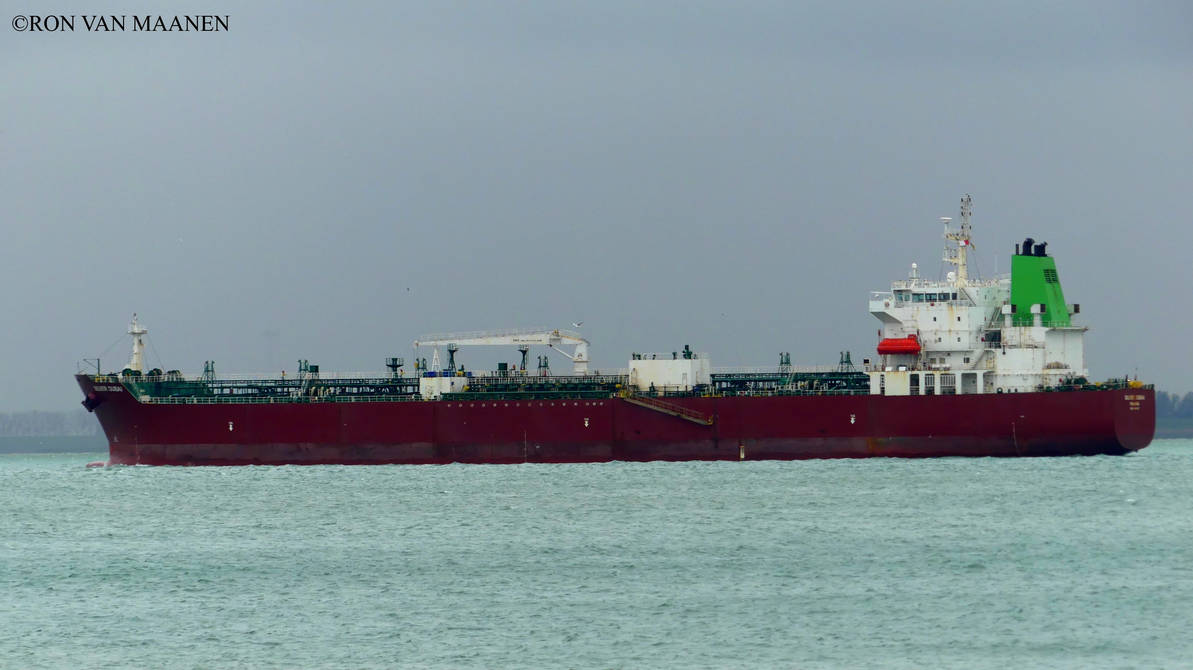
South Korean chemical/oil products tanker Silver Dubai 2015-

Schelde off Vlissingen 3-11-1026

Panama-flagged, IMO 9683427, MMSI 374369000 and call sign. Built by Hyundai Mipo Dockyard Co. Ltd., Ulsan, South Korea in 2015. Owner Propitious Shipping Holding Ltd, manager Sinokor Petrochemical Co. Ltd, both at Seoul, South Korea.

Australian whaler Roslin Castle for sale according to the Australian newspaper The Sydney Gazette and New South Wales Advertiser dated Saturday 21 July 1838

An item reported that the whaler Roslin Castle lying for a long time idle at Darling Harbour was to be sold in a few days by Messrs. Isaac Simmons and Co. 

Whaler Lunar spoken according to the Australian newspaper The Sydney Gazette and New South Wales Advertiser dated 21 July Saturday 1838

An item reported that the barque Mary, captain Swindells, property of Messrs. Hughes and Hosking, returned from the South Sea fishery on Thursday evening. She had spoken the whaler Lunar on 20 May 130 barrels

Australian whaling barque Mary returned home according to the Australian newspaper The Sydney Gazette and New South Wales Advertiser dated 21 July Saturday 1838

An item reported that the barque Mary, captain Swindells, property of Messrs. Hughes and Hosking, returned from the South Sea fishery on Thursday evening. She had spoken the whaler Lunar on 20 May 130 barrels

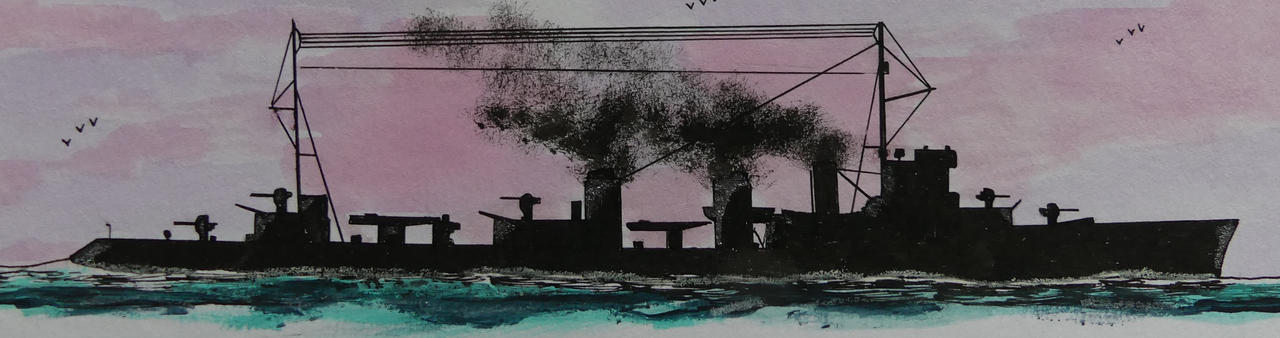
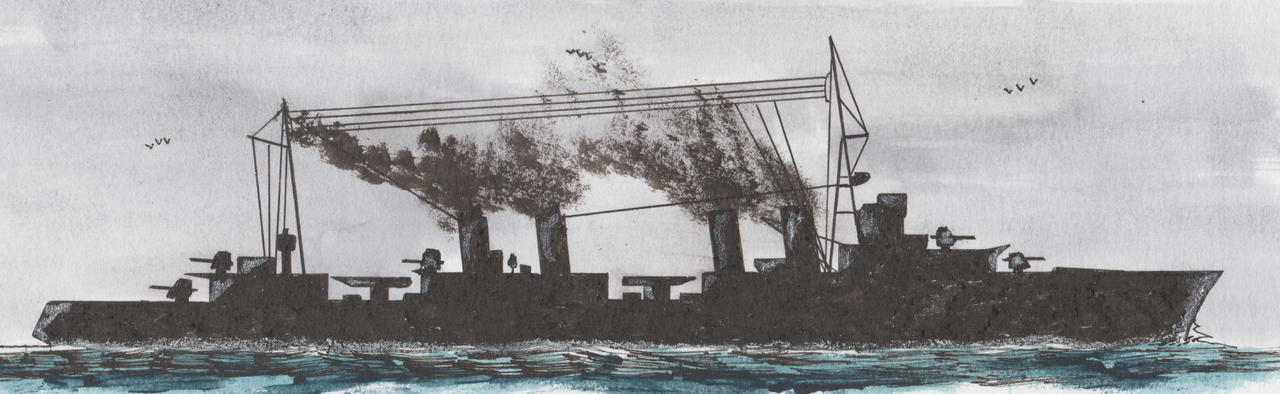
French destroyer Panthère 1923-1943

Admiral Sénés.©Warshipsresearch.blogspot.com

Chacal-class©Warshipsresearch.blogspot.com

Guépard-class©Warshipsresearch.blogspot.com

Part of the Chacal or Jaguar-class succeeded by Guépard-class, main task was to act as scouts for the battle line. Total six build. In the designing process was a 1,780 tons design armed with 5-10cm.3.8” guns of early 1920 not approved by the French Parliament. A new design was made on base of the designs of the Italian Leone-class and the German destroyer SM 113 which was after the First World War handed over to France as war reparations and commissioned in the French navy as Admiral Sénés. The new design was approved under the 1922 Naval Law. Ordered on 18 April 1922. Laid down byArsenal de Lorient, France on slipway No. 7 on 23 December 1923, launched on 27 October 1924, commissioned on 10 October 1926, completed on 4 January 1927,captured by German forces at Toulon on 27 November 1942, transferred to Italy on 14 December 1942, renamed FR 22 commissioned on 19 January 1943, scuttled by Italian forces at La Spezia on 9 September 1943 and broken up after the war. 

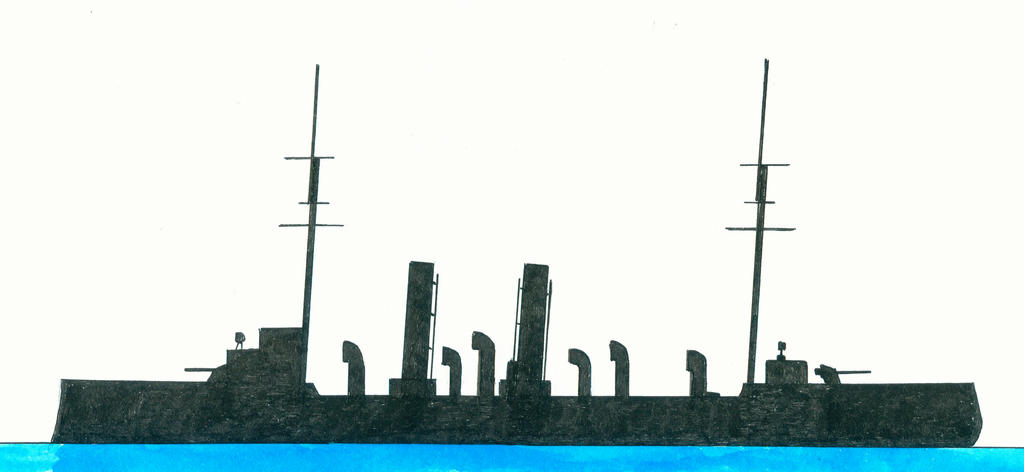
British protected cruiser HMS Pioneer visited the Dutch East Indies in 1909

Pelorus-class©Warshipsresearch.blogspot.com

The Dutch Jaarboek van de Koninklijke Nederlandsche Zeemacht 1908-1909 reported that the British cruiser HMS Pioneer visited Tandjong Priok, Dutch East Indies between 12-14 August and 9-13 September 1909. The Dutch newspaper Het nieuws van den dag voor Nederlandsch-Indië dated 12 August reported her arrival returning from Sydney, Australia and Thursday Island. Commanded by W.F. Blunt (2), 12 officers, 200 men and armed with 12 guns. De locomotief dated 19 August reported her departiure towards Colombo, Ceylon. The Het nieuws van den dag voor Nederlandsch-Indië dated9 September 1909 reported her arrival coming from Colombo, Ceylon and bound for Thursday Island.

Notes

1. Of the Pelorus-class protected cruisers 3rd class,designed by chief constructor of the British Royal Navy Sir William White (2 February 1945 Plymouth, England-27 February 1913 London, England), preceded by the Arrogant-class and succeeded by the Highflyer-class. Laid down by Chatham Dockyard on 16 December 1897, launched on 28 June 1899, completed on 23 January 1900, commissioned on 10 July 1900, decommissioned on 29 November 1912, handed over to Australia on 28 November 1912, commissioned on 7 November 1913, decommissioned on 7 November 1916 and scuttled on 18 February 1931 off Sydney Heads. 

2. William Frederick Blunt (3 March 1870-5 July 1928) end rank rear admiral. 

The armament of the Dutch merchant ship Kelbergen in the Second World War

According to the list and supplements 1-2 on 13 September 1945 BDZ No. 673 sent by the office of armament the Royal Netherlands Navy located at 41 East 42nd Street, New York 17, USA. There were no complete records available, so there were several sources used to compile the list. Sometimes the kind of guns gave indirect information regarding the origin such as 4”/BL and 12 pounder guns were British mostly supplied in the United Kingdom, Canada or Curacao. The 4.7” guns were old Japanese guns placed on some vessels in the begin of the war at Singapore and some 4” guns in the same period at Surabaya, Dutch East Indies. The trade in which the ship was used gave also an indication were the guns were supplied, for example involved in the Pacific trade means supplied at the West Coast.

Armed with 4-2cm guns supplied at New York, USA on 17 June 1942.

Source

Archieven van hoofd handelsbescherming en diverse handelsbeschermingsofficieren 1941-1946 inv.no. 53 (Nationaal Archief, The Hague, Netherlands.