Translate

Sunday, 6 September 2026

Dutch Greenland commandeur Jan Mynhart 1738-1741

Bookkeeper Aris Last, Zaandam

1738

Whales 1.5 Barrels blubber 60

1739

Whales 2.5 Barrels blubber 70

1740

Whales 1 3/4 Barrels blubber 90 Quardelen whale oil 130

1741

Whales 0.5 Barrels blubber 20 Quardelen whale oil 29

Total

Whales 6.25 Barrels blubber 240

Source

Alphabetische naam-lyst van alle de Groenlandsche en Straat-Davidsche Commandeurs die sedert het jaar 1700 op Groenland en sedert het jaar 1719 op de Straat Davis etc. Gerret van Sant. Published by Johannes Enschede, Amsterdam 1770, with hand written notes until 1794.

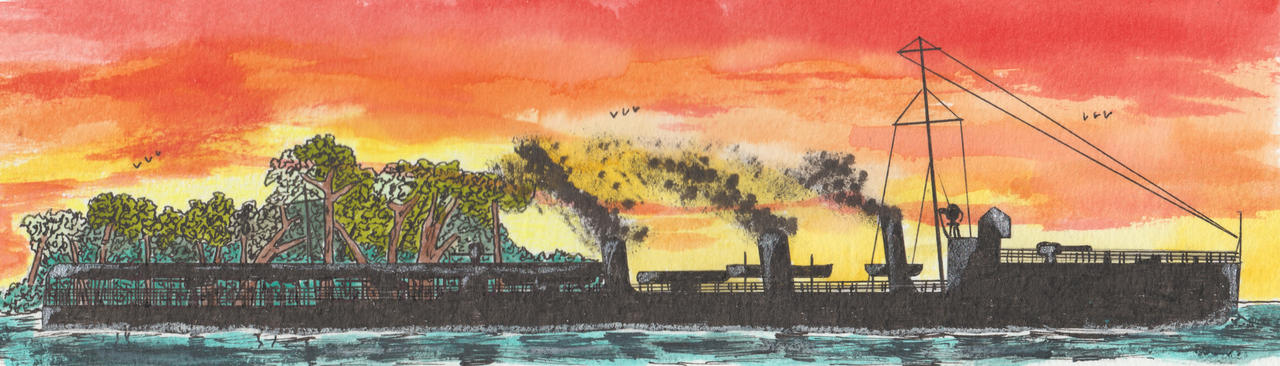
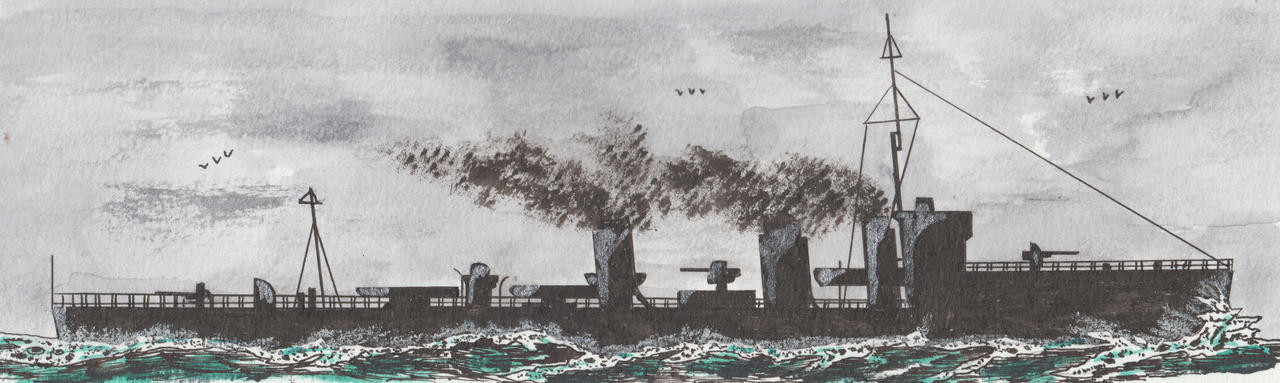
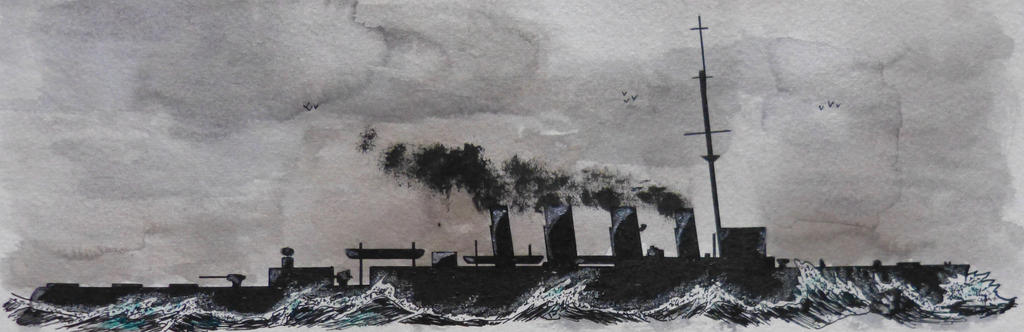
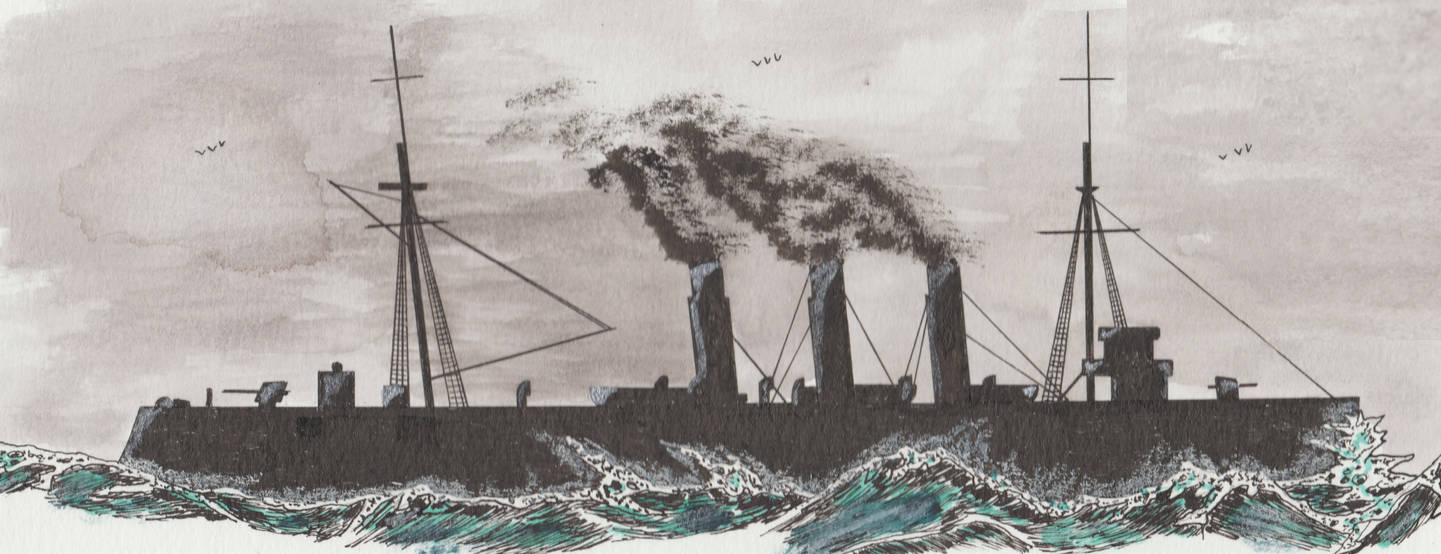
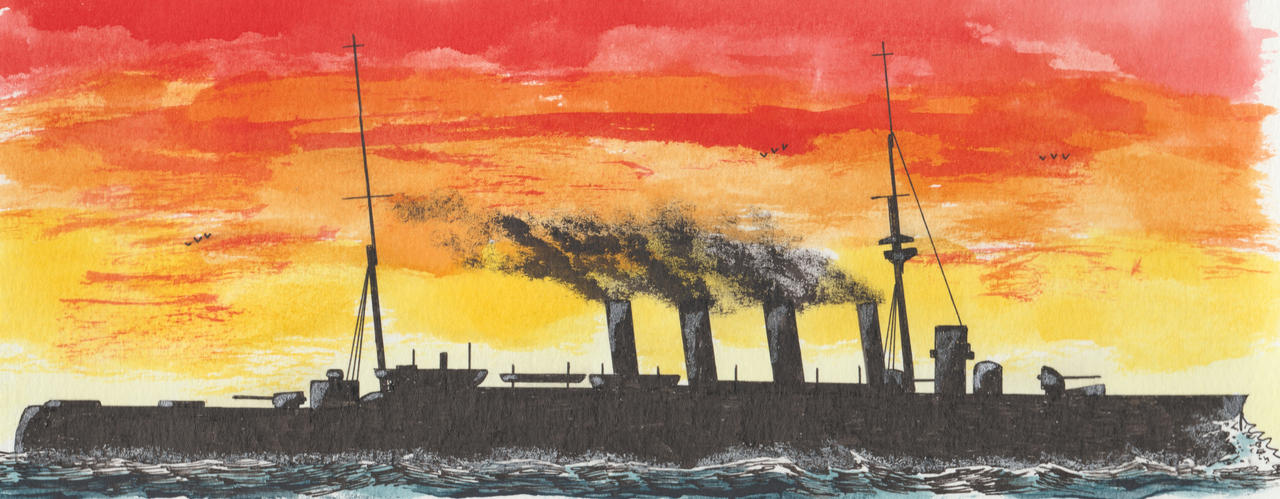
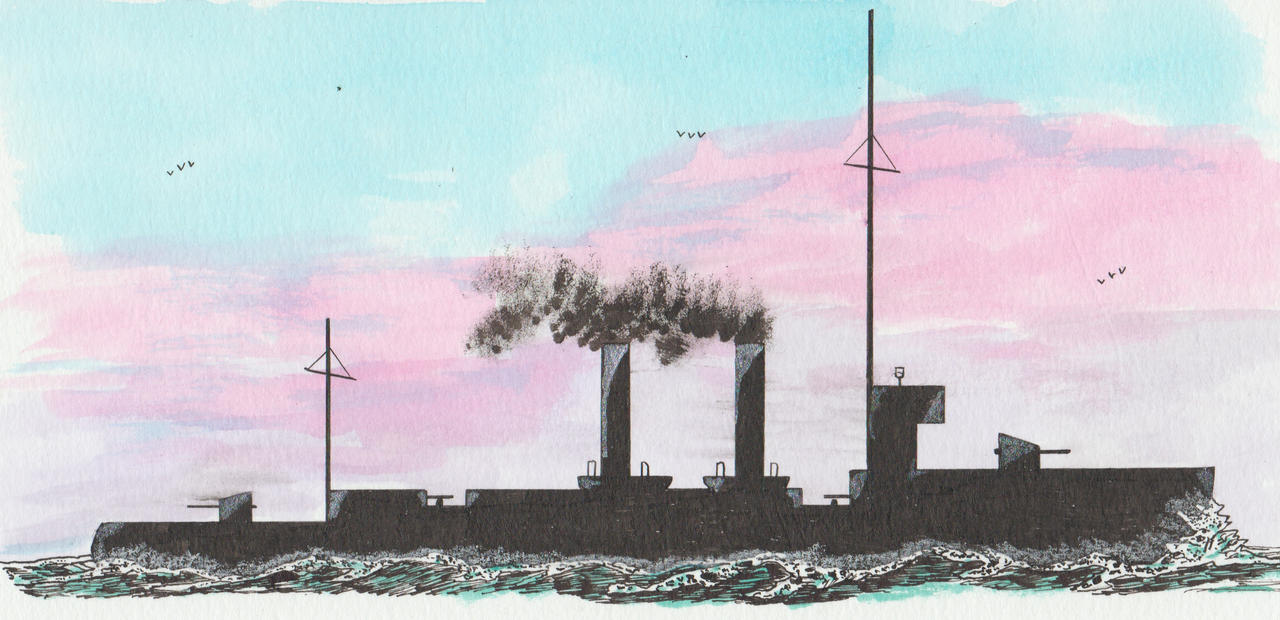
British destroyer HMS Porpoise 1912-1920 (Alexandrino de Alencar 1920-1927, Maranhao 1927-1945)

Admiralty-K-class design©Warshipsresearch.blogspot.com

Laforey- or L-class©Warshipsresearch.blogspot.com

Part of K- or Acasta-class preceded by Acheron-class succeeded by L- or Laforey-class. The class numbered 20 ships, of 12 which built while using the common Admiralty-design and 8 so-called builders’specials. The Acasta-class was in September 1913 redesignated K-class. Built under the Naval Programme of 1911-1912. Builder’s special. Original intended name Kennington. Laid down by Thornycroft, Woolston, England on 14 March 1912, launched on 21 July 1913, completed in January 1914, sold back to Thornycroft on 23 February 1920, sold to Brazil in March 1920, renamed Alexandrino de Alencar, renamed Maranhao in 1927 and disposed in 1945. 

British sailing transport Escort in the Crimean War on 28 October 1854

According to a list of the return of the disposition in the Black Sea on 28 October 1854 drawn up by Captain and Principal Agent of Transports P. Christie, “Melbourne”, Balaklava, Crimea: number transport 97, present position Eupatoria, remarks waiting for orders.

The Crimean War found place between 16 October 1853-30 March 1856 between Ottoman Empire, France, United Kingdom and Sardinia at one side and Russia and Greece on the other side. The British Government chartered a large number of merchant ships for transporting troops and stores.

Source

Reports from Committees: eight volumes. 3-Part II. Army before Sebastopol. Session 12 December 1854-14 August 1855. Vol. IX-Part II. 

Gun practice in the French Navy in 1888

Scientific American Supplement 22 September 1888

Shows an exercise of the Squadron of the North recently organizhed and consisted of the ironclads Marengo, Suffren and Ocean and the coast guards Furieux, Fulminant and Tonnerre. The despatch vessel Epervier twos a rectangular float with a length of about 2 metres upon which is a wood made frame with two canvas balloons mounted. The balloons had a diameter of 1 metre and a rod with a length of 1 metr, one balloon is black the another white. The whole is a floating target for the main armament of the ironclads consisting of 4-27xm and 4-24cm guns, for the Furieux 2-34cm guns and the other tow coast guards 2-27cm guns.

British sailing transport Deva in the Crimean War on 28 October 1854

According to a list of the return of the disposition in the Black Sea on 28 October 1854 drawn up by Captain and Principal Agent of Transports P. Christie, “Melbourne”, Balaklava, Crimea: number transport 96, present position Eupatoria, remarks waiting for orders.

The Crimean War found place between 16 October 1853-30 March 1856 between Ottoman Empire, France, United Kingdom and Sardinia at one side and Russia and Greece on the other side. The British Government chartered a large number of merchant ships for transporting troops and stores.

Source

Reports from Committees: eight volumes. 3-Part II. Army before Sebastopol. Session 12 December 1854-14 August 1855. Vol. IX-Part II.

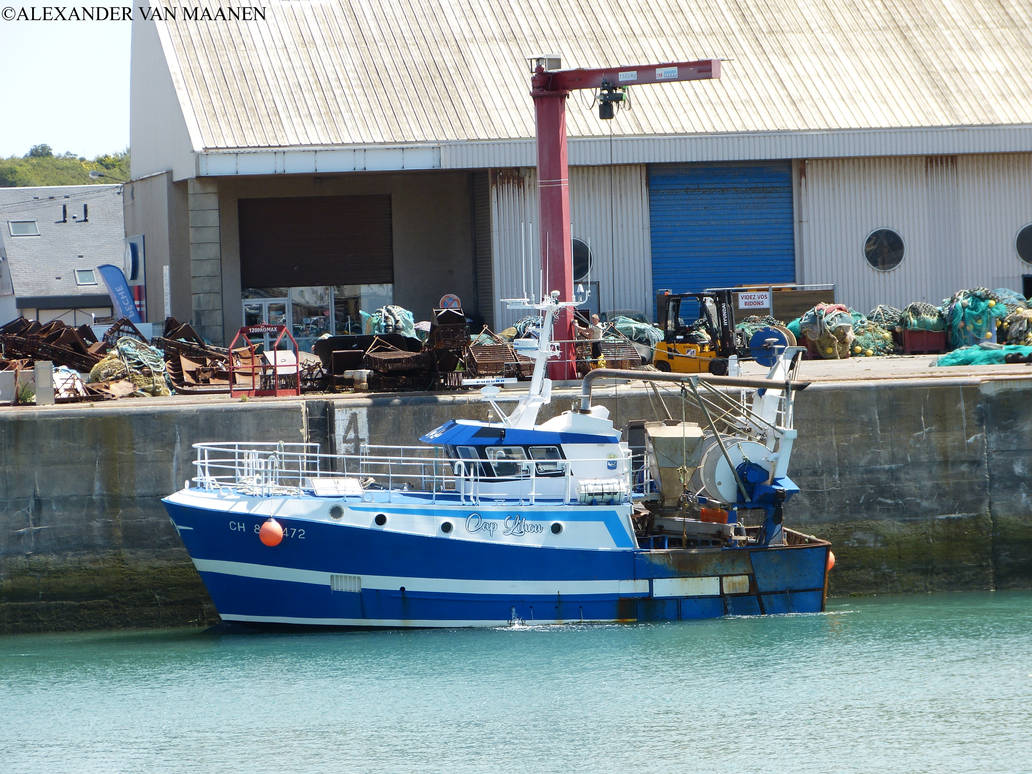
French bottom trawler (ex-Kreiz An Aod GV.898472 2006-2019) Cap Lihou CH 898472 2019-

Granville, France 20 July 2026

France-flagged, homeport Granville, MMSI 228247700 and call sign FIMR. Built by Atelier Bretagne Nord, Saint Malo, France in 2006. GV=le Guilvinec. 
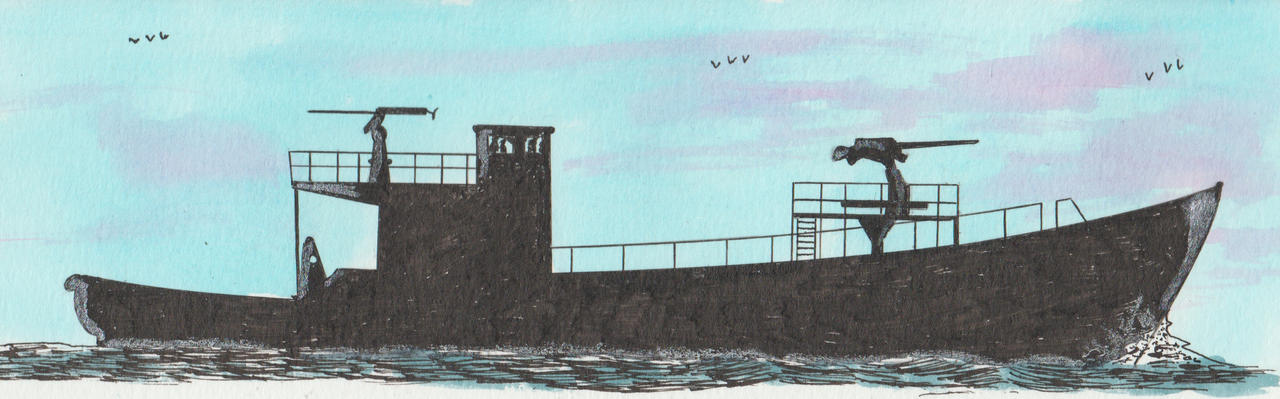
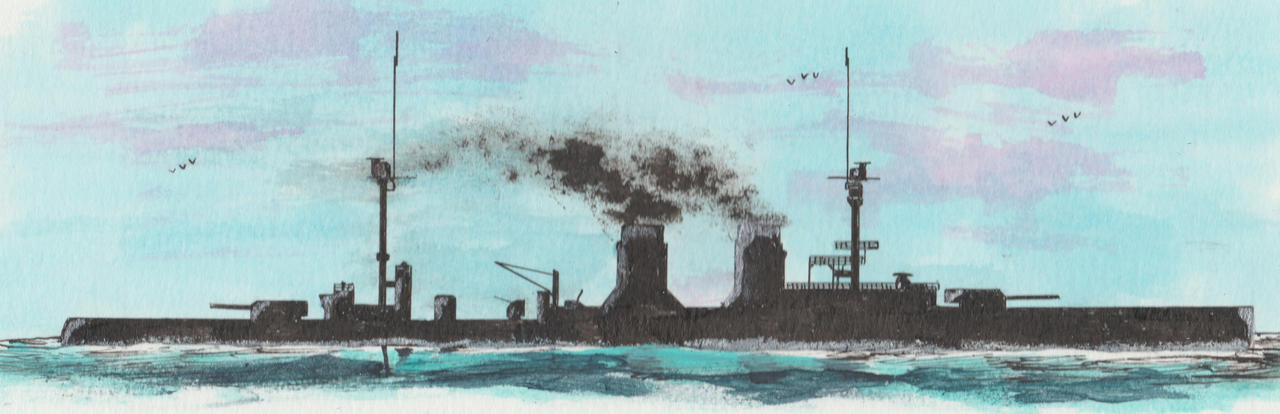
American sailing sealing ship Atlas in 1837-1838

Antarctic sealing ground Crozet Islands. Rigging ship. Captain Bailey. Tonnage 261 tons. Left Mystic, Connecticut on 14 June 1837 and lost with tender schooner Colossus on the Crozets between 1837-1838.

Source

Goode, George Brown. The fisheries and fishery industries of the United States. 

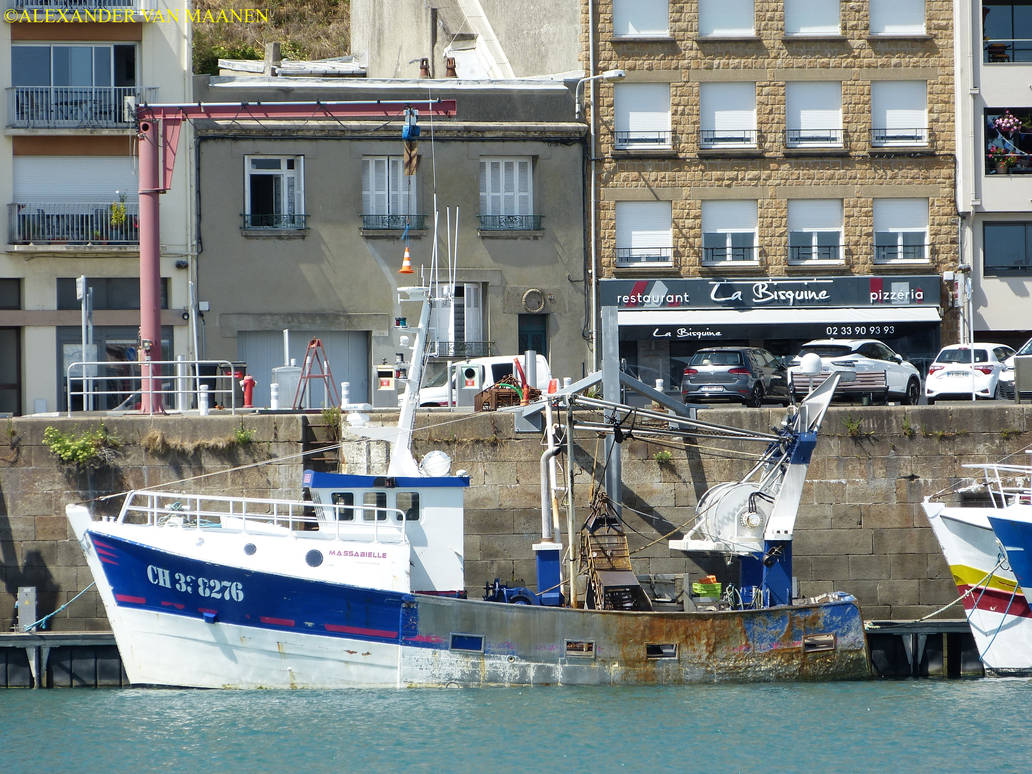
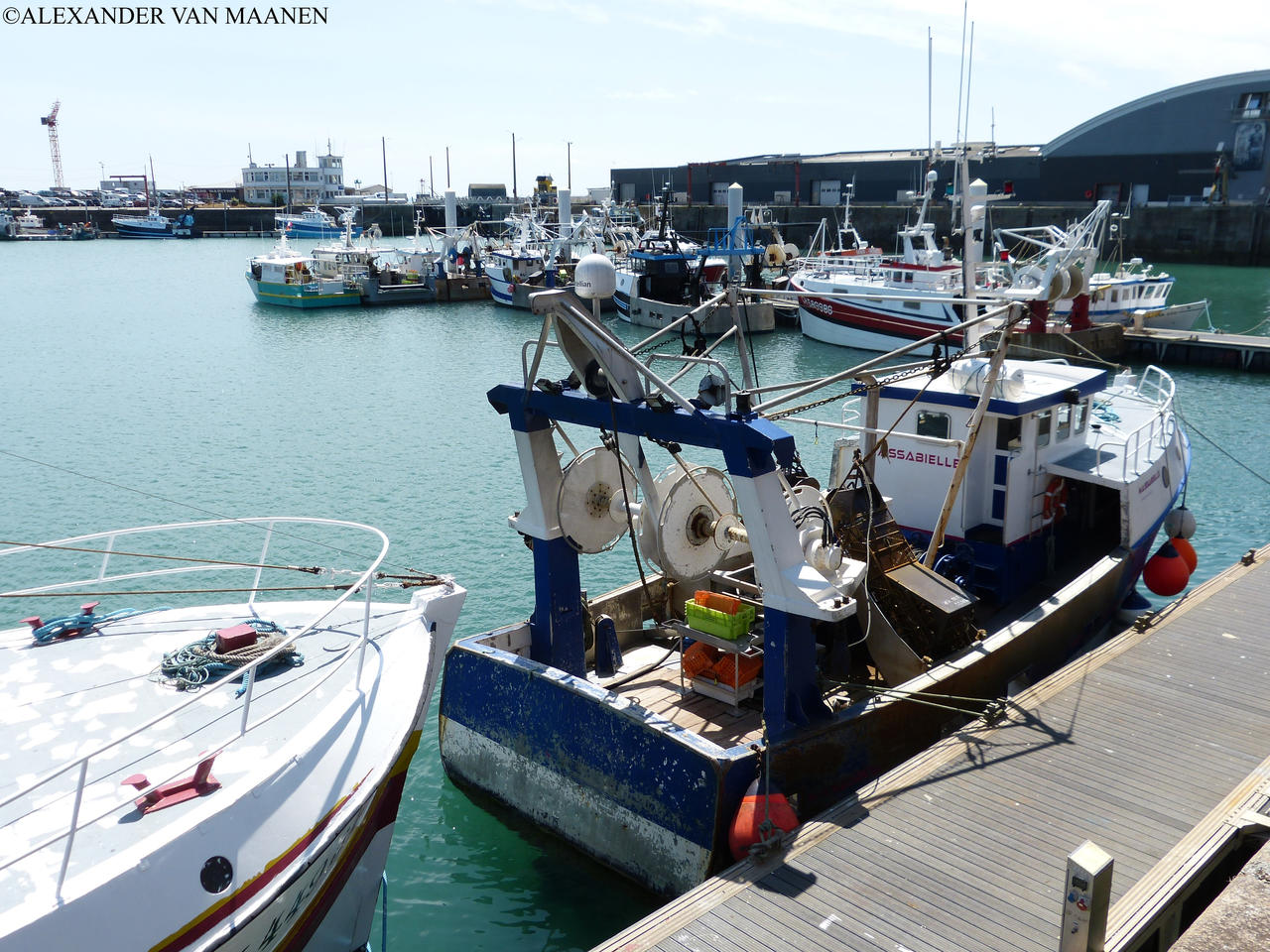
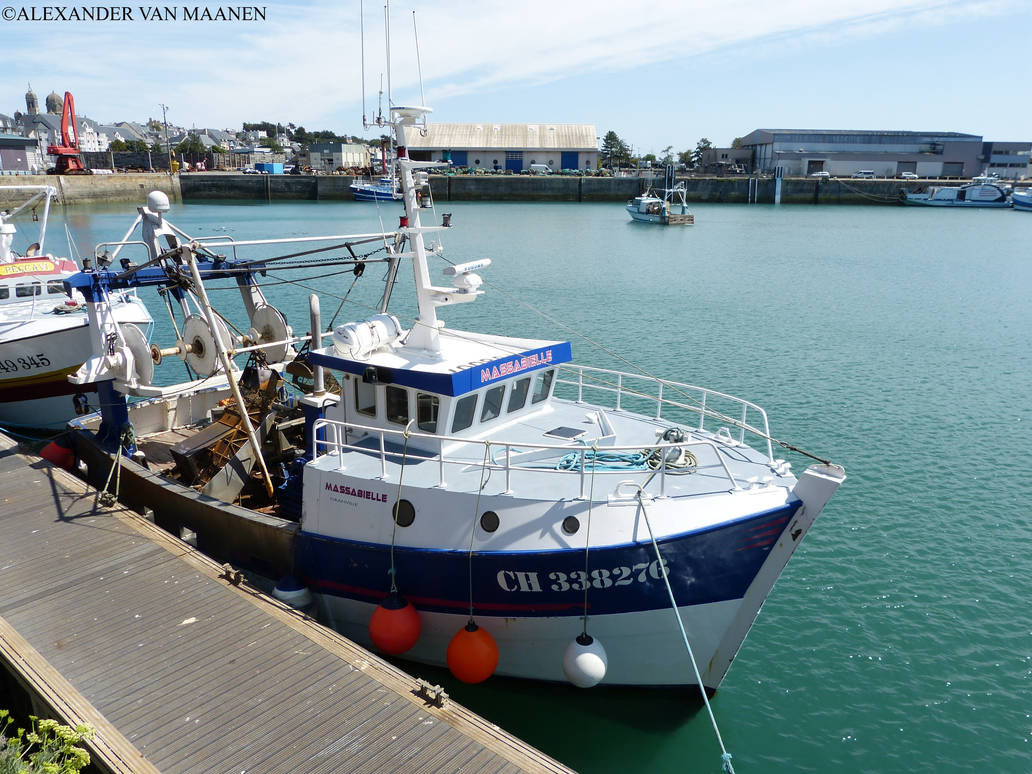
French bottom trawler Massabielle CH.338276 1976-


Granville, France 20 July 2026

France-flagged, homeport Granville, IMO 8542482, MMSI 227322390 and call sign FJ8007. Built by Servain, Granville in 1987. 

American sailing sealing ship Corvo in 1836-1837

Antarctic sealing ground Falkland Islands. Rigging ship. Tonnage 349 tons. Captain Beck. Left Stonington in October 1836, arrived home on 13 November 1837 with 1,400 barrels sea-elephant oil and 1,300 barrels whale-oil. Had as tenders the schooners La Grange and Bolton.

Source

Goode, George Brown. The fisheries and fishery industries of the United States. Section V. History and methods of the fisheries. Volume II, Washington, 1887. 

Saturday, 5 September 2026

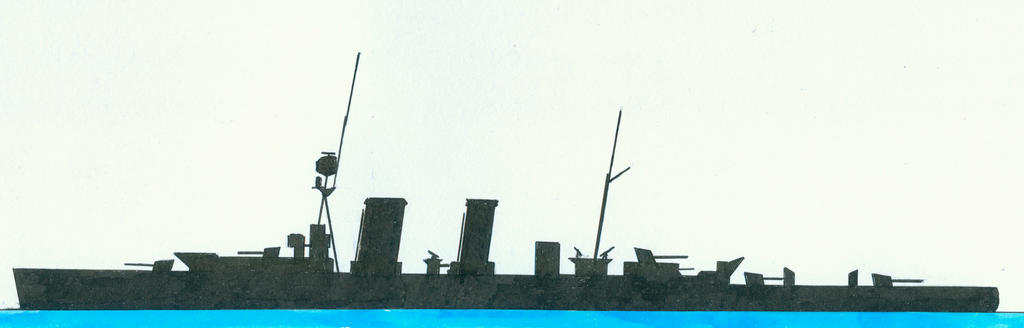
British light cruiser HMS Yarmouth 1910-1929

Active-class©Warshipsresearch.blogspot.com

Topaze-class©Warshipsresearch.blogspot.com

Town-class Weymouth subclass©Warshipsresearch.blogspot.com

Hawkins-class©Warshipsresearch.blogspot.com

Arethusa-class©Warshipsresearch.blogspot.com

Part of Town-class Weymouth subclass preceded by Active- and Topaze-class succeeded by Hawkins-class heavy cruisers and Arethusa-class light cruisers (1913). Ordered under the 1909-1910 Programme. Laid down by London&Glasgow Co. on 27 January 1910, launched on 12 April 1911, commissioned in April 1912 and sold to be broken up on 2 July 1929. 

American ship Exfort loaded with war stores arrived at Istanbul, Turkey according to a letter of the German naval attaché at Istanbul dated 2 March 1940

In his letter dated Istanbul, Turkey 2 March 1940 No. 801 g. reported the German naval attaché to the Oberkommando der Wehrmacht Abteilung Ausland the neutral ships passing Istanbul coming out of the Black Sea and loaded with contraband for or chartered by the enemy. An item reported on 25 February the American ship Exfort which arrived here with 3 aircraft, 3 trucks, 125 ton air bombs, artillery and machine gun ammunition coming from New York to Istanbul.

Source

Bundesarchiv. German Marineattaché for Greece, Romania and Bulgaria 1939-1941. RM 12-II/459.

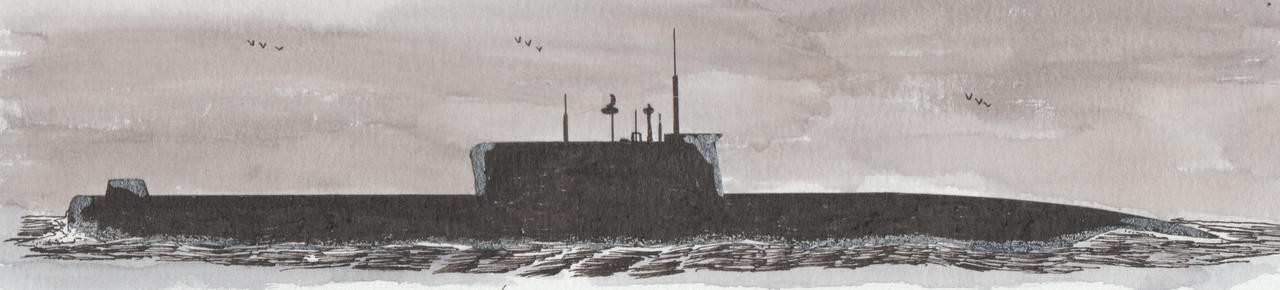
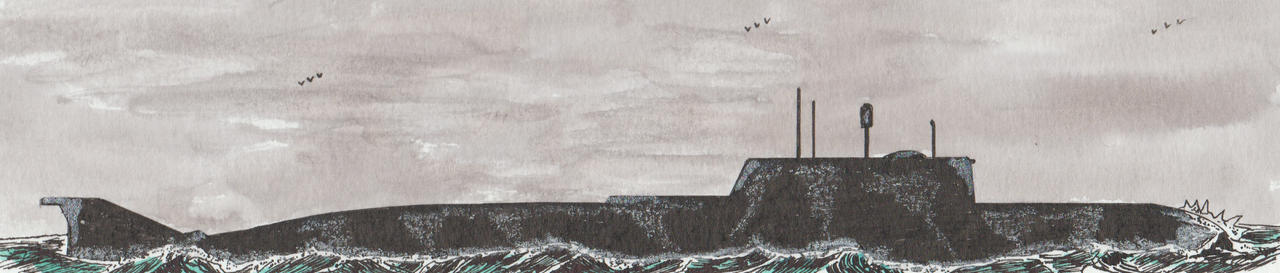
Russian diesel-electric cruise-missile submarine K-156 1960-1977 and B-156 1977-after 1991

Project 659/NATO Echo I-class in SSN configuration. ©Warshipsresearch.blogspot.com

Project 651/NATO Juliett-class. ©Warshipsresearch.blogspot.com

Part of Project 651 named by NATO Juliett-class preceded by Echo-class succeeded by Charlie-class. Designed in end 1950s by a team with as chairman Abram Samuilovich Kassatsier. Building planned of 35 boats but 19 were cancelled and 16 completed. Laid down by Baltic Shipyard, Leningrad, Russia on 16 November 1960, launched on 31 July 1962, commissioned on 10 December 1963, decommissioned in September 1991 to be broken up.

Sources

Breyer, S. and N. Polmar. Guide to the Soviet Navy, 2nd edition.

Jordan, J. Soviet submarines 1945 to the present.

Kouznetsov, N. La Marine sovietique en guerre 1941-1945.

Pavlov, A.S. Warships of the USSR and Russia 1945-1995.

Polmar N. and J. Noot. Submarines of the Russian and Soviet Navies 1718-1990.

Schulz-Troge, U. Die sowjetische Kriegsmarine.

Jane’s Fighting Ships several editions.

Warshipsresearch.blogspot.com

Russian Ships Info dated 12 April 2026 19:46 o’clock.

Juliett-class dated 5 May 2026 10:05 o’clock

Romanian steamship Alba Julia returned from France according to a letter of the German naval attaché at Istanbul dated 2 March 1940

In his letter dated Istanbul, Turkey 2 March 1940 No. 801 g. reported the German naval attaché to the Oberkommando der Wehrmacht Abteilung Ausland the neutral ships passing Istanbul coming out of the Black Sea and loaded with contraband for or chartered by the enemy. An item reported on 26 February the Romanian steamship Alba Julia of the Romanian Sea service (S.M.R.). arriving coming from Marseille, France. Underway she was stopped by the British and brought to Malta where she was kept for 8 days. Unknown if shere was there unloaded.

Source

Bundesarchiv. German Marineattaché for Turkey, Greece, Romania and Bulgaria 1939-1941. RM 12-II/459.

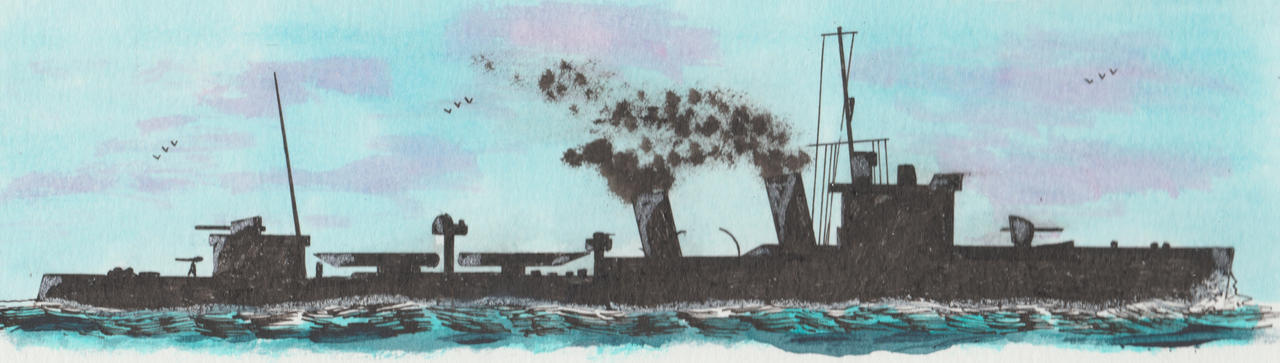
Italian destroyer Zeffiro 1925-1940

Italian Turbine-class©Warshipsresearch.blogspot.com

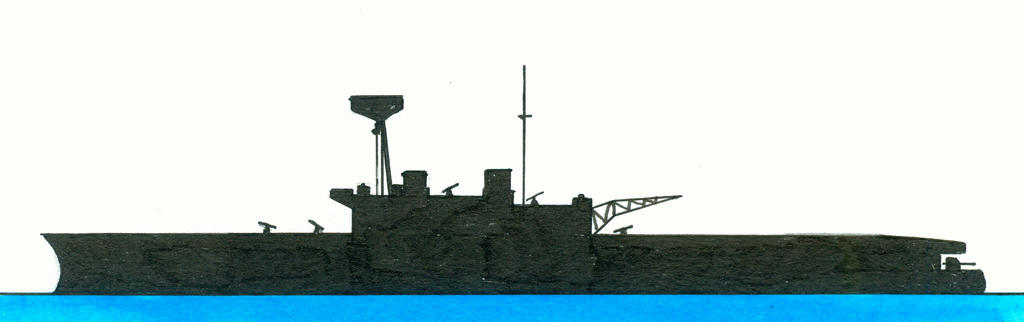
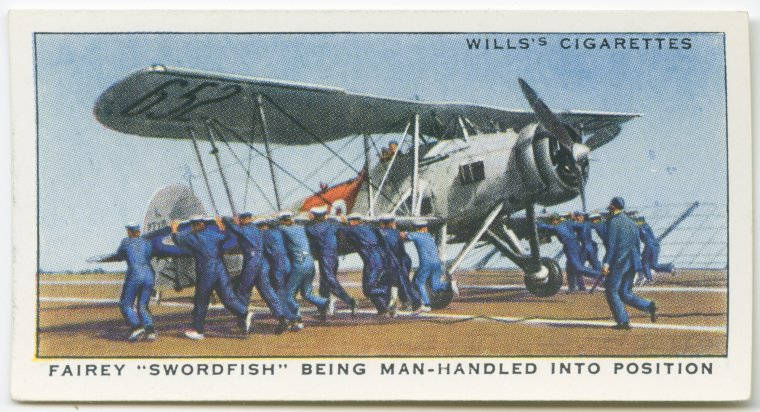
British aircraft carrier HMS Eagle©Warshipsresearch.blogspot.com

Part of Turbine-class preceded by Sauro-class succeeded by Navigatori-class. Identification code ZF. Laid down by Ansaldo, Genoa on 29 April 1925, launched on 27 May 1927, completed on 15 May 1928 and sunk in an attack by Swordfish torpedo bombers of the British aircraft carrier HMS Eagle on the harbour of Tobruk, Libya on 5 July 1940. 

British cargo ship Clan Oglivy sunk by enemy submarine torpedoed and sunk according to the War Cabinet Weekly Résumé No. 83 of the Naval, Military and Air Situation 27 March-3 April 1941

An item reported that on 20 March was torpedoed and sunk by an enemy submarine the British merchant ship Clan Oglivy, tonnage 5,802 tons , loaded with tea and general, underway from Chittagong British India [nowadays Bangladesh] to Glasgow, Scotland, part of convoy yes, on the position 182 miles north north west of St. Antonio, Cape Verde. What the fate was of her crew was yet unknown.

Source

National Archive UK. CAB-66-16-1. 

Cuban training annex cargo ship José Marti 1976-2007

©Warshipsresearch.blogspot.com

Similar Bolivar, Juarez, San Martin, José Marti, O’Higgins, and Sandino. Laid down by Helsingør Skibsvaerft&Maskinbyggeri, Helsingør, Denmark with yard number 412  for Empresa Maritimo Portuaria de Importación, Havana, Cuba on 23 August 1976, launched for the Maritime Port Import Company, Havana on 4 March 1977, commissioned in September 1977, transferred to Meggi Naviera Unida SA, Havana and renamed TAINO in 1990, same owner renamed Agate Islands, in 1996, St. Nevis) 1in 1996, renamed Agate Spirit on 1 December 2004, renamed Agate Islands, St. Kitts & Nevis on 1 January 2006 and sunk on the geographical position at 29° 55' S and 32° 25' E, while under tow to the scrapyard on 25 February 2007. Gross tonnage 12,170 tons, deadweight 13,000 tons, horsepower 9,400 bhp and speed 17.5 knots. Dimensions 154,1 x 19,8 x 9,5 metres. 

Merchant ship Deux-Jumeaux chartered by France for the expedition to China in 1860

In 1856 broke the Second Opium War out as a result of western powers trying to force the Chinese Qing dynasty to open the frontiers for foreign trade and to obtain more influence. A treaty signed in 1858 was to end the war and give the western powers more or less what they wanted. A combined British-America-French effort to pass the Taku forts and go on to Pei-ho (nowadays Hai River) failed and France and the United Kingdom decided to sent out a combined expedition with the first French ships leaving France on 5 December 1859. A joint ultimatum of both countries dated 8 March 1860 was refused on 8 April 1860 followed by fighting. To transport their troops and stores France and especially England hired several merchant ships. Not found back in Lloyds Register 1860.

Source

Léopold Pallu de La Barrière. Expédition de Chine en 1860. Paris, Imprimerie Impériale, 1863, p. 15. 

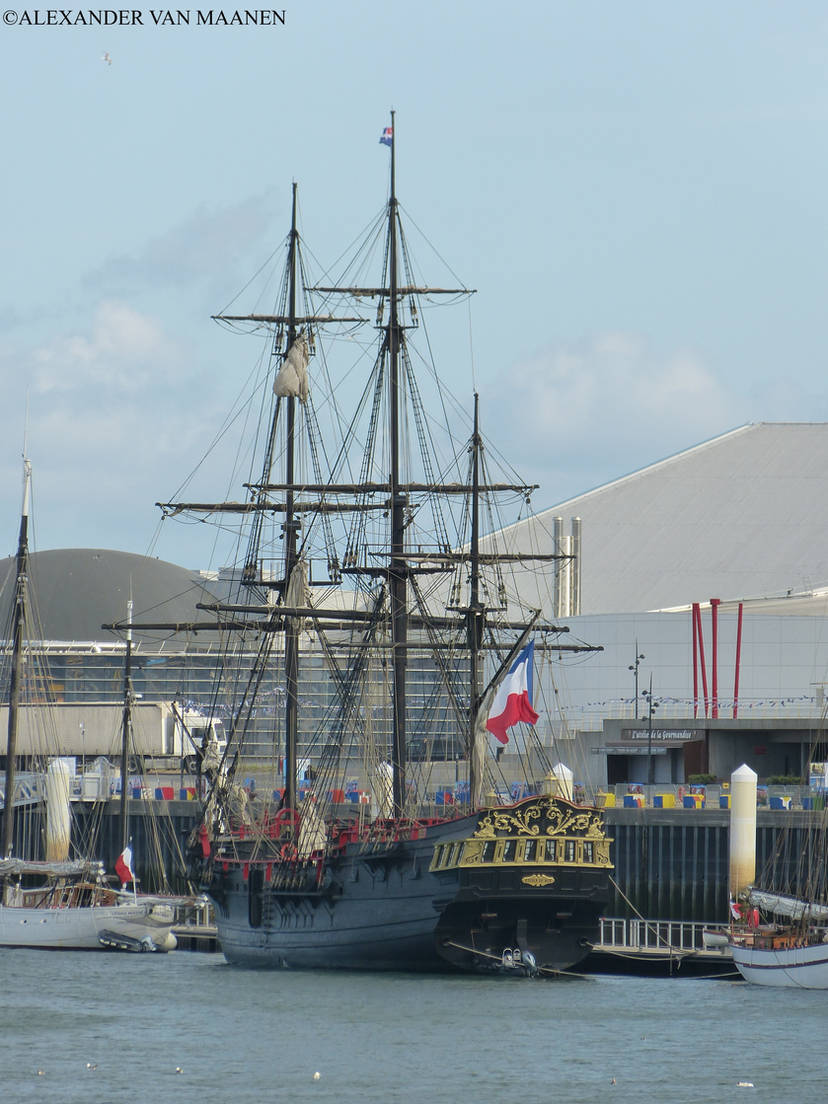
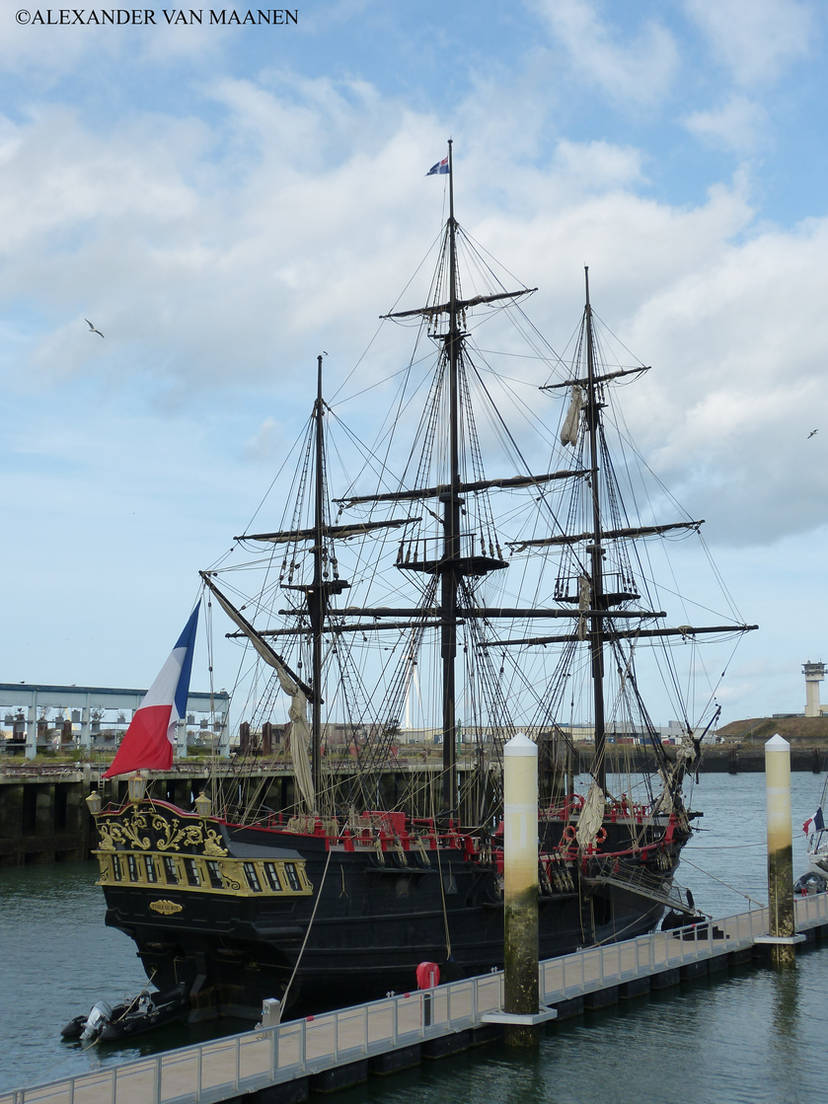
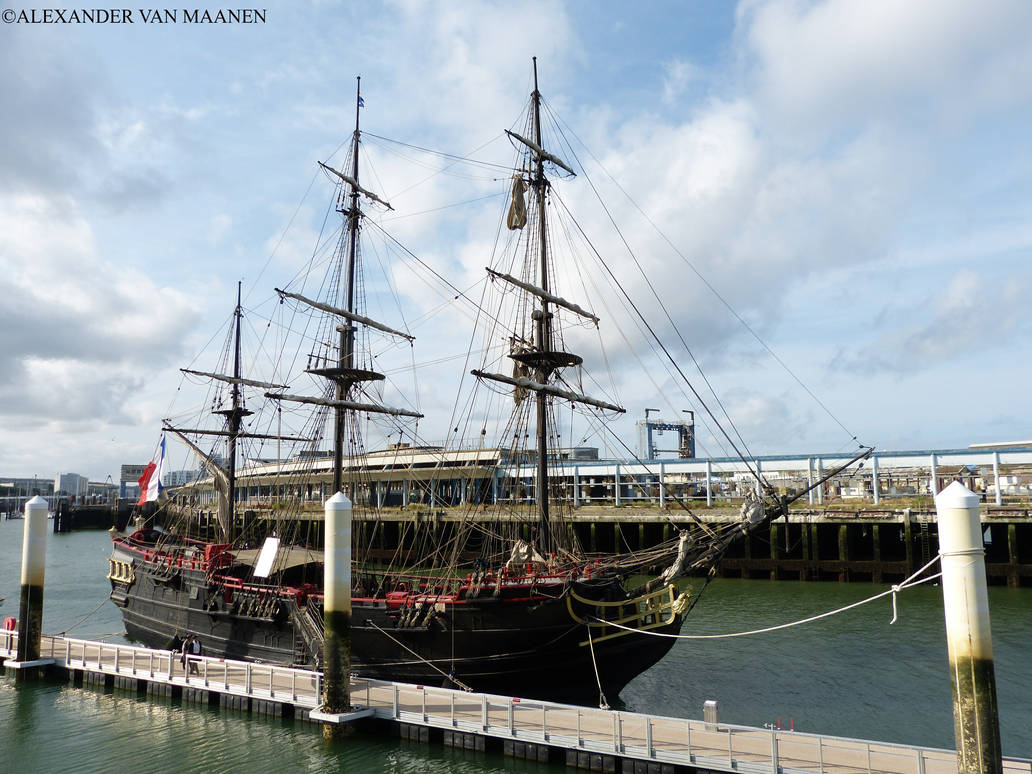
French replica of a 18th Century frigate (ex-Grand Turk 1996-2010) ’Etoile du Roy 2010


Boulogne-sur-Mer, France 19 July 2026

Replica of a British frigate laid down at Marmaris, Turkey in December 1996, launched in September 1997 using the design of the 6th rate frigate HMS Blandford of 1710.  Sold by Turk Phoenix Ltd. She was to be used as a British frigate for the ITV Network series Hornblower. In 2010 sold to the Étoile Marine Croisières. IMO 900582, MMSI 228000700 and call sign FFZA.

Merchant ship Reine-des Clippers chartered by France for the expedition to China in 1860

In 1856 broke the Second Opium War out as a result of western powers trying to force the Chinese Qing dynasty to open the frontiers for foreign trade and to obtain more influence. A treaty signed in 1858 was to end the war and give the western powers more or less what they wanted. A combined British-America-French effort to pass the Taku forts and go on to Pei-ho (nowadays Hai River) failed and France and the United Kingdom decided to sent out a combined expedition with the first French ships leaving France on 5 December 1859. A joint ultimatum of both countries dated 8 March 1860 was refused on 8 April 1860 followed by fighting. To transport their troops and stores France and especially England hired several merchant ships. Not found back in Lloyds Register 1860.

Source

Léopold Pallu de La Barrière. Expédition de Chine en 1860. Paris, Imprimerie Impériale, 1863, p. 15. 

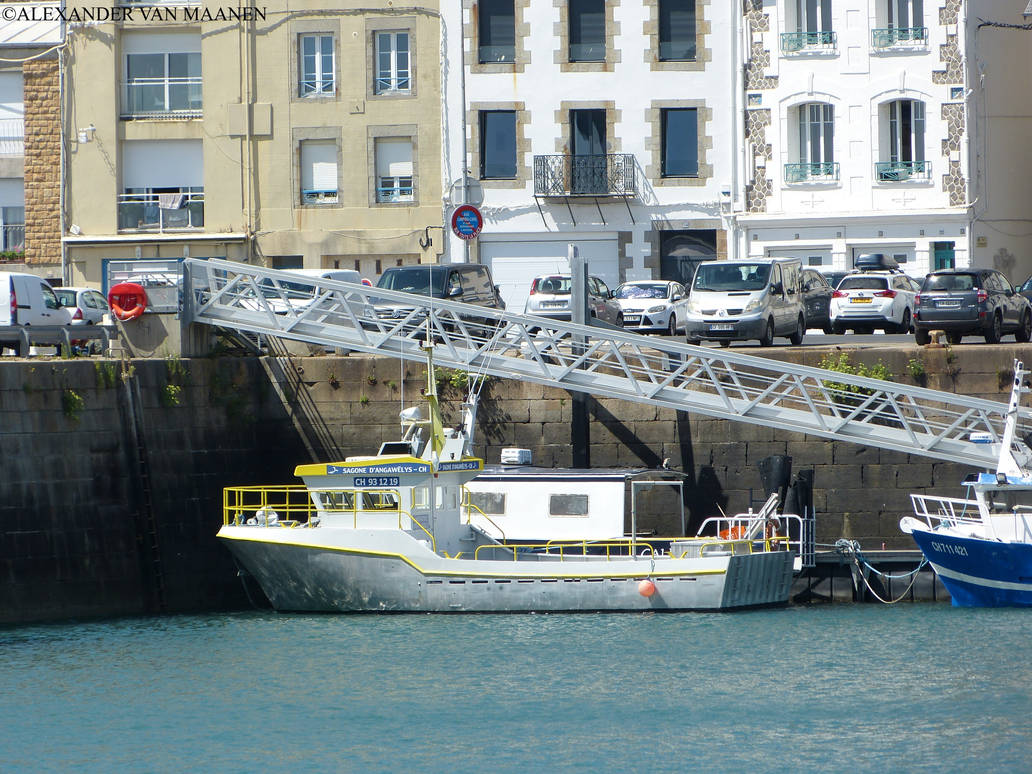
French boat Sagone d’Angawëlys CH.931219

Granville, France 20 July 2026

France-flagged, homeport Cherbourg. 

Dutch Greenland commandeur Jan Myndertsz Schaagen 1736-1739

Bookkeeper Grieland en Van Nuys, Amsterdam

1736

Whales 4 Barrels blubber 10

1737

Whales 2 2/3 Barrels blubber 110

1738

Whales 0 Barrels blubber 0

1739

Whales 1 Barrels blubber 30

Total

Whales 7 2/3 Barrels blubber 290

Source

Alphabetische naam-lyst van alle de Groenlandsche en Straat-Davidsche Commandeurs die sedert het jaar 1700 op Groenland en sedert het jaar 1719 op de Straat Davis etc. Gerret van Sant. Published by Johannes Enschede, Amsterdam 1770, with hand written notes until 1794.

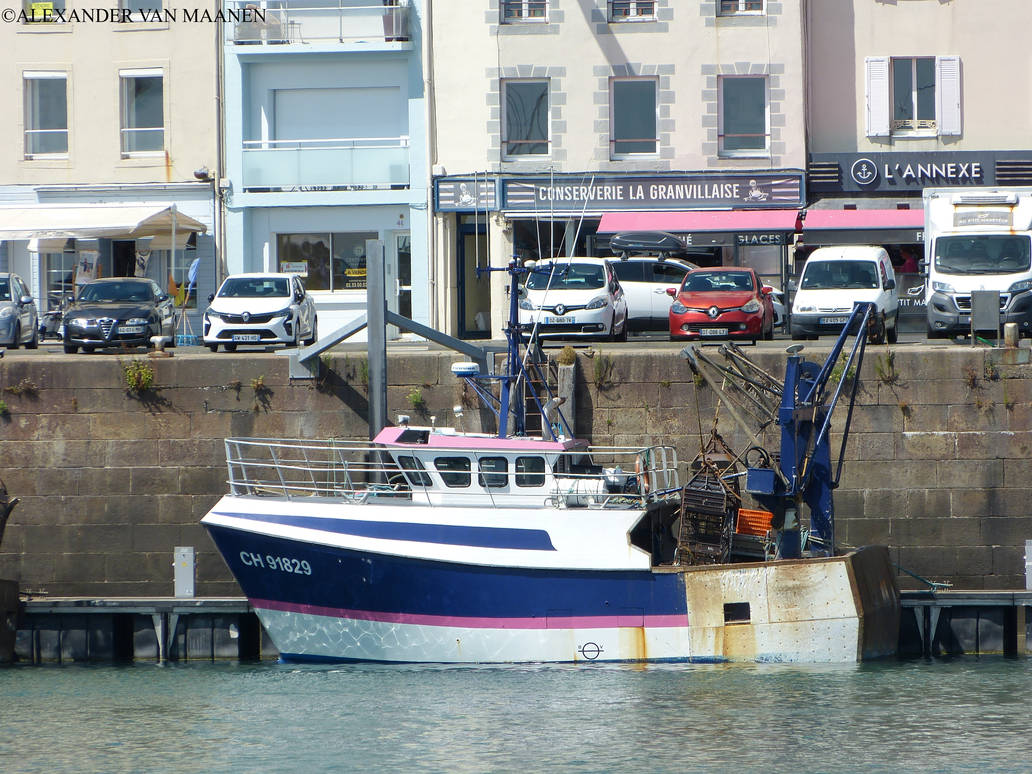
French fishing vessel CH.91829

Granville, France 20 July 2026

France-flagged, homeport Cherbourg, France. 

Dutch Greenland commandeur Joucke Hals 1734-1739

Bookkeeper Cornelis Claasz Ploeger, Broek

1734

Whales 1 Barrels blubber 45

Bookkeeper Cornelis Klooker, Broek

1735

Whales 1 Barrels blubber 40

1736

Whales 4 Barrels blubber 130

Bookkeeper Verlaan en Voogd, Broek

1737

Whales 3 Barrels blubber 140

1738

Whales 1 Barrels blubber 50

1739

Whales 1 Barrels blubber 44

Total

Whales 11 Barrels blubber 449

Source

Alphabetische naam-lyst van alle de Groenlandsche en Straat-Davidsche Commandeurs die sedert het jaar 1700 op Groenland en sedert het jaar 1719 op de Straat Davis etc. Gerret van Sant. Published by Johannes Enschede, Amsterdam 1770, with hand written notes until 1794.

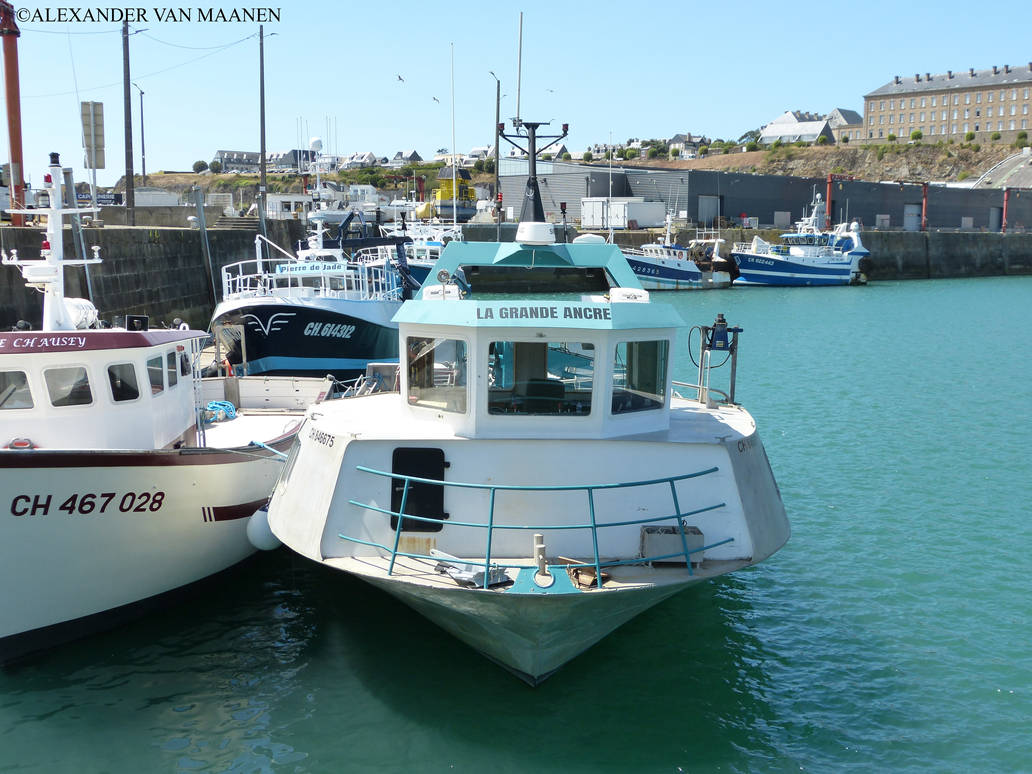
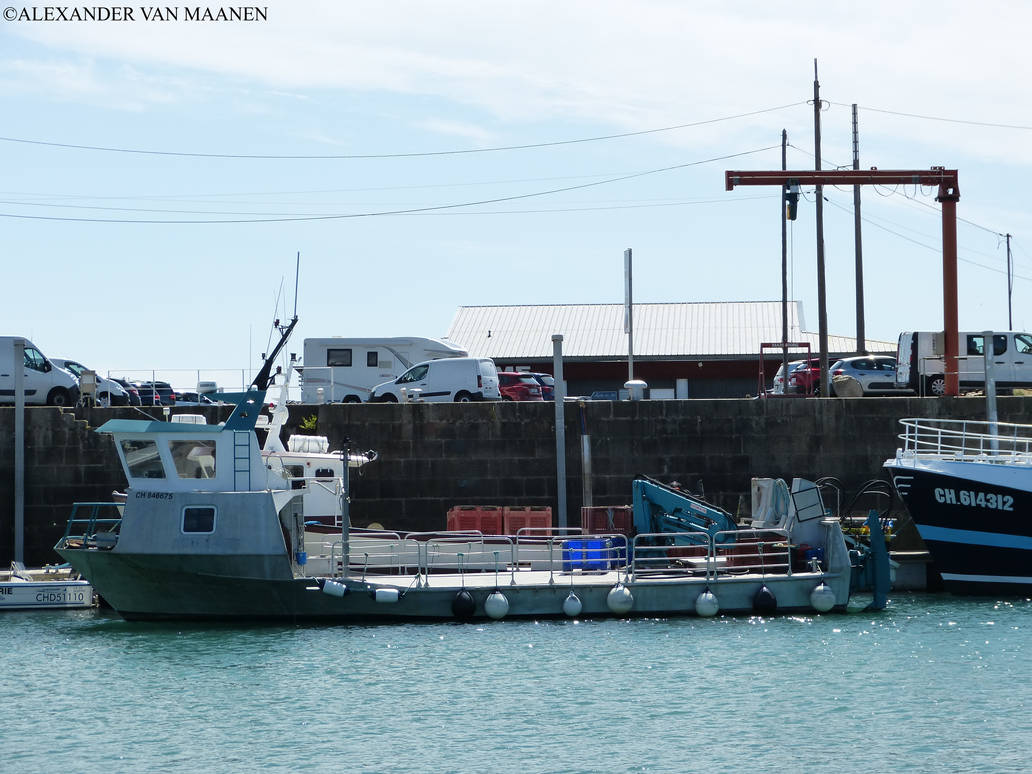
French boat La Grance Ancre CH.846675


Granville, France 20 July 2026

France-flagged, homeport Cherbourg.

American sailing sealing ship Charles Adams in 1836-1837

Antarctic sealing ground ? Rigging ship. Tonnage 268 tons. Captain Carew. Left Stonington on 15 October 1836 for sealing but was burned at the Falkland Islands in 1837.

Source

Goode, George Brown. The fisheries and fishery industries of the United States. Section V. History and methods of the fisheries. Volume II, Washington, 1887. 

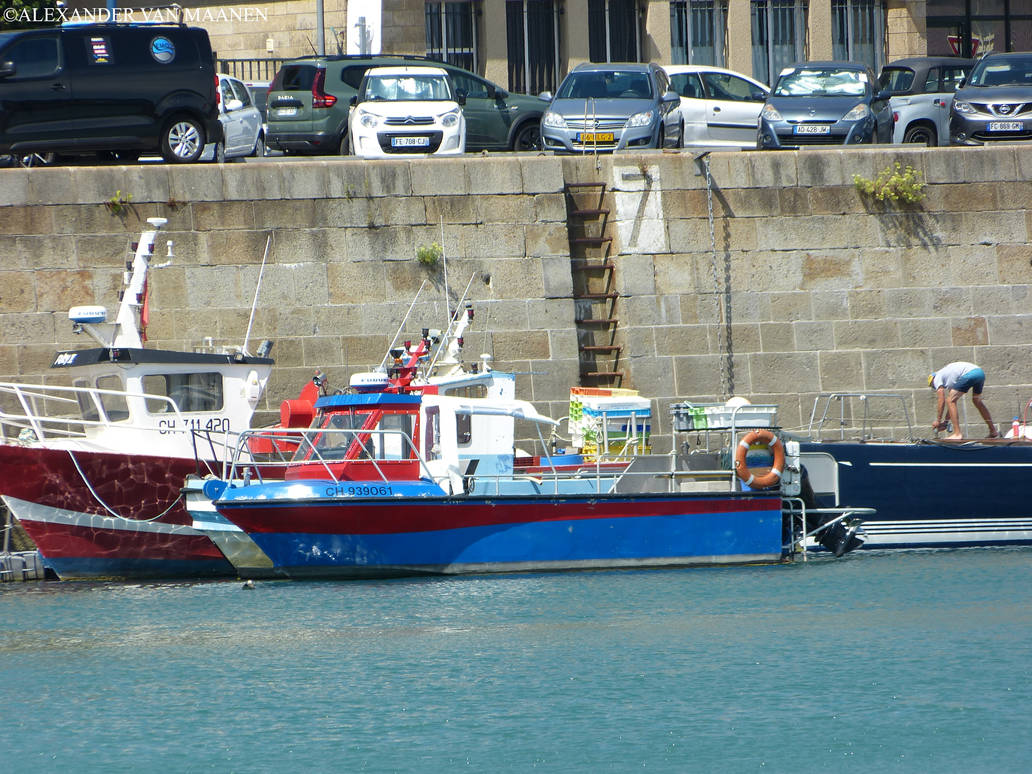
French boat Marius CH.939061

Granville, France 20 July 2026

France-flagged, CH=Cherbourg, Sport boat?

American sailing sealing ship Atlas in 1836-1937

Antarctic sealing ground South Atlantic. Tonnage 261 tons. Rigging ship. Captain Barnum, left New London on 17 May 1835 or 1836, returned on 9 April 1837 with 1,650 barrels sea-elephant oil.

Source

Goode, George Brown. The fisheries and fishery industries of the United States. Section V. History and methods of the fisheries. Volume II, Washington, 1887. 

Friday, 4 September 2026

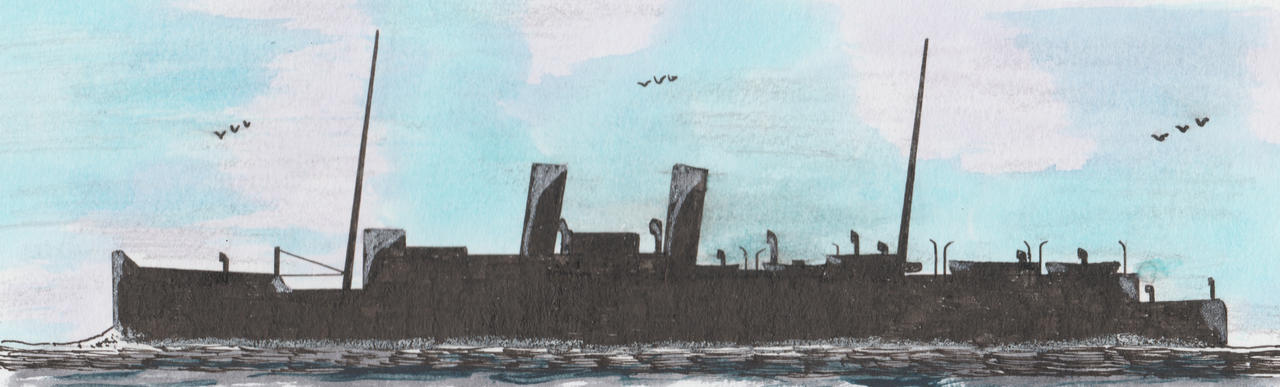
Chinese gunboat Yongji 1915-1937 and Hai Hsing 1937-

Sister ship Chu Tung©Warshipsresearch.blogspot.com

Yongxiang, Yongfeng-class. ©Warshipsresearch.blogspot.com

Part of Yonfeng-class consisting of the Yongfeng or Yong Feng, Yongxiang or Yong-Siang, Yonghian and Yongji, the latter two built in China with added poop decks. In fact enlarged seagoing versions of the Kiang- and Chu-classes river gunboats. Launched by Jiangnan Shipyard, China in 1915 and beached on 21 October 1937 when she was attacked by aircraft during the Battle of Wuhan. Taken into service by the Reorganized National Government of the Republic of China or so-called Wang Jingwei regime renamed Hai Hsing and after the war part of the Nationalist Chinese navy. 

Merchant ship Charmez chartered by France for the expedition to China in 1860

In 1856 broke the Second Opium War out as a result of western powers trying to force the Chinese Qing dynasty to open the frontiers for foreign trade and to obtain more influence. A treaty signed in 1858 was to end the war and give the western powers more or less what they wanted. A combined British-America-French effort to pass the Taku forts and go on to Pei-ho (nowadays Hai River) failed and France and the United Kingdom decided to sent out a combined expedition with the first French ships leaving France on 5 December 1859. A joint ultimatum of both countries dated 8 March 1860 was refused on 8 April 1860 followed by fighting. To transport their troops and stores France and especially England hired several merchant ships. Not found in Lloyds Register 1860.

Source

Léopold Pallu de La Barrière. Expédition de Chine en 1860. Paris, Imprimerie Impériale, 1863, p. 15. 

Merchant ship Morayshire chartered by France for the expedition to China in 1860

In 1856 broke the Second Opium War out as a result of western powers trying to force the Chinese Qing dynasty to open the frontiers for foreign trade and to obtain more influence. A treaty signed in 1858 was to end the war and give the western powers more or less what they wanted. A combined British-America-French effort to pass the Taku forts and go on to Pei-ho (nowadays Hai River) failed and France and the United Kingdom decided to sent out a combined expedition with the first French ships leaving France on 5 December 1859. A joint ultimatum of both countries dated 8 March 1860 was refused on 8 April 1860 followed by fighting. To transport their troops and stores France and especially England hired several merchant ships.

Loyds Register 1860 mentioned a Morayshire, master S.J. Mathers, 788 tons, built at M’lmn T. in 1853, owner D. Dunbar, homeport London, England.

Sources

Léopold Pallu de La Barrière. Expédition de Chine en 1860. Paris, Imprimerie Impériale, 1863, p. 15.

Lloyds Register 1860. 

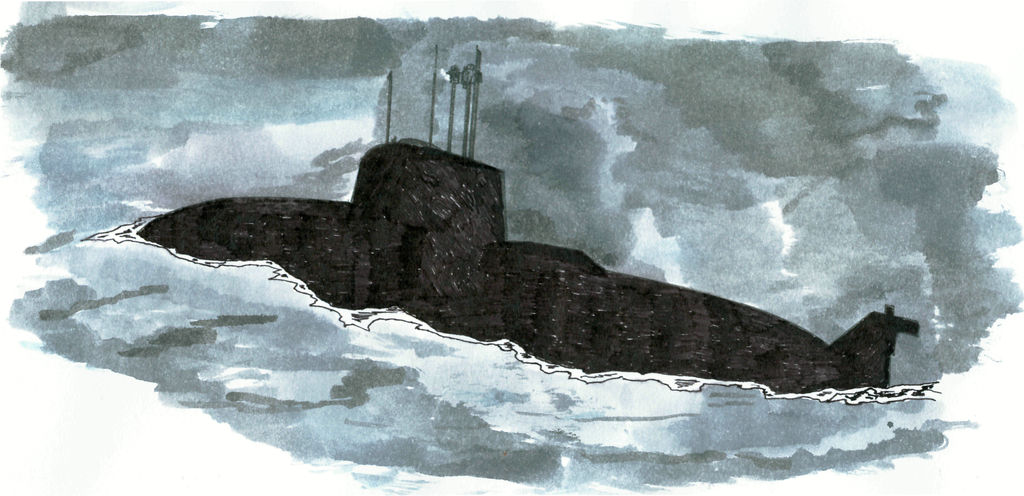
Russian nuclear cruise-missile submarine Arkhangelsk K 525 1975-2005

Project 661Anchaer/NATO: Papa-class©Warshipsresearch.blogspot.com


Project 949A Antey/NATO: Oscar II-class©Warshipsresearch.blogspot.com

Part of the Project 661 Anchar/NATO: Papa class, preceded by Project 670 Skat/NATO: Charlie-class, succeeded by Project 949 Granit and 949A Antey/NATO: Oscar-I and II-classses. Laid down by Sevmash on 25 July 1975, launched on 3 May 1980, commissioned on 30 December 1980, in service on 24 January 1981, part of Northern Fleet, out of service in 1996 and broken up between January 2004-February 2005.

Sources

Breyer, S. and N. Polmar. Guide to the Soviet Navy, 2nd edition.

Jordan, J. Soviet submarines 1945 to the present.

Kouznetsov, N. La Marine sovietique en guerre 1941-1945.

Pavlov, A.S. Warships of the USSR and Russia 1945-1995.

Polmar N. and J. Noot. Submarines of the Russian and Soviet Navies 1718-1990.

Schulz-Troge, U. Die sowjetische Kriegsmarine.

Jane’s Fighting Ships several editions.

Warshipsresearch.blogspot.com

Oscar-class dated 11 April 2026 15:53 o’clock

Russian Ships Info dated 12 April 2026 19:46 o’clock. 

The Russian Baltic submarine fleet in 1927

The American Military Attaché Sweden wrote in his report dated 1 April 1927 No. 352 that all known facts indicated that the Soviet Union at least would have 20 submarines available in the Baltic which number would be doubled within two years. From Italy were 5 flotilla leaders for submarines with a displacement of 2,200 tons ordered. At the shipyards around Leningrad were 2 divisions of submarines under construction of which two were nearly completed waiting for their guns.

Source

National Archive. Record Group 165: Records of the War Department General and Special Staffs Series: Security Classified Correspondence and Reports. File Unit. Russia: Navy - MID 2503-16 THRU 2503-265. Roll 1443.

Japanese cargo ship Tokozyu Maru 1922-

©Warshipsresearch.blogspot.com

Similar Keihuku Maru, Syokei Maru and Tokozyu Maru. Call sign JFBD. Homeport Tokyo, Japan. Owner in 1939 Department of Railways. Built by Mitsubishi Zosen Kaisha Ltd., Kobe, Japan in 1922. Gross tonnage 3,619 tons, under deck 2,943 tons, net tonnage 1,380, deadweight 690 tons and as dimensions 360.0 x 46.0 x 28.0 x 15 (loaded) feet. Steam turbine propulsion, 2 screws and speed 17 (normal cruising)-18.5 (maximum) knots. Designed for near seas ferry service. 

German blockade runner Elbe homeward bound in 1941

Transport Number -. Name ship ElbeCompany Norddeutscher Lloyd (N.D.L.), Bremen, Germany. Date departure April 1941. Harbour which was left -. Date lost 6 June 1941.

Source

Bundesarchiv RM 7/1419 Ausarbeitung "Wirtschaftsfahrten im Zweiten Weltkrieg" (Zusammenstellung der Fahrten von Blockadebrechern nach Ostasien, 1941-1945). 

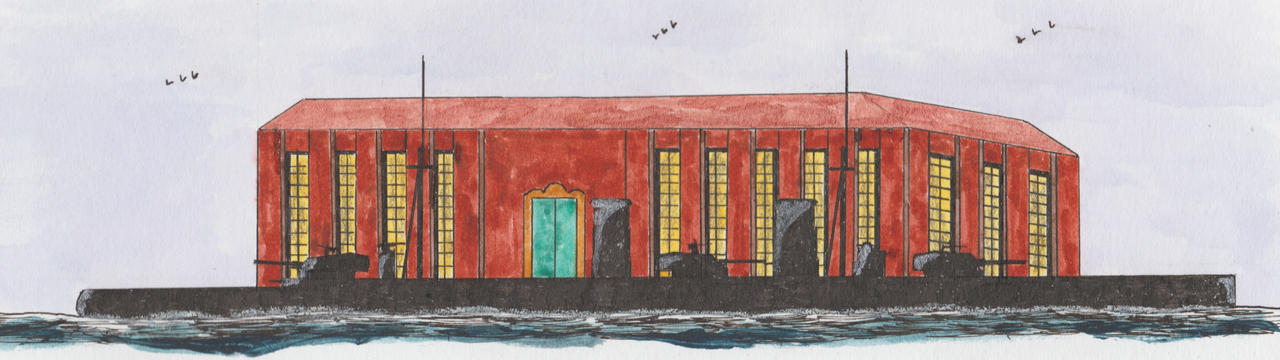
British design No. 764 of Sir W.G. Armstrong, Whitworth&Co. Ltd for a 31,500 tons battleship dated 11 April 1913

©Warshipsresearch.blogspot.com

A so-called stock design, not made for a specified navy. Dimensions 630 (between perpendiculars)-669 (over all) x 95 x 28.5 feet and a displacement of 31,500 tons. Main armament consisted of 5x2-38.1cm/15” cal 15 guns and secondary armament included 16x1-15.24cm/6” guns. Oil fuelled with a bunker capacity of 800-2,500 tons. Speed between 24-25 knots. The armour consisted oa a 13 “ thick bet, a middle belt of 13-6-4”, citadel and barbettes protected by respectively 6” and 10” thick armour. 

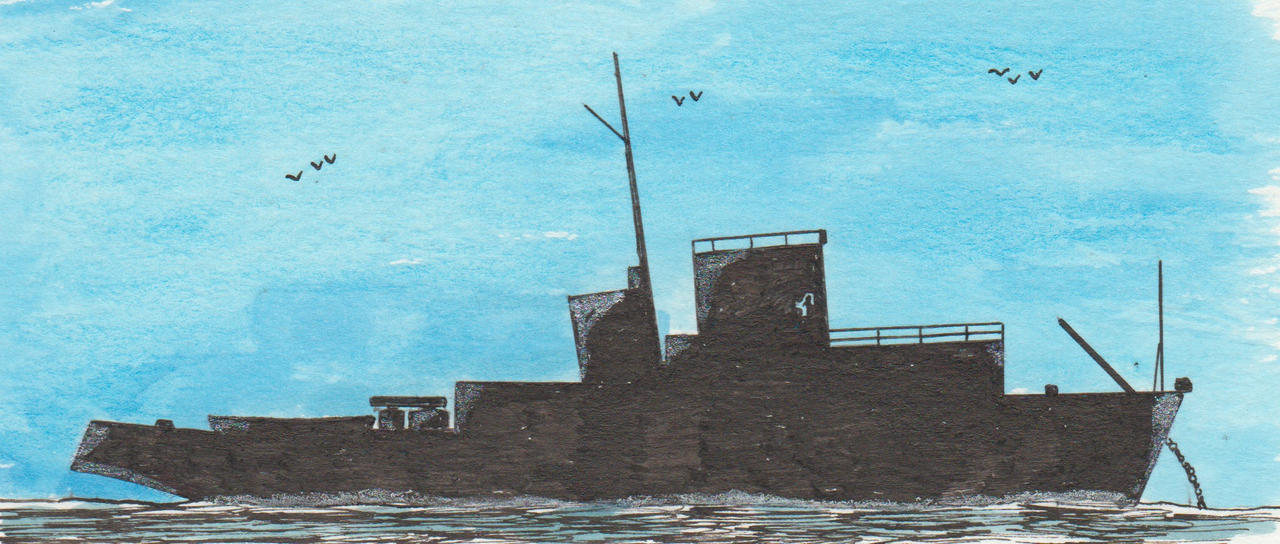
Construction status of the German kriegsfischkutter KFK 995 in 1944

©Warshipsresearch.blogspot.com

List of planning with deadlines for new construction of warships dated Berlin 22 May 1944. Built in South France. Date building ordered 15 April 1944. Date completion March 1945.

Source

Deutsches Historisches Institut Moska. Records 500 findbuch 12453-file 152. 

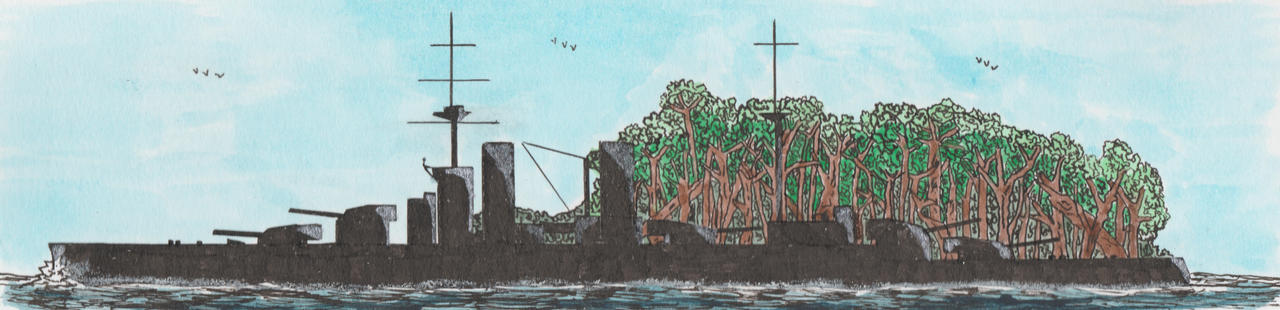
German battle cruiser study design GK 3531 dated 1918

©Warshipsresearch.blogspot.com

Dimensions 240 x 29,5 (maximum) x 9 (construction draught) and a displacement of 35,000 ton.

Armament 2x2-38xc cal 45 guns, 12x15 cm and 1 submerged bow torpedo tube.

Turbine propulsion,4 shafts, speed 31-32 knots, 16 coal and 15 oil fuelled boilers. 

Ships coming from the west arriving at Gibraltar according to the Kriegsnachrichten of the Chef des Admiralstabes der Marine dated Berlin 21 August 1917

An item reported that between 14-18 August coming from the west arrived at Gibraltar 1 Italian cruiser, 2 steamships of which towing an Italian sailing vessel, 1 Portuguese steamship, 5 British steamships, 1 loaded American tanker, 1 Italian passenger ship (2 guns, 4 Italian steamships, 1 American steamship, 2 Norwegian steamships. By night one British steamship.

Source

Bundesarchiv RM-40-622

Austro-Hungarian design for a battle cruiser Project II dated June 1917

Displacement 30,000 tons with an armament of 2x3-38 cm guns L/45 guns, her secondary armament included 18x1-15cm L/50 guns. Speed 30 knots. Designed by Marinetechnisches Komitee (MTK). Never realized. 

Ships arriving at Gibraltar according to the Kriegsnachrichten of the Chef des Admiralstabes der Marine dated Berlin 21 August 1917

An item reported that between 14-18 August coming from the east arrived at Gibraltar 4 British steamships, 4 French steamships, 3 Italian steamships, 2 British steam transports. 2 Norwegian steamships, 1 American steamship (2 guns), 1 Greek steamship.

As part of a convoy: 1 Italian auxiliary cruiser, 1 Italian steamship, 1 American cruiser, 1 steam transport, 3 Norwegian steamships, 1 British passenger ship, 1 Italian steamship (2 guns).

Source

Bundesarchiv RM-40-622

Japanese patrol vessel PS 78 1950s

PS 66. ©Warshipsresearch.blogspot.com

Operated by the Maritime Safety Board. Length about 121.6 feet

British sailing transport Libertas in the Crimean War on 28 October 1854

According to a list of the return of the disposition in the Black Sea on 28 October 1854 drawn up by Captain and Principal Agent of Transports P. Christie, “Melbourne”, Balaklava, Crimea: number transport 95, present position Constantinople, remarks under orders of rear-admiral Boxer.

The Crimean War found place between 16 October 1853-30 March 1856 between Ottoman Empire, France, United Kingdom and Sardinia at one side and Russia and Greece on the other side. The British Government chartered a large number of merchant ships for transporting troops and stores.

Source

Reports from Committees: eight volumes. 3-Part II. Army before Sebastopol. Session 12 December 1854-14 August 1855. Vol. IX-Part II. 

Japanese minesweeper MS 07 1950s

©Warshipsresearch.blogspot.com

Length 68.6 feet. The Chiyozuru-class with as dimensions 95 4/5 (overall) x 18 2/3 x 6 1/2 feeet and a displacement of 130 tons, wood-built between 1943-1945 as auxiliary sub chasers named after birds but which were before known as MS+number? 

British sailing transport William Jackson in the Crimean War on 28 October 1854

According to a list of the return of the disposition in the Black Sea on 28 October 1854 drawn up by Captain and Principal Agent of Transports P. Christie, “Melbourne”, Balaklava, Crimea: number transport 93, present position Eupatoria, remarks waiting for orders.

The Crimean War found place between 16 October 1853-30 March 1856 between Ottoman Empire, France, United Kingdom and Sardinia at one side and Russia and Greece on the other side. The British Government chartered a large number of merchant ships for transporting troops and stores.

Source

Reports from Committees: eight volumes. 3-Part II. Army before Sebastopol. Session 12 December 1854-14 August 1855. Vol. IX-Part II. 

Thursday, 3 September 2026

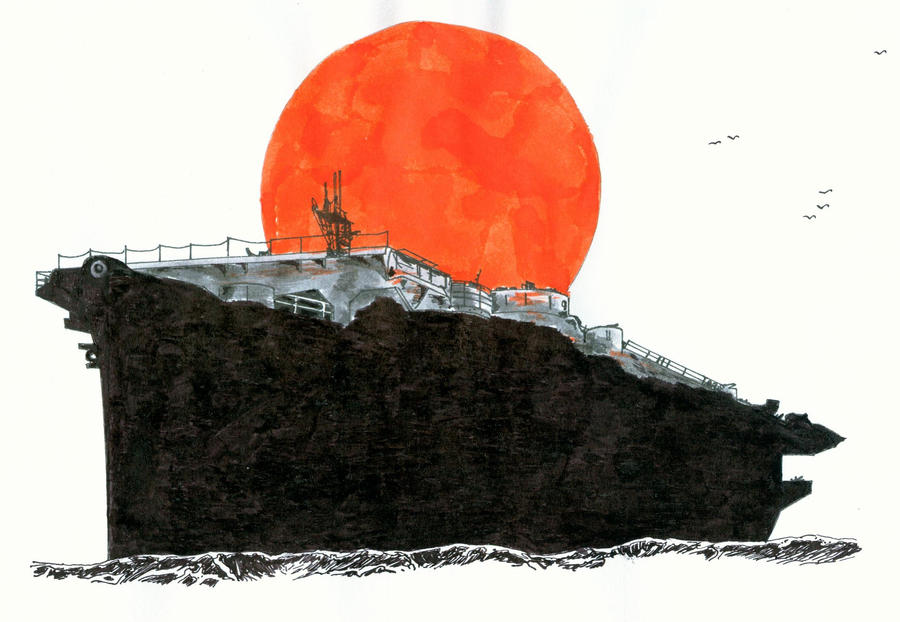
Dutch cargo ship ss (ex-USS Kedive 1943, HMS Kedive 1943-1946, Kedive 1946-1947) Rempang 1948-1968 (Daphne 1968-1975)

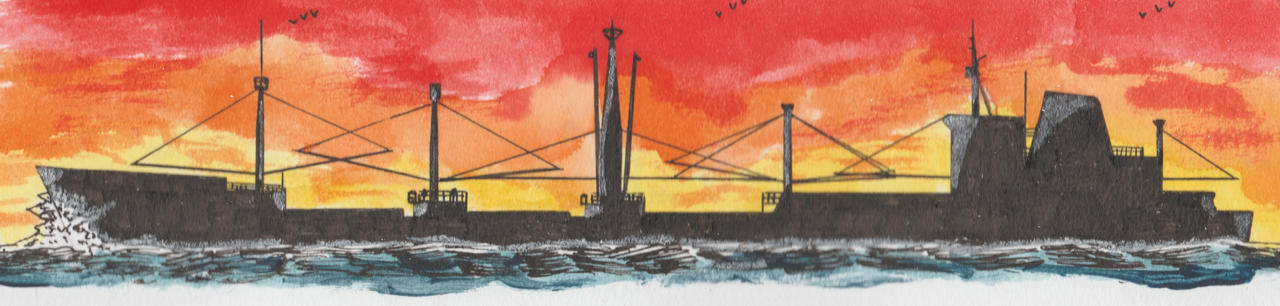
Bogue-class©Warshipsresearch.blogspot.com

Rempang©Warshipsresearch.blogspot.com

Escort carrier, first classifed as AVG-39, then ACV-39 and since 15 July 1943 CVE-39 USS Cordova as part of the Bogue-class and in British service Ruler-class. The U.S. Navy (USN) started with the hull classification Aircraft Escort Vessels (AVG) for escort aircraft carriers nicknamed ‘jeep carriers’ or even ‘baby flattop’ by the USN and ‘Woolworth Carrier’ by the British Royal Navy, that became Auxiliary Aircraft Carriers (ACV) on 5 August 1942 followed on 15 July 1943 Escort Aircraft Carriers (CVE). The last classification supplied an better impression of their combat and support roles.  Being (much) smaller and slower than a standard fleet carrier were they mainly used for convoy duties, supporting amphibious landings or just as a kind of cargo ship especially for transporting aircraft across the ocean.

Laid down by Seattle-Tacoma Shipbuilding Corporation as USS Cordova on 22 September 1942, launched on 30 January 1943, transferred to the British Royal Navy, renamed HMS Khedive D62, commissioned on 25 August 1943, decommissioned on 19 July 1946, as Kedive owner/manager United States Maritime Commission, Washington, USA since 20 January 1946, bought by Waterman Steamship Corporation, Mobile, USA and converted into a cargo ship by the Gulf Shipbuilding Corporation, Mobile in 1946, bought by the Dutch government on 23 January 1947, as Rempang owner/manager N.V. Stoomvaart Maatschappij Nederland, Amsterdam, Netherlands since 15 January 1948, sold, renamed Daphne and owner Atlas Enterprises Inc., Panama, manager Africa Liner Agencies Inc. S.A., Genoa, Italy since 4 July 1968, sold to owner/manager Comaran Africa Line (Compagnie Maritime de L'Afrique Noire S.A., Vlahakis), Abidjan, Ivory Coast, sold to be broken end 1975, arrived at Gandia, Spain on 20 January 1976 and breaking up by Hierros Ardes S.A. begun in February 1976.